
 0
0
 0
0
If you’ve left chili out overnight, it’s likely unsafe to eat. The danger zone for food is between 41°F and 135°F, where bacteria thrive. Even if the chili looks and smells fine, harmful bacteria could be present. To stay safe, it’s best to discard it rather than take a risk. But if you want to know more about food safety and how to handle leftovers, there are important guidelines to follow.
Understanding the Danger Zone: What It Means for Your Chili
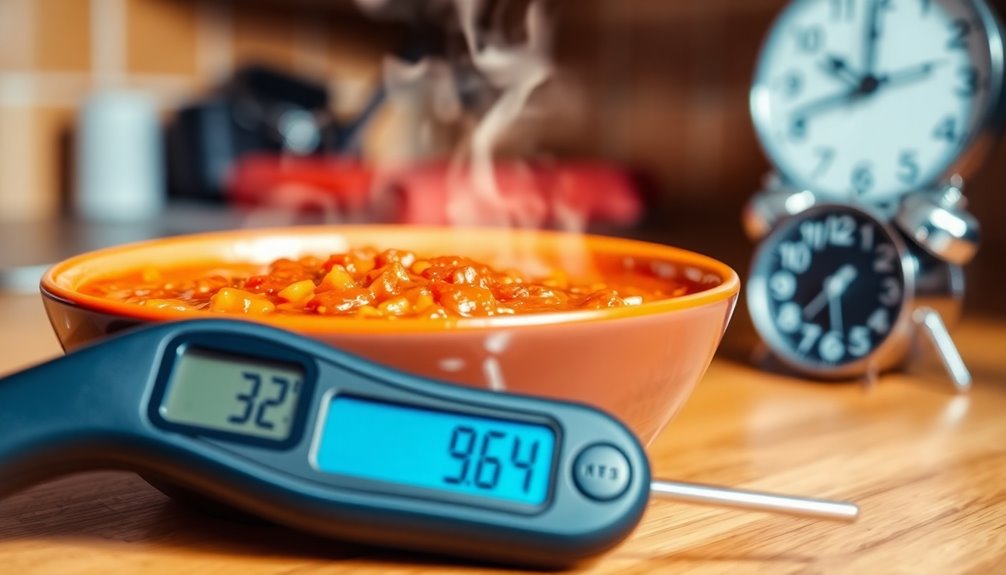
When you leave your chili out overnight, it enters a temperature range known as the danger zone, which stretches from 41°F to 135°F.
In this range, bacteria can grow rapidly, increasing the risk of foodborne illnesses. If your chili’s been sitting out for more than two hours, it’s in serious danger; at a house temperature of 54°F, it’s definitely unsafe to eat.
Even if your chili looks and smells fine, it can still harbor harmful bacteria.
To keep your food safe, always refrigerate leftovers within two hours of cooking—or within one hour if it’s hotter than 90°F. Regularly reviewing your billing processes can help you understand and mitigate safety risks in food handling as well.
Understanding the danger zone is essential for protecting your health and ensuring your meals are safe to enjoy.
How Long Can Chili Safely Sit Out?
Chili can safely sit out for no more than two hours at room temperature to avoid the risk of bacterial growth. If the temperature exceeds 90°F, you should refrigerate your chili within one hour for food safety.
Chili should not sit out for more than two hours at room temperature to prevent bacterial growth.
Remember, harmful bacteria can grow rapidly in chili left out overnight, leading to foodborne illness.
Here are key points to keep in mind:
- The danger zone for food is between 40°F and 140°F.
- The maximum time chili can be in this zone is four hours.
- Discard chili after two hours at room temperature.
- Always refrigerate leftovers promptly.
- Even if it looks and smells fine, don’t risk it!
Prioritize food safety to keep yourself and others healthy. Additionally, take note of the danger zone for food temperatures to ensure proper food handling practices.
Signs That Chili Has Gone Bad: Smell, Appearance, and More
When it comes to chili, your nose and eyes are your first line of defense.
If you notice an unpleasant odor, unusual discoloration, or a slimy texture, it’s time to toss it out.
Trust your senses—if something seems off, it probably is. Additionally, be mindful that chili can spoil quickly, especially if left out for more than two hours at room temperature, as bacteria can multiply rapidly under these conditions, leading to potential foodborne illnesses and food safety guidelines.
Unpleasant Odor Detection
If you’ve left chili out overnight, you’ll want to be vigilant about its smell and appearance.
Unpleasant odor detection is key to determining if your chili is still safe to eat. Here are some signs that indicate spoilage:
- A strong, foul smell or sour odor
- A rancid scent that suggests contamination
- Any off-putting or unusual aromas
- A slimy texture, which can accompany bad odors
- The presence of mold or discoloration
Visual Signs of Spoilage
While evaluating your chili for spoilage, visual signs can provide vital clues beyond just smell.
Look for any discoloration, which may indicate that the chili has gone bad. A vibrant, fresh color is a good sign, while dull or darkened hues can raise red flags.
Additionally, if you spot mold on the surface, it’s a clear indicator to discard the chili immediately.
Remember, even if the chili doesn’t smell off, visual signs of spoilage are essential in determining safety. Relying solely on taste or smell can be risky, as harmful bacteria might be present without noticeable changes.
Always trust your eyes alongside your nose when evaluating food safety.
Texture and Consistency Changes
Changes in texture and consistency can be critical indicators that your chili has gone bad. Pay attention to these signs, especially if it’s been left out at room temperature:
- A sour or off smell indicates bacterial growth.
- Visible mold suggests spoilage and unsafe consumption.
- A thickened texture or change in consistency often points to spoilage.
- Watery separation of liquids indicates it’s time to toss it out.
- A dull or darkened color can signal it’s no longer safe to eat.
If you notice any of these changes, it’s best to err on the side of caution and discard the chili.
Consuming spoiled chili can lead to serious health risks, so don’t take chances!
The Role of Temperature in Food Safety: Key Guidelines to Follow
Temperature plays an essential role in food safety, as keeping food out of the danger zone—between 40°F and 140°F—can prevent harmful bacteria from multiplying.
Temperature is crucial for food safety; keep food out of the 40°F to 140°F danger zone to prevent bacteria growth.
Bacteria grow rapidly in this range, so it’s vital to monitor the temperature of your food. Ready-to-eat items shouldn’t sit in the danger zone for more than 4 hours.
If you leave perishable food at room temperature for over 2 hours, or 1 hour when it’s hotter than 90°F, you should discard it to avoid serious health risks.
To keep food safe, use proper cooling techniques, like dividing large portions into shallow containers. Additionally, vacuum sealing can help extend the shelf life of leftovers, reducing the risk of spoilage and waste.
Remember, even if food looks and smells fine, it can still harbor harmful bacteria if stored improperly.
Stay safe!
Reheating Chili: How to Do It Safely
Here’s how to do it safely:
- Use a food thermometer to confirm the chili reaches at least 165°F.
- Simmer the chili for at least 20 minutes to heat thoroughly.
- Avoid letting the chili sit at room temperature during reheating.
- Stir the chili occasionally to confirm even heating.
- Discard any chili left out for more than 2 hours.
Additionally, using a food thermometer is crucial for ensuring food safety, similar to how expense tracking apps help freelancers manage their finances accurately.
The Risks of Eating Leftover Chili: What You Need to Know
While it might be tempting to eat leftover chili that’s been sitting out overnight, doing so can expose you to serious health risks.
When chili is left at room temperature for more than two hours, it enters the danger zone where bacteria that can cause foodborne illnesses, like salmonella and E. coli, thrive. These bacteria can multiply rapidly, even if the chili looks and smells fine.
Reheating it to an internal temperature of 160°F may kill some bacteria, but it won’t eliminate any toxins that have already formed. To protect your health, it’s best to discard any perishable food, including chili, that’s been left out overnight. Trust your instincts and prioritize safety over temptation. Additionally, just like natural oils can help maintain cleanliness in your home, ensuring proper food storage can prevent health risks associated with spoiled food.
Best Practices for Cooling and Storing Chili After Cooking
To keep your chili safe and delicious, it’s essential to cool and store it properly right after cooking. Rapid cooling is key to preventing bacterial growth.
To ensure your chili remains safe and tasty, proper cooling and storage right after cooking are crucial.
Here are some best practices for cooling food like chili:
- Divide the chili into smaller, shallow containers for quicker cooling.
- Refrigerate within 2 hours of cooking to maintain safety.
- It’s okay to place hot chili directly in the fridge, but don’t leave it out for more than 2 hours.
- Store at a refrigerator temperature of 40°F or below.
- When reheating, make certain it reaches an internal temperature of at least 165°F and simmer for at least 20 minutes to kill any bacteria. Immediate actions after cooking can significantly enhance food safety.
Following these steps keeps your chili fresh and safe for later enjoyment!
How to Divide and Store Large Batches of Chili for Safety
When you’ve cooked a large batch of chili, it’s essential to divide and store it properly to confirm safety.
Start by transferring the chili into shallow containers; this promotes rapid cooling, helping it reach safe temperatures quickly. Make sure to refrigerate the divided chili within 2 hours of cooking, especially if the ambient temperature’s above 90°F, to minimize bacteria growth.
Store the chili in airtight containers to keep its quality and avoid cross-contamination with other foods. Don’t forget to label each container with the storage date.
Finally, remember to discard any leftovers that have been in the fridge for more than 3-4 days to confirm you’re not consuming large amounts of food that could be unsafe. Additionally, utilizing expense tracking tools can help manage any costs associated with meal preparation and storage.
Common Myths About Food Safety and Leftovers
You might think that if your leftovers look and smell fine, they’re safe to eat, but that’s a dangerous myth.
Many people believe reheating food can eliminate any risks, not realizing that some bacteria produce toxins that heat won’t destroy.
Let’s clear up these misconceptions about food safety and the proper way to handle your leftover chili. Practicing frugal meal planning can help ensure that you only prepare the amount of food you actually need, reducing the likelihood of having to deal with questionable leftovers.
Myths About Food Safety
What do you really know about food safety and leftovers? Many myths can put you at risk, especially with perishable foods. Here’s the truth behind some common misconceptions:
- Food left out overnight can be unsafe, regardless of how it looks or smells.
- Reheating food doesn’t kill all bacteria; heat-resistant toxins can still harm you.
- Leftovers should be refrigerated within two hours, not cooled to room temperature first.
- Freezing halts bacterial growth, but doesn’t kill bacteria; they can reactivate once thawed.
- The ‘five-second rule’ is a myth; food can pick up harmful bacteria instantly.
Stay informed to keep your meals safe and avoid these dangerous myths!
Misconceptions on Leftover Storage
How long can leftovers really sit around before they become unsafe? Many people think that if food looks and smells fine, it’s still good to eat.
However, bacteria can thrive in the danger zone (41-135°F) without any visible signs of spoilage. You should discard perishable leftovers left out for more than 2 hours, or just 1 hour if it’s over 90°F.
Some believe that reheating food will eliminate all risks, but certain toxins remain heat-stable and can still cause illness. It’s also a myth that you can let hot food cool before refrigerating; you should refrigerate it within 2 hours.
Community Insights: Personal Experiences With Food Safety
While many in the community share stories of indulging in food left out overnight without experiencing immediate illness, these anecdotes often spark lively debates about food safety.
You might find that some folks confidently judge food safety based on appearance and smell. Others habitually leave cooked food at room temperature for convenience, despite knowing the risks.
Here’s a glimpse of the community’s insights:
- Many trust their senses when evaluating food safety.
- Some prefer traditional methods over conventional guidelines.
- Users suggest reheating food to safe temperatures, like simmering for 20 minutes.
- Opinions vary widely on the safety of hot food left out.
- A few dismiss food safety rules entirely, relying on personal experience.
Interestingly, adopting mindful spending habits can also extend to how we handle food safety, emphasizing the importance of not wasting food and making informed choices.
It’s a mixed bag of beliefs surrounding food safety!
Tips for Safe Leftover Management: What to Remember
When it comes to managing leftovers, remember that proper cooling techniques are essential.
Make sure to store food in shallow containers to speed up cooling and keep it safe.
Following these storage practices will help you enjoy your meals without the worry of foodborne illness.
Proper Cooling Techniques
To guarantee your leftover chili stays safe to eat, it’s essential to follow proper cooling techniques. Here are some tips to help you cool your chili effectively:
- Divide chili into shallow containers to speed up cooling.
- Refrigerate leftovers within 2 hours; if it’s over 90°F, do so within 1 hour.
- Place hot food directly in the fridge but let it cool slightly first to avoid condensation.
- Consider using an ice bath for larger quantities to cool food quickly.
- Always store leftovers at 40°F or below to prevent bacteria growth.
Safe Storage Practices
Safe storage practices are essential for keeping your leftover chili fresh and safe to eat. Always refrigerate leftovers within two hours of cooking, or within one hour if it’s hotter than 90°F.
If your chili’s been out for more than two hours, it’s best to discard it to prevent foodborne illness. Divide large portions into shallow containers for quicker cooling, ensuring they reach safe temperatures faster.
Always use airtight containers to keep your chili’s quality intact and to avoid cross-contamination. Regularly check your fridge and dispose of any leftovers older than three to four days.
Why Does Food Safety Matter? Understanding Foodborne Illness
Why should you care about food safety? Understanding foodborne illness is essential for your health. Leaving food in the danger zone (41-135°F) for more than two hours can lead to rapid bacteria growth, putting you at risk.
Here’s what you need to know:
- Symptoms include diarrhea, vomiting, and fever.
- Some bacteria, like E. coli and Salmonella, can thrive in improperly stored foods.
- Heat-resistant toxins may not be destroyed by reheating.
- Awareness of food safety guidelines is critical.
- Refrigerate perishable foods within two hours to prevent illness.
Don’t let foodborne illness catch you off guard! Being proactive about food safety can keep you and your loved ones safe from harmful bacteria.
Conclusion: When to Save Your Chili and When to Discard It
When you’re unsure about the safety of your chili left out overnight, it’s essential to know when to save it and when to toss it.
When in doubt about your overnight chili, knowing when to keep it or throw it out is crucial for safety.
If your chili was left at a temperature of 54°F for over two hours, it’s unsafe to eat. The internal temperature of ready-to-eat food should stay below 41°F or above 135°F to prevent bacterial growth.
Remember, even if it looks and smells fine, harmful bacteria might still be present. Always refrigerate leftover chili within two hours of cooking, or one hour if it’s above 90°F.
If you’re unsure about its safety after three to four days in the fridge, it’s best to discard it. Better safe than sorry!
Conclusion
So, next time you find your beloved chili sitting out like a forgotten child at a party, remember: it’s not a culinary miracle waiting to happen. If it’s been out for more than two hours, toss it like yesterday’s news. Your stomach will thank you later, and you won’t be auditioning for a role in a food poisoning horror story. After all, why risk a night of regret when you can simply embrace the glorious comfort of a fresh batch?




Average Rating