
 0
0
 0
0
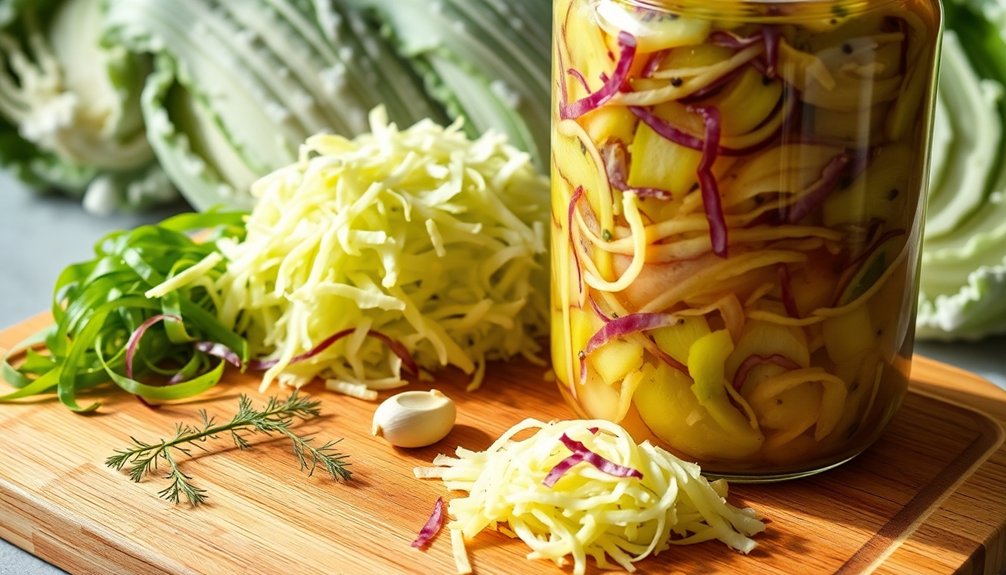
To preserve cabbage, you’ve got several options. Refrigerate it in the crisper tray for up to a year. If you want to freeze it, blanch it first for 1-2 minutes, then cool it in ice water. Dehydrating is also great—just chop, blanch, and dry. You can even ferment cabbage into sauerkraut by using a salt brine. Each method has its perks, and if you stick around, you’ll discover even more tips and tricks.
Understanding Cabbage Preservation Methods
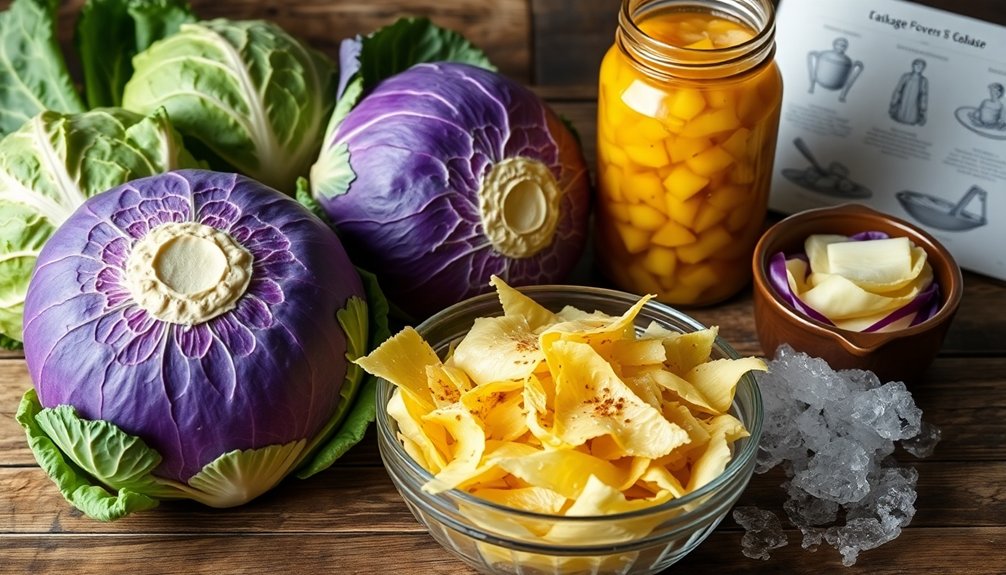
When you want to preserve cabbage, understanding the different methods can make all the difference in maintaining its flavor and texture.
Refrigeration is a straightforward option, allowing your cabbage to last up to a year in the crisper tray. To maximize freshness, just remove any outer leaves.
Refrigerate your cabbage for up to a year; just remove the outer leaves for maximum freshness.
For long-term storage, freezing requires blanching for 1 to 2 minutes to prevent sogginess, making it perfect for soups.
Dehydrating involves chopping and drying at 55 degrees Celsius for 8 to 10 hours, ideal for soups but not salads.
Fermentation turns cabbage into tangy sauerkraut using a 2% salt brine, drawing out moisture without needing to add water.
Choose the method that suits your needs and enjoy cabbage all year round!
The Benefits of Refrigerating Cabbage

Refrigerating cabbage keeps it fresh for an impressively long time, sometimes up to a year.
By storing it in the crisper tray, you create ideal conditions that preserve its low moisture content and nutritional value.
Plus, removing outer leaves and trimming cut edges helps prevent spoilage, ensuring you enjoy your cabbage longer.
Long-lasting Freshness
Storing cabbage in the refrigerator not only keeps it fresh but can also greatly extend its shelf life. When you follow proper refrigeration techniques, your cabbage can last up to a year in the crisper tray.
Here are three tips to maximize its longevity:
- Remove any outer leaves before storage to protect the inner leaves.
- Trim exposed edges of cut cabbage to prevent browning and maintain quality.
- Keep cabbage in a cool, dark place with controlled humidity levels.
Optimal Storage Conditions
Although many may overlook it, creating ideal storage conditions for cabbage can greatly enhance its freshness and longevity. By refrigerating various cabbage varieties in the crisper tray, you can keep them fresh for up to a year.
Before storing, remember to remove the outer leaves, as they can harbor spoilage. If you’re dealing with cut cabbage, trim exposed edges to maintain quality and extend shelf life.
Regularly check and adjust the humidity levels in your refrigerator to optimize the storage conditions. According to the Self-sufficient Me YouTube channel, using proper refrigeration techniques can greatly prolong the freshness and usability of your cabbage, ensuring you enjoy its crisp texture and flavor for much longer.
Freezing Cabbage for Long-Term Storage
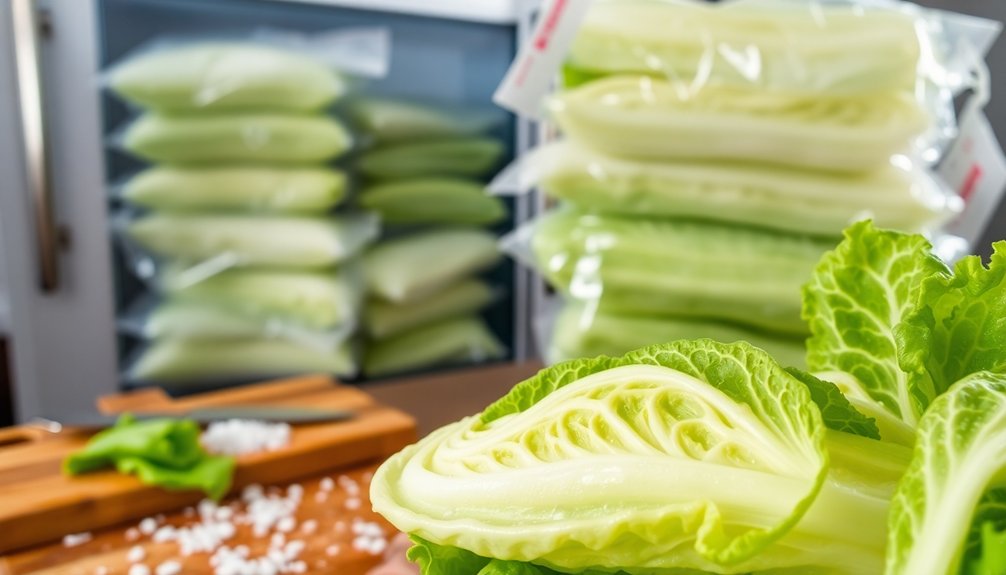
To freeze cabbage effectively, you’ll want to start with blanching it for 1 to 2 minutes.
This step helps preserve the texture and flavor, so your thawed cabbage stays crisp and tasty.
After blanching, quick cooling and proper storage techniques are key to maintaining its quality for up to a year.
Blanching Techniques Explained
Blanching cabbage before freezing is an essential step that guarantees you preserve its vibrant color and crisp texture.
The blanching process offers several key benefits that enhance your cabbage’s quality:
- Texture Preservation: Blanching for 1 to 2 minutes prevents cell wall damage, keeping the cabbage crisp for salads.
- Color Retention: It helps maintain the bright green hue, making your dishes visually appealing.
- Freezer Burn Prevention: Cooling the cabbage in ice water halts cooking and guarantees excess moisture is removed, preventing freezer burn.
Freezing Storage Tips
Once you’ve blanched your cabbage, you’re ready to move on to freezing it for long-term storage.
First, cool the cabbage quickly to prevent ice crystals from forming, which can make it mushy when you thaw it. Use uniform pieces for even freezing and easier portioning later on.
For the best results, employ proper freezing techniques: pack the cabbage into airtight freezer bags or containers, removing as much air as possible before sealing. This helps to avoid freezer burn, ensuring your cabbage retains its flavor and texture.
When stored correctly in the freezer, cabbage can maintain its best quality for up to 12 months, making it a fantastic option for your future meals.
Dehydrating Cabbage: Techniques and Tips
When you’re looking to preserve cabbage through dehydration, proper techniques can make all the difference.
Here are some essential Dehydration Techniques to follow:
- Chop and Blanch: Cut cabbage into larger pieces and blanch before dehydration. This helps maintain texture and quality.
- Optimal Temperature: Dehydrate at 55 degrees Celsius for 8 to 10 hours to guarantee thorough drying.
- Storage Matters: Once fully dried, store your cabbage in airtight containers to keep it fresh and extend its shelf life.
The Art of Fermenting Cabbage Into Sauerkraut
Fermenting cabbage into sauerkraut is a rewarding process that transforms simple ingredients into a tangy and nutritious staple.
Start by using a 2% salt brine; for every 550 grams of cabbage, add 11 grams of salt to draw out moisture effectively. Work the chopped cabbage for 5 to 10 minutes to release its natural juices, ensuring it’s moist enough for fermentation without any extra water.
Pack the cabbage tightly into a jar, using a rolling pin to press out excess moisture, and make sure all leaves are submerged. Leave the jar at room temperature for 1 to 2 weeks, checking regularly.
Tasting and Adjusting Your Fermented Cabbage
As you monitor your cabbage during fermentation, tasting it after a week is essential to find the right level of sourness. This helps you achieve the perfect flavor balance.
Tasting your cabbage after a week is crucial for achieving the ideal sourness and flavor balance during fermentation.
The fermentation typically takes 1 to 2 weeks, so regular tasting is vital.
Here are three tips for adjusting your fermented cabbage:
- Taste Regularly: Monitor the sourness every few days to see how it develops.
- Adjust Time: If it’s not tangy enough after a week, let it ferment longer, but be cautious as it can intensify quickly.
- Keep It Submerged: Use a food bag filled with water or a weight to prevent exposure to unwanted bacteria.
With these steps, you’ll create sauerkraut that suits your taste perfectly!
Community Knowledge: Sharing Cabbage Preservation Tips
After perfecting your sauerkraut, you might wonder how to enhance your cabbage preservation skills even further. Engaging with community groups, whether online or in-person, can be a game-changer.
Here, you’ll discover personal experiences and effective techniques tailored to different cabbage varieties. Social media platforms are treasure troves for sharing tips, from fermentation to freezing. Learning from others’ successes and challenges can refine your own methods, making your preservation efforts more efficient.
Participating in local workshops provides hands-on experience, boosting your confidence in techniques like dehydration. Don’t forget to discuss specific cabbage varieties and their unique storage needs within your circles; this collective knowledge can lead to better outcomes for everyone involved.
Share and grow together!
Conclusion
So, whether you’re freezing, fermenting, or dehydrating, preserving cabbage is easier than you thought! Who knew a humble vegetable could lead to such culinary adventures? Just remember, if you can’t figure out how to keep your cabbage fresh, you might want to contemplate taking up a new hobby—like collecting dust bunnies. But for now, embrace the art of preservation and turn your cabbage into something worth bragging about at the next dinner party!