
 0
0
 0
0
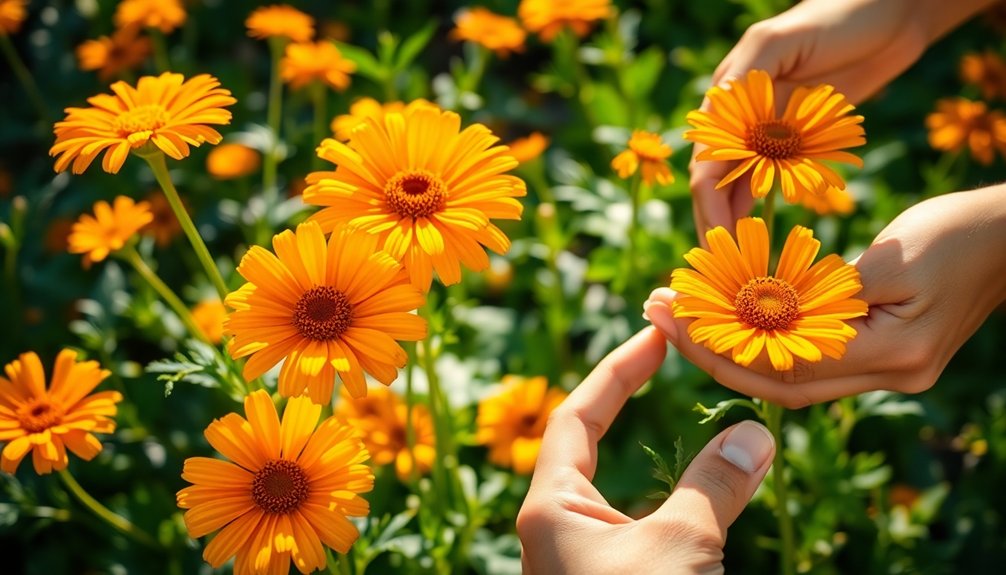
To harvest calendula for the best potency, pick fully open flower heads in the morning after the dew has dried. This guarantees you capture the highest concentration of medicinal resin. Aim to harvest every 2-3 days while the flowers are blooming to encourage more blossoms. Avoid collecting wilting or seed-forming flowers to maintain their medicinal value. Want to learn more about effective harvesting techniques and post-harvest care? Keep exploring!
Understanding Calendula’s Potency
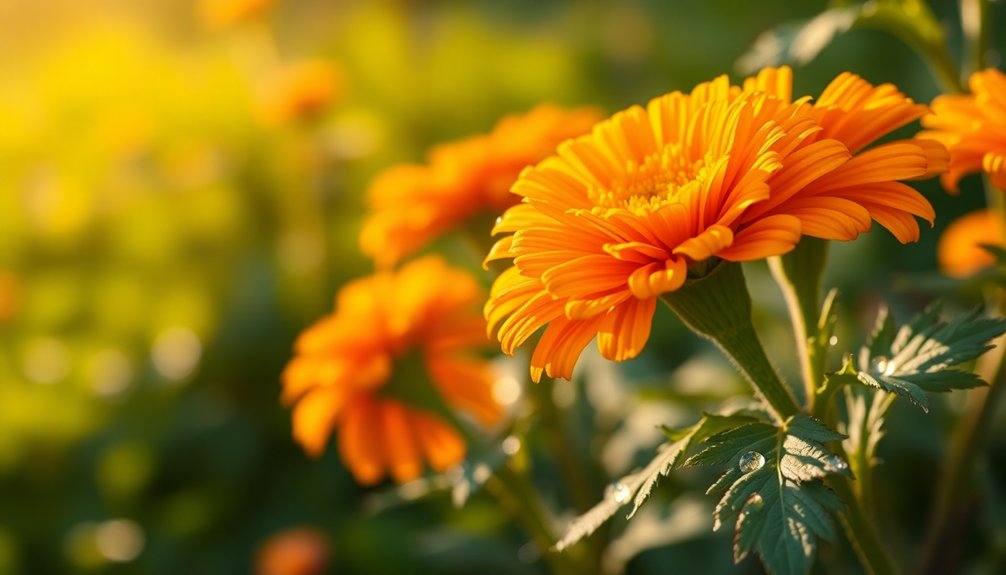
Understanding the potency of calendula is vital for anyone looking to harness its medicinal benefits. To achieve this, you should harvest the young flower heads in the morning, after the dew has dried. This timing guarantees maximum resin concentration, which is critical for ideal use.
Focus on fully open flowers, avoiding those that are drying or forming seeds, as they lack potency. The sticky resin is a clear indicator of higher medicinal value. By harvesting every 2-3 days, you encourage continuous blooming, enhancing both the potency and yield of your calendula plants.
Don’t overlook the green pedestal of the flower, as it contains potent antifungal properties that further contribute to the overall efficacy of your calendula preparations.
Ideal Harvesting Conditions
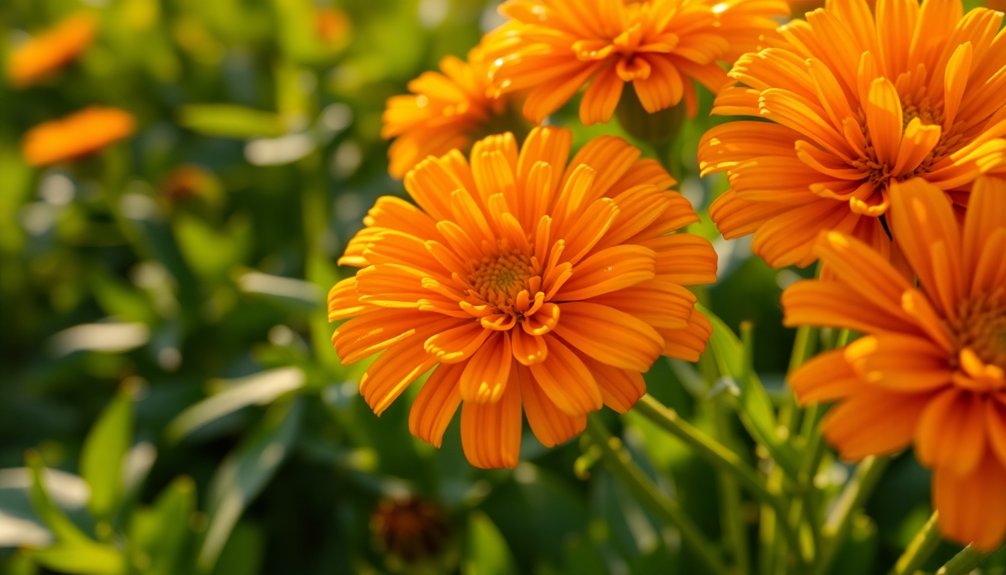
To maximize the potency of your calendula harvest, it’s important to contemplate the ideal conditions for gathering flowers. Aim to harvest calendula in the morning after the dew has dried. This timing guarantees maximum potency and prevents moisture that could lead to mold during drying.
For ideal harvesting, choose flower heads that are fully open and vibrant, as they contain the highest concentration of medicinal oils. Cut flower heads at the base where they meet the stem to preserve these valuable oils.
To encourage continuous blooming, harvest every 2 to 3 days, avoiding any heads that are drying or forming seeds.
Finally, remember to leave some flowers for pollinators, balancing your needs with ecological considerations.
Timing Your Harvest
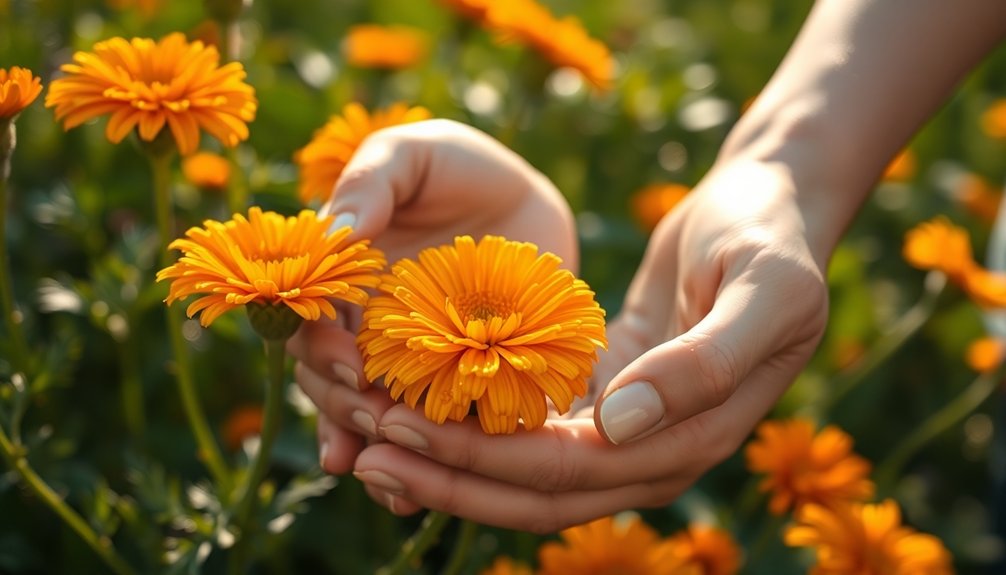
Harvesting calendula at the right moment is essential for ensuring the flowers retain their medicinal potency. Aim to collect the flower heads when they’re in full bloom, ideally in the morning after the dew has dried. This timing maximizes the concentration of medicinal compounds.
During peak bloom, you should harvest every 2 to 3 days to encourage the plant to produce more flowers throughout the flowering season. Focus on fully open flower heads for best use, as these contain the highest potency.
Avoid collecting flowers that are drying or forming seeds, as their medicinal value diminishes. Remember to leave some blooms for pollinators while still harvesting enough to meet your needs.
Best Practices for Harvesting
When you’re ready to gather calendula flowers, following some best practices can considerably enhance the quality of your harvest.
To guarantee you get the most potent and medicinal benefits, keep these tips in mind:
- Harvest in the morning after the dew has dried for maximum resin content.
- Collect flower heads that are fully open, as they contain the highest beneficial compounds.
- Regularly harvest every 2 to 3 days during peak bloom to promote continuous flowering.
- Use sanitized scissors or pinch the young flowers off at the stem base to avoid damaging the plant.
- Prioritize fresh, young flowers, steering clear of those that are wilting or forming seeds.
Parts of the Plant to Harvest
When you’re harvesting calendula, focus solely on the flower heads, as they hold the most medicinal power.
It’s best to pick them when they’re fully open, ideally after the morning dew has dried.
Use scissors or pinch them off at the base for the best results.
Flower Heads Only
The flower heads of calendula are the most potent parts of the plant, packed with medicinal properties that make them highly sought after. To guarantee maximum potency, you should harvest the flower heads when they’re fully open and before the petals begin to drop.
Regularly harvesting every 2 to 3 days encourages the plant to produce more blooms, enhancing your yield throughout the season. Use sanitized scissors or your fingers to carefully cut or pinch the flower heads at their base for best results.
- Focus on flower heads for their high medicinal value.
- Avoid harvesting foliage unless necessary.
- Aim for culinary uses when possible.
- Harvest at the right time for maximum effectiveness.
- Enjoy the benefits of your freshly harvested flowers!
Harvesting Techniques Explained
After focusing on the potent flower heads, it’s important to understand the best harvesting techniques for calendula. You should only harvest the flower heads, as they contain the highest concentration of medicinal properties.
Collect them when they’re fully open, ideally in mid-morning after the dew has dried to maximize potency. Use sanitized snips or your fingers to gently remove the flower heads at the base, leaving some blooms for pollinators and continued flowering.
Avoid harvesting flowers that are starting to dry out or going to seed, as they’ll have diminished potency. To encourage ongoing growth, regularly harvest every 2 to 3 days during peak bloom.
This way, you’ll maintain the health of your calendula plants while maximizing your harvest.
Encouraging Continuous Blooming
To keep your calendula blooming continuously, you should harvest the flowers every 2 to 3 days during their peak blooming season. Regular harvesting stimulates the plant to produce more flowers.
Don’t forget to deadhead spent blooms; removing wilting flowers redirects the plant’s energy toward new growth.
- Harvest in the morning after the dew has dried to preserve flower oils.
- Leave some flowers for pollinators to support the ecosystem.
- Guarantee proper spacing of 8 to 12 inches between plants for adequate air circulation.
- Monitor plant health to maintain vigorous growth.
Enjoy a vibrant display of calendula flowers throughout the blooming season by following these practices.
Post-Harvest Care
Once you’ve harvested your calendula flowers, it’s crucial to bring them indoors quickly and shield them from direct sunlight to safeguard their potency and medicinal properties.
Spread the flower heads in a single layer on drying racks or screens in a well-ventilated area. This allows good airflow during the drying process, preventing mold growth.
You’ll want to monitor the drying process closely, turning the flowers occasionally to promote even drying and check for any signs of moisture or pests.
Make sure the calendula flowers are completely dry before storing them in air-tight containers.
Label and date these storage containers to track the harvest year and guarantee you use the dried calendula within a year for maximum potency.
Storing Harvested Calendula
Once you’ve harvested your calendula, proper storage is essential to keep its potency intact.
You’ll want to make certain the flowers are completely dry before placing them in airtight containers, like glass jars, stored away from light and humidity.
Regularly check for pests or moisture to maintain the quality of your herbs over time.
Proper Storage Techniques
Proper storage techniques are essential for maintaining the potency of your harvested calendula flowers. To guarantee your dried petals retain their quality, follow these guidelines:
- Store dried calendula in airtight containers, like glass jars.
- Make sure blooms are 100% dry before storage to prevent mold growth.
- Label and date all containers to track freshness.
- Keep your stored calendula in a dark, cool cupboard to preserve medicinal properties.
- Regularly inspect stored calendula for any signs of pests.
Pest Prevention Methods
To keep pests at bay while storing your harvested calendula, it’s crucial to implement effective prevention methods.
First, verify your calendula is completely dry; moisture can attract pests and lead to mold. Store your dried calendula in airtight glass jars to maintain potency and reduce pest risks.
It’s beneficial to place bay leaves in your pantry to deter pantry moths and basil leaves to repel flying insects like gnats. Regularly inspect flowers for any signs of pests, and don’t forget to rotate herbs annually to promote freshness.
Keep your storage areas clean and dry, as a well-maintained environment is key to preventing pests in your stored calendula.
Conclusion
In the golden glow of early morning, as dew clings to the vibrant petals, you’ll know it’s time to harvest your calendula. By timing your harvest just right and following best practices, you’ll capture the plant’s full potency, transforming your garden’s bounty into healing treasures. Picture the sun-drenched blooms in your hands, ready to soothe and invigorate. With care and attention, you’ll preserve their magic, turning each dried petal into a whisper of summer’s warmth.