 0
0
 0
0
Cleaning mildew from your air ducts is essential to improve your air quality and protect your family’s health. Start by gathering protective gear like an N95 mask and gloves. Turn off your HVAC system, then use a HEPA vacuum to remove dust and mildew. A bleach-water solution or vinegar can be an effective cleaner. To prevent future mildew growth, keep humidity below 60% and guarantee proper ventilation. If you want to discover more about maintaining a healthy indoor environment, keep going.
Why Cleaning Mildew From Air Ducts Is Essential for Health
When you neglect to clean mildew from your air ducts, you expose yourself and your family to harmful spores that can lead to serious respiratory issues.
Regular air duct cleaning is essential for maintaining good indoor air quality and reducing health risks, especially for those with respiratory problems like asthma.
Mildew thrives in humid environments, so controlling moisture is vital for mold prevention.
Clean air ducts enhance the efficiency of your HVAC systems, which can lower energy consumption and utility bills.
Additionally, a thorough cleaning eliminates unpleasant musty odors that indicate poor air quality.
Implementing effective financial management practices can also help you budget for regular maintenance, ensuring a healthier living environment.
Detecting Mildew and Mold in Your Air Ducts
How can you tell if mildew or mold is lurking in your air ducts? Start by paying attention to musty odors, which often indicate hidden growth.
During your inspection, look for visible mold spots around vents and ductwork. Increased allergy-like symptoms, such as sneezing and coughing when your HVAC system runs, may suggest that airborne mold spores are circulating through the ducts.
Using a flashlight can help you detect mold in hard-to-reach areas. If you suspect contamination, consider using mold testing kits to confirm the presence of mold spores. Additionally, maintaining accurate financial records can help you budget for professional cleaning services if needed.
Step-by-Step Guide to Cleaning Mildew From Air Ducts

Once you’ve detected the presence of mildew or mold in your air ducts, it’s important to take immediate action to clean it.
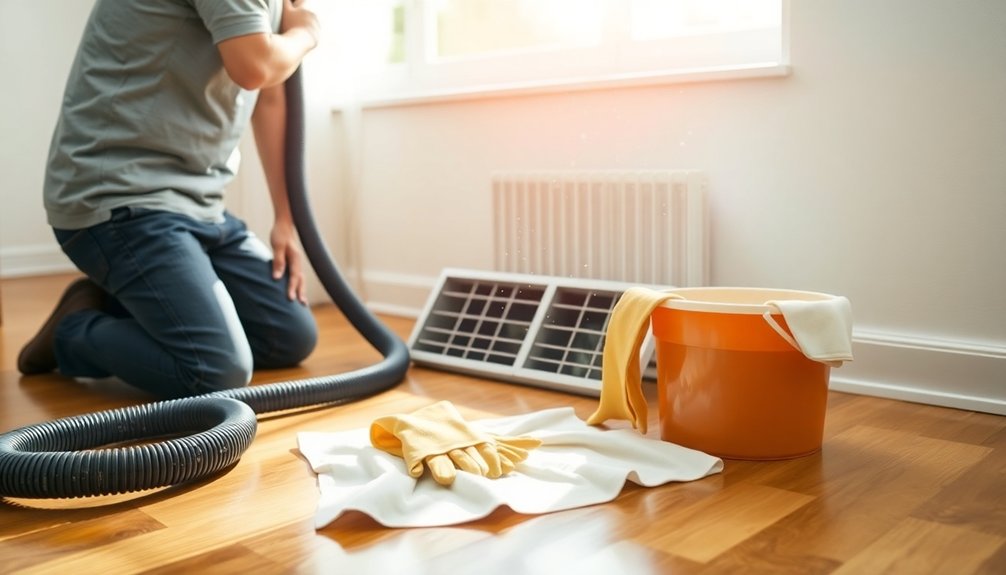
Start by gathering protective gear, including an N95 mask, gloves, and goggles.
Next, turn off your HVAC system to prevent spores from spreading.
Turning off your HVAC system is crucial to prevent the spread of mold spores during cleaning.
Use a HEPA vacuum to remove loose dust and visible mildew from the ductwork.
Prepare a cleaning solution, like a bleach-water mix or white vinegar, to scrub the affected areas.
After cleaning, apply mold inhibitors to prevent future growth.
Finally, regularly check and replace your air filters every 1-3 months to reduce humidity and minimize dust accumulation, which helps maintain better air quality in your home. Additionally, consider using materials that support sustainable practices to further enhance your home’s eco-friendliness.
Preventing Future Mildew Growth in Ducts
To keep mildew from growing in your air ducts, you need to monitor indoor humidity levels and schedule regular HVAC maintenance. Keeping humidity below 60% will greatly reduce the chances of mildew taking hold. Additionally, implementing automated payment solutions for regular HVAC maintenance can ensure timely servicing and help maintain optimal indoor air quality.
Monitor Indoor Humidity Levels
Maintaining ideal indoor humidity levels is essential for preventing mildew growth in your air ducts. Aim to keep humidity below 60%, as high humidity creates a perfect breeding ground for mildew.
To monitor indoor humidity levels effectively, use a hygrometer to track real-time data and take action before conditions worsen. Incorporating dehumidifiers in moisture-prone areas like basements and bathrooms can drastically reduce humidity.
Additionally, guarantee proper ventilation and air circulation throughout your home to avoid stagnant air that fosters mildew growth. Address any leaks or water damage promptly, as even small moisture sources can lead to significant humidity issues.
Regular HVAC Maintenance Schedule
Establishing a regular HVAC maintenance schedule is essential for preventing future mildew growth in your ducts. Aim for a thorough cleaning and inspection every 3-5 years, particularly in humid climates.
Replace air filters every 1-3 months to minimize dust and allergens that can trap moisture. Seasonal inspections should focus on identifying leaks and standing water, which can lead to mildew.
Utilize exhaust fans in moisture-prone areas like bathrooms and kitchens to enhance ventilation and lower humidity levels. Additionally, consider using a dehumidifier to keep indoor humidity below 60%.
The Benefits of Professional Air Duct Cleaning Services
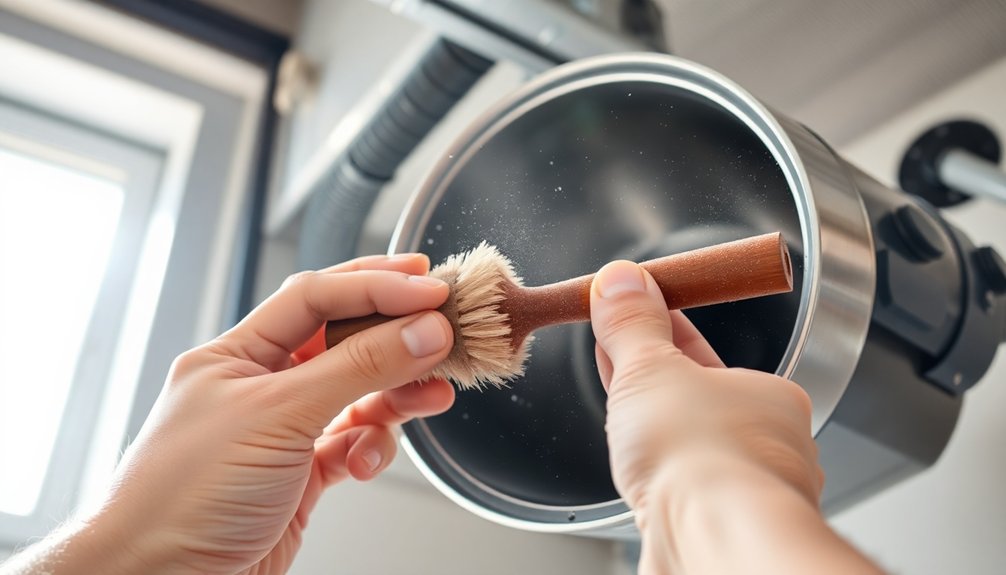
When you invest in professional air duct cleaning services, you’re not just enhancing the air quality in your home; you’re also safeguarding your family’s health.
These experts utilize specialized equipment, like HEPA vacuums, to effectively remove dust, allergens, and mildew, which can greatly improve air quality. They focus on mold removal and can identify underlying issues, such as leaks or poor ventilation, to prevent future mold problems, especially in humid environments.
Regular professional cleaning every 2-3 years helps maintain HVAC efficiency and lowers energy bills. By using eco-friendly cleaning agents, you provide a safe environment while enhancing respiratory health by reducing allergens. Additionally, prioritizing regular reviews of air quality can lead to better long-term health outcomes.
Prioritizing these preventive measures creates a healthier home for you and your loved ones.
Tips for Maintaining Clean Air Ducts and Air Quality
To keep your air ducts clean and guarantee good air quality, regular maintenance is essential.
Start by changing your air filters every 1–3 months to minimize dust and mold spores, which improves air quality.
Regularly changing your air filters every 1–3 months helps reduce dust and mold, enhancing your indoor air quality.
Maintain indoor humidity below 60% to prevent mold growth; using dehumidifiers and making sure proper ventilation can help.
Schedule professional HVAC inspections every 2–3 years to address your air duct cleaning needs and thoroughly remove contaminants.
For DIY cleaning, apply antimicrobial cleaners to kill mildew and prevent regrowth.
Finally, ensure your ductwork is properly sealed and insulated to reduce humidity and avoid moisture accumulation that encourages mildew development. Additionally, consider sustainable delivery practices to minimize your overall environmental impact while maintaining your home’s air quality.
Conclusion
In summary, tackling mildew in your air ducts is essential for maintaining a healthy living environment. By following the steps outlined, you can effectively clean and prevent future growth, ensuring your air quality remains pristine. Remember, as the great philosopher Socrates once proclaimed, “An unexamined life is not worth living,” so take the time to examine your ducts regularly. With a little effort, you’ll breathe easier and enjoy a fresher home.