 0
0
 0
0
If you want to stop your kids from relying on baby food pouches, focus on introducing whole foods. Encourage self-feeding with finger foods to build fine motor skills and expose them to various textures and flavors. Set limits on pouch use—save them for travel or busy days. Try homemade purees using fresh ingredients without added sugars. Not only will this provide better nutrition, but it could also pave the way to healthier eating habits in the future. There’s more to discover!
Understanding the Appeal of Baby Food Pouches
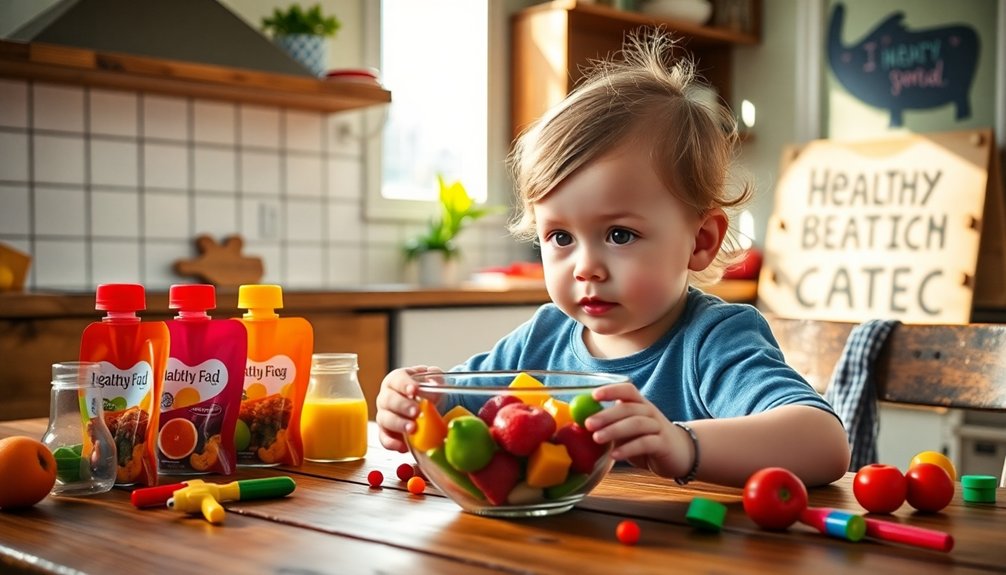
Baby food pouches have taken the market by storm, and it’s easy to see why. For parents, the convenience of these portable pouches is unmatched. They’re non-shatterable, making them perfect for on-the-go feeding, and toddlers can easily self-feed, which is a huge win for busy families.
Many pouches are marketed as organic and contain pureed food made from fruits and vegetables, appealing to health-conscious parents. With a significant number of pouches filling baby food aisles—over 25% of shelf space—it’s clear they’re favored over traditional jarred options.
Plus, the widespread popularity is reflected in the staggering $466 million spent annually by average American families on baby food pouches. It’s no wonder they’ve become a staple in many households. Additionally, the environmental impact of sustainable packaging solutions is an important consideration as parents seek to make eco-friendly choices.
Nutritional Drawbacks of Relying on Pouches
While the convenience of baby food pouches is undeniable, relying on them too heavily can pose significant nutritional drawbacks for your child. Many pouches contain high amounts of natural sugars, with some having added sugars, which can lead to unhealthy eating habits.
This overreliance may result in nutritional deficits, as pouches often lack essential nutrients like iron-rich protein, zinc, and healthy fats vital for growth. In addition, relying on these smooth purees can hinder your child’s oral motor skills development, limiting their exposure to varied textures and potentially leading to texture aversions.
Prioritizing fruits and vegetables in their diet is essential for supporting children’s health and preventing inadequate nutrient intake that can affect their immune system and overall well-being. Moreover, conscious consumerism encourages parents to choose nutritious, whole food options over processed alternatives like pouches.
The Impact on Developmental Skills

Relying on baby food pouches can greatly impact your child’s developmental skills. When kids eat from pouches, they miss out on practicing spoon-feeding and grasping solid foods, which are crucial for fine motor skills.
This passive experience limits sensory engagement, preventing them from exploring various textures, flavors, and colors. Without exposure to diverse textures, kids may struggle with chewing skills and oral motor development, relying instead on smooth purees.
Additionally, excessive pouch consumption can lead to picky eating habits, making it harder for them to appreciate complex foods later on. To foster healthy eating habits, it’s essential to encourage your child to engage with solid foods and develop the necessary skills for lifelong nutrition. Furthermore, promoting enhanced accuracy and organization in meal preparation can assist parents in better managing their child’s dietary needs.
Encouraging a Diverse Diet With Whole Foods
To foster a diverse diet and reduce reliance on baby food pouches, it’s vital to introduce your child to a wide range of whole foods. Start with vegetables, fruits, grains, and proteins to enhance their palate.
Early exposure to various textures, especially lumpy foods after 10 months, can help combat texture aversions and improve acceptance of solid foods by age 15 months. Whole foods deliver essential nutrients like iron and zinc, often missing in pouches, which can lead to picky eating habits. Additionally, incorporating expense tracking tools can help parents manage their grocery budgets while ensuring they provide healthy options for their children.
Involving Kids in Meal Preparation

Getting your kids involved in meal prep can spark their interest in trying new foods. By exploring food choices together and letting them take on hands-on cooking tasks, you’ll encourage them to develop a taste for different textures and flavors. Plus, it’s a fun way to build their confidence and skills in the kitchen! Additionally, fostering financial awareness through meal planning can help teach them the value of budgeting and making informed choices.
Encourage Hands-On Cooking
Involving your kids in meal preparation can be a game changer for their relationship with food. Engaging children in cooking activities helps enhance their fine motor skills while fostering independence and confidence in the kitchen.
When they participate, they’re more likely to try new foods, reducing picky eating habits. These hands-on experiences create meaningful sensory moments, allowing them to explore textures, colors, and flavors that baby food pouches often lack.
Cooking together strengthens family bonds and instills healthy eating habits, teaching kids about the importance of whole foods over processed options.
Ultimately, this involvement encourages healthier options and nurtures an understanding of balanced diets, leading to improved long-term dietary habits for your family.
Explore Food Choices Together
When you explore food choices together with your kids, you open the door to a world of flavors and textures that can transform their eating habits.
Involving children in meal preparation enhances their understanding of nutrition, encouraging them to make healthy choices. As they help with cooking, they develop fine motor skills and coordination, fostering independence during mealtime.
Research shows that kids who participate in the kitchen are more likely to try new foods and prefer healthier options, reducing their reliance on baby food pouches.
Strategies for Reducing Pouch Dependency
To help your child move away from pouch dependency, you can start by promoting solid food exploration and establishing clear limits on pouch usage.
Encourage active engagement during mealtime by introducing finger foods and allowing your child to self-feed. Additionally, consider implementing a personalized spending plan to manage your grocery budget effectively while trying out new foods.
Promote Solid Food Exploration
Encouraging your child to explore solid foods is essential for their development and can help reduce reliance on baby food pouches. Offer a variety of whole foods with different textures and flavors at mealtimes to develop their chewing skills.
Introduce lumpy foods around 10 months to prevent texture aversions and support taste preferences. Make mealtimes messy and exploratory; these experiences are crucial for sensory development, helping your child differentiate flavors they might miss with pouches.
Monitor pouch consumption to limit sugars, as many pouches contain high sugar levels that can lead to unhealthy eating patterns.
Establish Pouch Limits
While baby food pouches can be convenient, it’s important to establish limits to prevent your child from becoming too dependent on them. Set clear guidelines for pouch consumption, using them only during travel or outings.
This encourages your little one to explore a variety of solid foods and textures at home, fostering healthy eating habits. Monitor pouch intake to guarantee they don’t replace nutrient-rich whole foods in their diet, aiming for a balanced approach.
Introduce messy, exploratory eating experiences to help your child learn about different food textures. Gradually reduce pouch usage by incorporating homemade purees and snacks, allowing better control over ingredients and nutritional content.
With these strategies, you can cultivate a healthier relationship with food.
Encourage Active Mealtime Engagement
Creating an engaging mealtime environment can greatly reduce your child’s reliance on baby food pouches. Start by encouraging self-feeding with a variety of solid foods that promote fine motor skills and help them learn to chew.
Limit pouch use to specific situations, like travel, to expose them to different textures and flavors during regular meals. Foster exploratory eating by allowing messy experiences that enhance their sensory skills.
Gradually introduce a range of textures and flavors to prevent picky eating and nurture healthy food preferences. Get your child involved in meal preparation, letting them see, smell, and touch the ingredients.
This active engagement can spark their interest in trying new foods, reducing their dependency on pouches.
Homemade Puree Recipes for Young Children
Making homemade purees for your young children can be a fun and rewarding experience that gives you complete control over what they eat. By using fresh ingredients, you guarantee their meals are free from added sugars and fillers.
Try simple recipes like sweet potatoes and apples, which pack essential nutrients without excessive sugar. Preparing these cost-effective homemade purees not only saves money but also allows for easy portioning and storage. Freeze them in ice cube trays for quick meal options.
Additionally, introducing a variety of textures and flavors helps develop your child’s palate, reducing the chances of picky eating habits. With homemade purees, you can create nutritious meals tailored to your child’s tastes and needs. Furthermore, incorporating budgeting apps into your meal planning can help track food expenses effectively.
Balancing Convenience and Nutrition
Though baby food pouches can be a lifesaver for busy parents, relying on them too heavily can compromise your child’s nutrition. Many baby food manufacturers market their pouches as organic or “all natural,” but 58% contain added sugars, raising health implications.
Overusing these pouches may lead to nutritional deficits and make your child develop texture aversions to solid foods. To strike a balance, limit pouch use to travel or hectic days and prioritize introducing fresh, whole foods at home. This approach helps guarantee your child receives essential nutrients while exploring a variety of textures and flavors. By integrating nutritious options into their diet, you can maintain the convenience of pouches without sacrificing your child’s health and development. Additionally, monitoring progress in your child’s dietary habits can support their overall nutritional health and development.
Making Mealtime Interactive and Engaging
While mealtime can often feel like a race against the clock, turning it into an interactive and engaging experience is vital for your child’s development.
Encourage self-feeding with solid foods to help them develop fine motor skills and coordination. Allowing your child to explore different textures and flavors enhances their sensory experiences and promotes a healthy relationship with food.
Interactive meals, where they can make messes and try various foods, lead to better acceptance of diverse flavors. Avoid passive eating habits by presenting meals playfully, which keeps children engaged.
This participation helps them learn important skills like chewing and swallowing, essential for speech development. Incorporating personalized recommendations for diverse food options can further enhance their mealtime experience. Make mealtime a fun adventure, and watch your child flourish!
Conclusion
By prioritizing whole foods and involving your kids in meal prep, you can help them break free from the pouch dependency. Did you know that children who regularly engage in cooking are 40% more likely to try new foods? Making mealtime interactive not only boosts their nutritional intake but also fosters essential developmental skills. Embrace the challenge of reducing pouches, and watch your little ones thrive with diverse and wholesome meals that they’re excited to eat!