
 0
0
 0
0
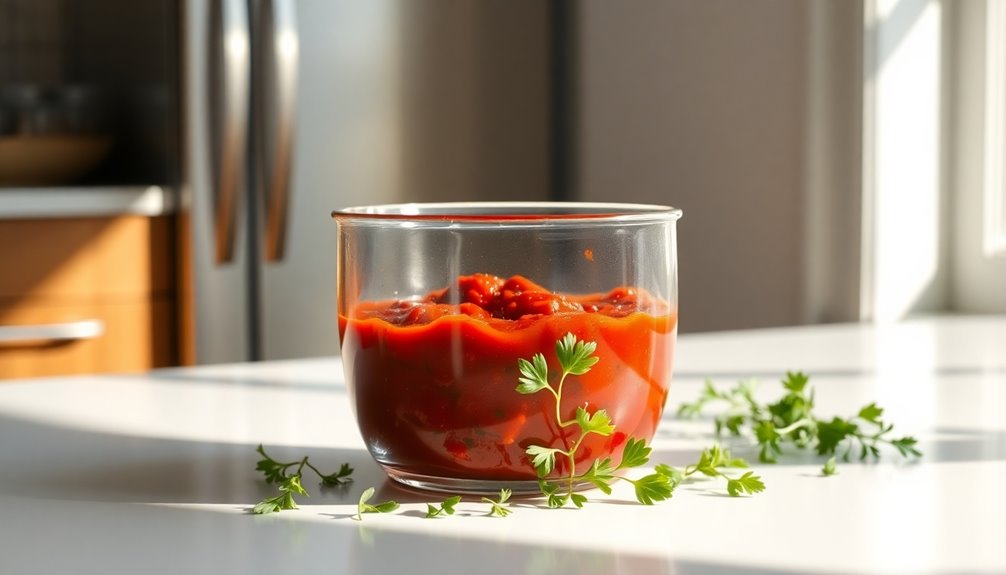
You should consume meat sauces within 3 to 4 days when stored in the fridge to prevent harmful bacteria from growing. Always refrigerate leftovers within 2 hours of cooking, or 1 hour if it’s over 90°F. If you don’t plan to eat your sauce within that timeframe, freezing it is a safe option for longer storage. Keep an eye on signs of spoilage, and there are more tips to guarantee your leftovers stay safe and tasty.
Understanding the Meat Sauce Rule: What It Means for Leftovers

When it comes to leftovers, understanding the Meat Sauce Rule is crucial for keeping your meals safe to eat. This rule suggests you should consume meat sauces within 3 to 4 days when stored in the fridge.
After 4 days, the risk of bacterial growth rises considerably, even if the sauce looks and smells fine. To guarantee safety, always reheat meat sauce to an internal temperature of at least 165°F (74°C).
If you can’t eat it within that timeframe, freezing is your best bet; it stays safe indefinitely but is best consumed within 3 to 4 months.
Also, remember to refrigerate leftovers within 2 hours of cooking to prevent them from entering the danger zone where bacteria thrive. Additionally, regular maintenance of food storage practices ensures the safety and longevity of your leftovers.
How Long Can You Safely Keep Leftovers in the Fridge?

To keep your leftovers safe and enjoyable, it’s important to know that they can typically be stored in the fridge for just 3 to 4 days. After this timeframe, the risk of food poisoning increases considerably. Make sure to refrigerate perishable foods within 2 hours, or within 1 hour if the temperature exceeds 90°F (32°C). Meat leftovers, like cooked ground beef or poultry, should also be consumed within this 3 to 4-day window. If you won’t eat the leftovers in time, consider freezing them, where they can last for several months. To minimize waste, planning meals in advance can help ensure that leftovers are utilized effectively.
Signs Your Leftovers Are No Longer Safe to Eat

Understanding the signs that your leftovers are no longer safe to eat is essential for avoiding foodborne illnesses.
First, check for changes in color or texture; if it looks different than when you stored it, it might be time to toss it. Mold is another clear indicator—if you see any, don’t take the risk.
Check for any changes in color or texture, and discard if you notice mold—better safe than sorry.
Also, pay attention to off-putting odors; a sour or unusual smell means bacteria could be present.
Remember, if your leftovers have been left out at room temperature for more than 2 hours (or 1 hour above 90°F), discard them immediately.
Bacteria multiply quickly in the danger zone, so when in doubt, it’s always safer to err on the side of caution and throw the food away. Additionally, implementing frugal recipes can help you minimize waste by using up leftovers creatively.
The Importance of Proper Storage for Leftovers
Properly storing your leftovers is essential for keeping them safe and tasty. To guarantee food safety, refrigerate your leftovers within two hours of cooking. This helps to prevent bacterial growth in the danger zone between 40°F and 140°F.
Wrap your leftovers well to avoid contamination, and use airtight containers to maintain freshness. Remember, different foods have varying shelf lives; meat leftovers are usually safe for 3 to 4 days, while starches and veggies can last up to two weeks. If you want to extend their life, freezing is an effective option, keeping food at 0°F indefinitely, though quality is best within 3 to 4 months. Always discard perishables left at room temperature for over 2 hours. Using expense tracking apps can also help manage your food budget effectively while ensuring you make the most of your groceries.
Best Practices for Refrigerating Leftover Meat Sauce
When you make a delicious meat sauce, it’s crucial to handle it correctly to guarantee your safety and enjoyment.
Cool the sauce rapidly after cooking and refrigerate it within 2 hours to prevent bacterial growth. Store your meat sauce in airtight containers to maintain food quality and protect it from contamination by other items in the fridge.
Remember that leftover meat sauce is safe for up to 3 to 4 days. When you’re ready to enjoy it again, reheat the sauce to an internal temperature of 165°F (74°C) to confirm it’s safe to eat. Additionally, if you have leftover onions from your meal preparation, properly store cut onions to prevent waste and extend their freshness.
If you don’t plan to consume the sauce within that timeframe, think about freezing it for longer storage without compromising quality.
How to Freeze Leftovers for Extended Freshness
After savoring your meat sauce, you might’ve some leftovers that you want to save for later.
Freezing is a great way to extend your food’s freshness. Follow these tips for freezing leftovers effectively:
Freezing helps keep your food fresh longer; follow these tips for effective leftover storage.
- Cool leftovers rapidly before freezing.
- Use airtight containers or heavy-duty freezer bags to prevent freezer burn.
- Label each container with the date and contents for easy tracking.
- Keep frozen leftovers for 3 to 4 months for best quality.
- Remember to reheat leftovers to an internal temperature of 165°F (74°C) after thawing. Additionally, freezing half and half can also help you avoid waste if you have leftover cream-based sauces.
Thawing Frozen Leftovers: What You Need to Know
Thawing frozen leftovers requires careful attention to guarantee food safety and quality. You can safely thaw your leftovers using one of three methods: in the refrigerator overnight, in cold water in a leakproof container, or in the microwave if you plan to reheat them immediately.
Never thaw frozen food at room temperature, as this allows bacteria to grow in the danger zone between 40°F and 140°F. If you choose the cold water method, change the water every 30 minutes to make sure it stays cold and the food thaws evenly. Vacuum sealing can also help extend shelf life, ensuring your leftovers remain fresh longer before freezing.
Reheating Leftovers Safely: Guidelines to Follow
When you’re reheating leftovers, aim for an internal temperature of 165°F (74°C) to guarantee safety. Remember to stir the food while heating to keep it evenly warmed throughout. If you’ve got frozen leftovers, thaw them correctly before reheating to avoid any safety issues. Additionally, using eco-friendly practices in your kitchen can help maintain a healthier cooking environment.
Ideal Reheating Temperature
To guarantee your leftovers are safe to eat, it’s crucial to reheat them to an internal temperature of 165°F (74°C). This ideal reheating temperature helps eliminate harmful bacteria.
Here are some tips to make sure your food is safely reheated:
- Use a food thermometer to check the temperature accurately.
- Stir food while reheating for even heating and to eliminate cold spots.
- Avoid slow cookers, as they may not heat food quickly enough.
- Fully thaw frozen leftovers using the microwave, fridge, or cold water before reheating.
- Trust food safety over visual cues; appearance and smell don’t guarantee safety.
Thawing Methods Explained
While it might seem tempting to cook leftovers straight from the freezer, using safe thawing methods is crucial for maintaining food safety.
To thaw frozen leftovers safely, you can place them in the refrigerator overnight, use cold water in a leakproof container, or opt for the microwave. If you choose the microwave method, remember to cook the food immediately afterward to avoid any bacterial growth.
Always verify that your leftovers reach an internal temperature of 165°F (74°C) during reheating. Avoid using slow cookers for this purpose, as they may not heat food quickly enough.
Understanding these thawing methods explained will help you enjoy your leftovers without compromising your health.
Stirring for Even Heating
Stirring your leftovers during reheating not only guarantees even heating but also minimizes the risk of cold spots where bacteria can thrive.
To confirm your food reaches a safe internal temperature of 165°F (74°C), keep these tips in mind:
- Use a food thermometer to check the internal temperature.
- Stir food frequently for even heat distribution.
- Avoid using slow cookers for reheating; they can’t raise the temperature quickly enough.
- Make sure frozen leftovers are fully thawed before reheating.
- Trust your thermometer; visual and olfactory cues aren’t reliable indicators of safety.
Common Myths About Leftovers and Food Safety
You might think that leftovers are always safe as long as they look and smell fine, but that’s a dangerous myth.
Bacteria can grow even in seemingly perfect food, especially after a few days in the fridge.
It’s essential to know the facts about food safety to keep yourself healthy. Regularly check track alignment of your leftovers to ensure they’re stored safely and consumed within the recommended time frame.
Leftovers Are Always Safe
Many people believe that leftovers are always safe to eat, but that’s a dangerous misconception. Perishable foods can harbor bacteria even when they look and smell fine.
To stay safe, keep these tips in mind:
- Refrigerate leftovers within 2 hours of cooking.
- Enjoy them within 3 to 4 days.
- Reheat to an internal temperature of 165°F (74°C) to kill bacteria.
- Don’t rely on taste or smell; they can be misleading.
- When in doubt, throw it out.
Understanding that not all leftovers are safe indefinitely can help you avoid foodborne illnesses.
Be cautious and follow these guidelines to make sure your meals remain healthy and enjoyable!
Smell Determines Food Safety
Relying on smell to determine the safety of leftovers is a common misconception that can lead to foodborne illnesses.
While you might think that a foul odor indicates spoiled food, remember that harmful bacteria can thrive without producing any noticeable smells. This means that just because your leftovers smell fine doesn’t mean they’re safe to eat.
The USDA recommends discarding perishable leftovers after 3 to 4 days in the fridge, regardless of how they smell. When in doubt, it’s safer to toss the food than risk getting sick.
To keep your leftovers safe, practice proper food handling, including timely refrigeration and reheating to safe temperatures.
Don’t let the myth that smell determines food safety put your health at risk.
Tips for Avoiding Food Waste With Leftovers
To keep your fridge organized and minimize food waste, start by storing leftovers in airtight containers that lock in freshness and prevent spoilage. This method helps keep your food cold and guarantees they last up to 3-4 days.
Here are some tips to help you avoid waste:
- Regularly check your fridge for older leftovers and eat them first.
- Label containers with dates so you can track how long they’ve been stored.
- Freeze leftovers if you won’t eat them within 3-4 days; they can last months, extending shelf life up to six months without flavor loss.
- Get creative! Turn meat sauce into a pasta bake or use roasted veggies in a frittata.
- Plan meals around leftovers to make sure they get used up.
Following these tips can greatly reduce your food waste!
Expert Opinions on Leftover Safety: What Chefs Recommend
When it comes to guaranteeing your leftovers are safe to eat, expert opinions from chefs can provide valuable insights.
Most chefs recommend consuming leftovers within three to four days to minimize the risk of foodborne illness. They stress the importance of proper storage—leftovers should be chilled promptly after serving.
Consume leftovers within three to four days and ensure they are chilled promptly after serving to reduce foodborne illness risk.
Always reheat your leftovers to an internal temperature of 165°F to guarantee safety before eating. If you won’t finish leftovers within four days, freezing is the best option to maintain quality and safety.
Additionally, many culinary experts caution against relying solely on visual and smell cues; when in doubt, it’s best to discard questionable leftovers.
Following these guidelines can help you enjoy your meals safely.
Resources for Further Learning About Food Safety
Although you might feel confident about your food safety knowledge, there’s always more to learn. Staying informed can help you keep your food hot and safe.
Here are some excellent resources to enhance your understanding of food safety:
- USDA Food Safety Website: Offers guidelines on handling, storing, and reheating leftovers.
- FoodSafety.gov: A thorough portal for food safety tips and updates.
- National Restaurant Association: Provides food safety training materials.
- Centers for Disease Control and Prevention (CDC): Information on foodborne illnesses and prevention tips.
- Local Health Departments: Often offer workshops and resources tailored to your area.
Taking the time to explore these resources will help you stay safe and minimize risks with your leftovers.
Conclusion
In the world of leftovers, remember the meat sauce rule like a trusty compass guiding you through the fridge labyrinth. By keeping your leftovers safe and fresh, you can savor those delicious meals, just like a fine wine improves with age—up to a point, of course! So, embrace these tips to not only enjoy your culinary creations but also reduce food waste. After all, a well-stored leftover can be a treasure, not just a memory!




Average Rating