

 0
0
 0
0
You can easily create a week’s worth of meals for your family of four on a $100 budget. Focus on cheap staples like rice, beans, and oats while choosing versatile proteins like chicken. Plan inexpensive breakfasts, creative lunches, and budget-friendly dinners using leftovers. Don’t forget to take advantage of sales and coupons, and shop the perimeter of the grocery store for fresh produce. Keep going, and you’ll discover more tips and tasty recipes to stretch your budget further!
Budget-Friendly Meal Planning Strategies
When you plan your meals around your budget, you can stretch your grocery dollars further without sacrificing taste or nutrition. Focus on cheap grocery staples like rice, beans, and oats, which form the backbone of versatile meals throughout the week.
Take advantage of sales and seasonal produce to keep your meals fresh and exciting while reducing costs. Create a thorough grocery list to avoid impulse buys, ensuring you only pick up items that fit your meal planning.
Get creative with leftovers, transforming them into new dishes to minimize waste and maximize value. Finally, check out affordable grocery stores like ALDI or local salvage outlets, which can help you feed a family of four for under $100 a week. Additionally, utilizing expense management apps can aid in tracking your grocery spending and budgeting effectively.
Essential Grocery List for a Family of Four
Creating a grocery list tailored for a family of four means focusing on budget-friendly staples that keep meals varied and nutritious.
Start with rice, beans, and eggs, which are excellent bases for frugal meals. Add versatile proteins like chicken and ground beef, along with frozen vegetables to maximize meal options and minimize waste.
Begin with staples like rice, beans, and eggs for budget-friendly meals, then incorporate proteins and frozen veggies for variety.
Don’t forget affordable pantry items such as pasta, canned tomatoes, and peanut butter; these can stretch your budget while providing multiple meal solutions. Aim to spend around $100 for the week, taking advantage of sales and bulk buys at stores like ALDI. Additionally, consider using coupon codes to further reduce costs on your grocery purchases.
Finally, include snacks and breakfast items like oats, cereal, or fruit to guarantee your family stays satisfied throughout the week.
Breakfast Ideas That Won’t Break the Bank
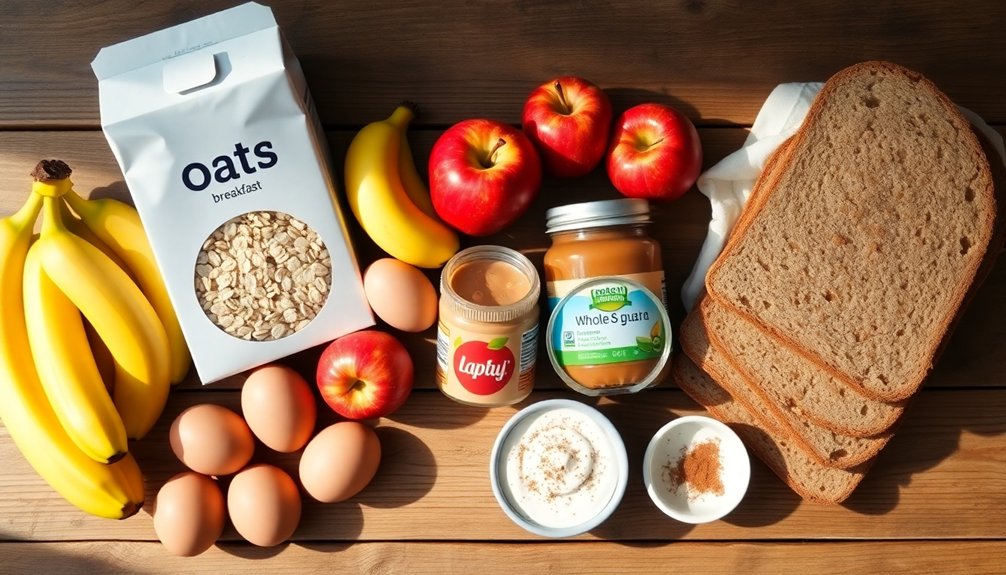
When you’re looking for budget-friendly breakfast ideas, you’ve got plenty of tasty options.
Oatmeal, eggs, and affordable bread are just a few staples that can keep your mornings satisfying without breaking the bank.
Many people find it helpful to use budgeting apps like YNAB (You Need a Budget) to manage their finances while planning meals!
Let’s explore some quick and easy recipes that make the most of these ingredients!
Affordable Breakfast Staples
Breakfast doesn’t have to be expensive to be delicious and satisfying. You can stock your grocery list with affordable breakfast staples that offer variety and nutrition without breaking the bank.
Oatmeal is a cost-effective choice; just $3 for a 42-ounce container gives you multiple servings. Eggs are another versatile option at around $3.98 for a dozen, perfect for scrambling or making breakfast burritos.
Whole grain toast, priced at $1.39 per loaf, pairs well with cheap food like peanut butter or jam. If you’re short on time, cereals can be found for $2 to $4, while bananas at $0.59 per pound provide a nutritious fruit option.
Enjoy these budget-friendly breakfasts all week!
Quick and Easy Recipes
Starting your day with a delicious and budget-friendly meal is easier than you think. For your meal plan, consider oatmeal topped with fruits or nuts for a nutritious breakfast that won’t cost much.
Scrambled or fried eggs, priced at about $0.33 each, also provide a filling protein option. Toast made from whole grain or sandwich bread serves as an affordable base, topped with peanut butter or jam for a satisfying meal under $1.
Cereal, especially when bought in bulk, is another economical choice, costing around $0.50 per serving with milk. Finally, grab a banana for just $0.20; it’s a healthy, quick option that pairs well with other items on your shopping list.
Affordable Lunch Options for Busy Days
When you’re short on time, affordable lunch options can save the day.
Utilize leftovers creatively, whip up quick meals with budget-friendly ingredients, and keep it simple with easy prep ideas. Incorporating budgeting apps into your meal planning can help you stay within your grocery budget while ensuring you have the ingredients needed for delicious lunches.
Let’s explore how you can make satisfying lunches without spending a fortune.
Quick Prep Ideas
Even on the busiest days, you can whip up affordable and satisfying lunches without breaking a sweat.
Start your meal plan by making quick PB&J sandwiches with whole grain bread and your favorite preserves. Quesadillas are another great option—just fill tortillas with cheese and any leftover proteins or veggies, then grill them for under 10 minutes.
For a snacky lunch, assemble cheese, pepperonis, hard-boiled eggs, and crackers for a balanced meal. Don’t forget about using last night’s dinner leftovers; repurpose them into salads or wraps.
For a rejuvenating touch, pack baby carrots and apple slices with peanut butter or hummus for dipping. Keep these ideas handy on your shopping list to streamline your week!
Leftover Utilization Tips
Repurposing dinner leftovers can be a game changer for busy days, turning what could be waste into delicious and affordable lunches.
Use leftover roasted chicken to whip up a hearty chicken salad or toss extra stir-fried veggies into a wrap or quesadilla. You can create “snacky lunches” that combine cheese, pepperonis, hard-boiled eggs, and crackers, making meals fun and filling while reducing waste.
Leftover rice or beans can transform into lunch bowls topped with fresh veggies and dressing for a quick option. Don’t forget to incorporate leftover pizza or pasta into dishes like pasta salad or pizza frittata.
Finally, designate a “leftover day” in your meal plan to maximize your ingredients and save on grocery costs.
Budget-Friendly Ingredients List
If you’re looking to keep your lunch budget-friendly without sacrificing flavor, consider incorporating a mix of versatile and affordable ingredients.
Start by planning your meals around leftovers from dinner; they save time and cut down on food waste. Classic PB&J sandwiches are a great option, costing around $5 for the week. You can also whip up quesadillas for less than $2 per serving, depending on your ingredients.
For variety, create a “snacky lunch” with cheese, pepperonis, hard-boiled eggs, crackers, and apples—all for under $10 weekly.
Don’t forget to add baby carrots and seasonal produce to your shopping list; they enhance nutrition while being budget-friendly.
This meal plan will keep your lunches delicious and economical!
Dinner Recipes for Frugal Families
Dinner recipes for frugal families don’t have to be bland or boring. You can whip up delicious meals while sticking to a budget.
Start with beans and rice bowls, costing around $1.50 per serving, or crispy chicken, bean, and rice burritos at about $2 each. For a fun twist, try pizza pasta—it’s filling and only $1.75 per serving!
Chicken Tetrazzini or spaghetti with veggies and French bread can be prepared for roughly $2.25, making it versatile and economical.
Another comforting option is creamed chicken over rice or toast, costing around $1.80.
These dinner recipes for frugal families are perfect for your weekly meal plans, ensuring you enjoy tasty dinners without breaking the bank. Additionally, utilizing budget apps can help you effectively manage your grocery expenses and track spending habits.
Creative Snack Ideas on a Budget
When you’re looking for budget-friendly snacks, you’ve got plenty of creative options. From DIY trail mix to homemade granola bars, you can whip up healthy treats without breaking the bank. Let’s explore some affordable ideas that’ll keep your cravings satisfied! Additionally, utilizing digital coupons can help you save even more on the ingredients you need for these snacks.
Affordable Homemade Snack Ideas
Snacking on a budget doesn’t have to mean sacrificing taste or nutrition. You can create affordable homemade snack ideas that are both delicious and cheap.
Start with homemade popcorn, which costs less than $1 for a large batch. Spice it up with herbs for variety!
Pair fruit slices like apples or bananas with peanut butter for a satisfying snack at just $0.50.
Yogurt parfaits with plain yogurt, frozen berries, and granola come in at under $2 each, offering a filling option.
Veggie sticks with homemade hummus, made from canned chickpeas, are a budget-friendly choice at about $1.50.
Customize trail mix with bulk nuts, seeds, and dried fruit for a tasty, portable snack at around $2 per serving.
Enjoy!
Healthy Snack Swaps
If you’re looking to make healthier choices without straining your budget, consider swapping out some common processed snacks for more nutritious options.
For instance, trade chips for air-popped popcorn, a whole grain that’s low in calories and can be seasoned to your liking.
Replace sugary granola bars with homemade energy bites using pantry staples like oats, peanut butter, and honey for a nutrient-dense treat.
Fresh fruits like apples or bananas can easily substitute candy bars, delivering natural sweetness and vitamins.
Instead of individual yogurt cups, buy a larger tub of plain yogurt to portion out with fruit or granola.
Finally, enjoy raw veggies like carrots with hummus instead of pricey pre-packaged trays for a crunchy, fiber-rich snack.
Budget-Friendly Snack Pairings
Creative snack pairings can transform your munching habits without breaking the bank. For a family of four, try pairing apple slices with peanut butter for a nutritious treat that costs under $1 per serving.
Hard-boiled eggs, made in bulk, offer a protein-rich option when combined with crunchy baby carrots. If you’re craving something savory, saltine crackers topped with cheese or pepperoni provide a satisfying snack for around $2.
Yogurt mixed with frozen berries creates a revitalizing dessert, costing approximately $1.50 per serving. Finally, whip up a homemade trail mix of oats, dried fruit, and nuts for about $2, delivering energy and essential nutrients.
These budget-friendly snack pairings will keep everyone happy and healthy!
Tips for Using Leftovers Effectively
Leftovers can be a lifesaver when it comes to both saving money and reducing food waste. To make the most of them, create a meal plan that intentionally produces leftovers, like a large batch of beans and rice.
Maximize savings and minimize waste by planning meals that generate delicious leftovers, like a hearty batch of beans and rice.
Store your leftovers in clear containers with labels and dates, ensuring they’re visible and used within a few days. Incorporate leftovers into your lunch options, such as turning leftover chicken into salads or sandwiches.
You can also toss leftover vegetables into omelets or stir-fries for added variety. Get creative by reheating and transforming leftovers; for example, use leftover pizza pasta as a filling for stuffed bell peppers or mix it into a casserole.
Additionally, consider using AI-driven tools to optimize your grocery list and ensure you’re purchasing only what you need, reducing the chances of leftovers going to waste.
These tips will keep your meals exciting and economical!
Maximizing Nutritional Value on a Budget
To maximize nutritional value on a budget, focus on incorporating a variety of affordable ingredients into your meals.
Start by creating a meal plan that features seasonal produce, like fresh apples and frozen broccoli, to guarantee you’re getting essential vitamins while saving money.
Legumes such as black beans and lentils are great for adding protein and fiber without breaking the bank. Whole grains like brown rice and oatmeal will keep your energy levels up throughout the day.
Incorporate versatile ingredients like eggs and chicken to stretch your meal options further. Additionally, consider using budgeting tools like expense tracking to help manage your grocery spending effectively.
Finally, compile a shopping list based on your meal plan to make certain you stick to your budget while maximizing nutrition for the week ahead.
Grocery Shopping Tips for Saving Money
With a solid meal plan in place, you’re well on your way to eating healthy without overspending.
Stick to your shopping list to avoid impulse purchases, which can save you up to 20% on your grocery bill.
Sticking to your shopping list can help you save up to 20% on your grocery bill by preventing impulse purchases.
Take advantage of store loyalty programs and coupons; they can help you save an average of $30 to $50 monthly when used with planned purchases. This is particularly effective because loyalty program members spend 12-18% more annually than non-members.
Consider shopping at discount grocers like ALDI or local salvage stores, where prices are often 20-50% lower.
Buying non-perishable items in bulk can also cut costs by up to 30%.
Finally, shop the perimeter of the store for fresh produce, dairy, and meats to avoid the processed foods found in the center aisles.
Meal Prep Ideas to Simplify Your Week
When you meal prep, not only do you save time during your busy week, but you also make healthier eating choices more accessible.
By cooking larger quantities, you can create a variety of meals from versatile ingredients like rice and beans. This approach maximizes your budget and minimizes waste.
Here are some ideas to get started:
- Transform leftover roasted vegetables into wraps or salads for lunch.
- Store pre-portioned snacks, like cut veggies or hard-boiled eggs, to avoid impulse snacking.
- Plan meals around sales and seasonal produce to enhance your shopping list.
Incorporating expense tracking tools into your budget planning can further optimize your grocery spending.
With a solid meal plan, you’ll find that prepping not only simplifies your week but also keeps your meals exciting and nutritious!
Conclusion
By sticking to this ultimate $100 grocery list, you’re not just saving money—you’re reclaiming control over your meals and health. Imagine how rewarding it feels to nourish your family while staying within your budget! With a little creativity and planning, you can enjoy delicious, nutritious meals that won’t break the bank. So roll up your sleeves, embrace these frugal strategies, and watch your savings grow as you transform your kitchen into a haven of affordable goodness!