
 0
0
 0
0
When a friend leaves lights on all over the house, it’s not just wasteful; it can inflate your utility bills. Start by discussing the issue kindly, sharing how much money could be saved. Simple reminders at switches can prompt better habits. Consider investing in smart bulbs or motion sensors for more efficient lighting. By fostering a culture of conservation together, you’ll not only save money but also improve your living situation. Discover more effective strategies to tackle energy waste.
Understanding the Impact of Leaving Lights On
Leaving lights on in unoccupied rooms can really add up on your electricity bill. You mightn’t realize it, but the cost of wasted energy can be significant, especially with multiple light fixtures in your home.
According to the U.S. Department of Energy, simply turning off the lights when you leave a room can lead to substantial savings. Even modern LED bulbs, which consume about 8.8 watts, can cost you just under $0.0015 per hour when left on—but those costs accumulate quickly. Additionally, strategic timing of purchases for energy-efficient products can enhance overall savings on your utility bills.
The Cost of Energy Waste in Shared Spaces
When you leave lights on in shared spaces, you’re not just wasting energy; you’re also driving up utility costs that affect everyone. Rising expenses can lead to tension among housemates, making it essential to address energy waste. Plus, conserving energy helps lessen your environmental impact, benefiting both your wallet and the planet. By implementing sustainable practices in your household, you can collectively reduce energy consumption and foster a more eco-friendly living environment.
Rising Utility Expenses
As energy costs continue to rise, the impact of leaving lights on in unoccupied rooms becomes increasingly evident in shared spaces.
You mightn’t realize it, but those little mistakes can add up and inflate your energy bill considerably. The average household spends around $1,400 annually on utility bills, with unnecessary energy use contributing to this total.
Just one LED bulb left on for 20 hours costs about three cents, but multiply that across multiple bulbs and hours, and it quickly adds up.
By turning off lights when not in use, you can save money and practice simple energy conservation.
Consider using timers or smart technology to help manage energy use and reduce waste in your shared living environment.
Environmental Impact Considerations
Energy waste from leaving lights on not only impacts your wallet but also has significant environmental repercussions. When lights stay on in unoccupied rooms, you’re contributing to increased energy consumption, which results in higher carbon emissions.
By taking simple steps to turn off lights when not in use, you help reduce this environmental impact and actively participate in sustainability efforts. Plus, saving money on your electricity bill is a bonus!
With households losing hundreds annually due to unnecessary lighting, it’s clear that being mindful can make a big difference. In shared spaces, addressing energy waste can even improve relationships with housemates, preventing conflicts over utility bills.
Communicating Concerns Effectively

When you notice lights left on, approach your friend with kindness and share your concerns about rising energy costs.
Use clear examples, like how leaving an LED bulb on for 20 hours can add up to a few cents, to highlight the impact of wasted energy.
This way, you create an open dialogue that encourages everyone to be mindful of their energy usage. Additionally, you might suggest implementing financial organization strategies to help track and manage household expenses effectively.
Approach With Kindness
While it might feel awkward to bring up the issue of lights being left on, starting the conversation with appreciation for your friend sets a positive tone. You could say something like, “I really enjoy having you around; your energy brightens up the space.”
Then, think about mentioning how leaving just one LED bulb on for 20 hours could cost around three cents, impacting shared utility bills. Frame your discussion around energy conservation and how small changes, like turning off lights, can save everyone money.
Suggest practical solutions, like placing reminders near switches or using timer switches. Invite your friend to share their thoughts on energy usage, fostering collaboration to tackle the issue together.
Use Clear Examples
Bringing up the issue of leaving lights on can be made easier by using clear examples that resonate with your friend. Start by mentioning that the average cost of electricity is around 17¢ per kWh, which can add up quickly.
For instance, explain how leaving a dozen LED bulbs on 24/7 costs less than running a typical fridge in a day. This highlights the importance of mindful energy use.
You might also suggest energy-efficient solutions, like timer switches or smart bulbs, to help them remember to turn off the lights. Using reminders, such as sticky notes on light switches, can further encourage better habits without coming off as confrontational.
Ultimately, these small changes can lead to significant savings and reduced spending money on electricity.
Simple Reminders and Signage Solutions
To help reduce energy waste effectively, simple reminders and signage can play an essential role in your daily routines.
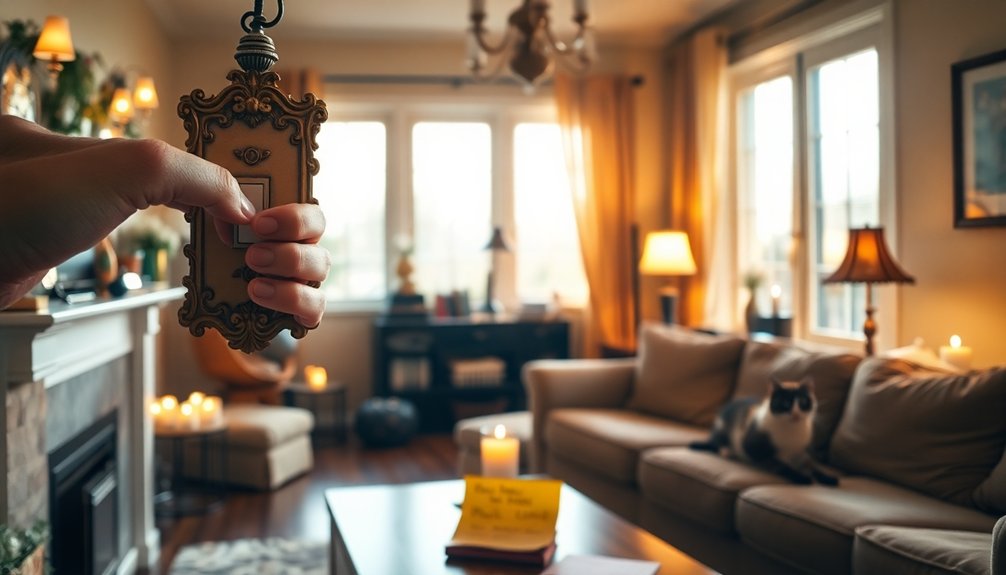
Placing sticky notes next to light switches can nudge you and your housemates to turn off lights when leaving a room. Consider adding clear signage, like “Please turn off the lights,” in common areas to reinforce energy conservation.
Simple reminders like sticky notes by light switches can encourage everyone to turn off lights when leaving a room.
Visual cues, such as posters that highlight the cost savings of switching off lights, can further raise awareness about mindful energy usage. Studies show that these reminders can reduce energy waste by up to 20%. Incorporating budgeting apps into your household routines can also enhance awareness of overall resource consumption and promote better financial and energy management.
Combining these strategies with discussions about energy conservation fosters a culture of responsibility, making everyone more aware of their habits and encouraging a collective effort to save energy.
Exploring Smart Lighting Options

Simple reminders and signage can lay the groundwork for energy conservation, but smart lighting options take your efforts a step further.
With smart lighting, like smart bulbs and plugs, you can control your home’s lighting remotely and schedule automatic on/off times, cutting down on energy waste. For example, the TP-Link Kasa Smart Wi-Fi Plug Slim turns regular lamps into smart devices you manage via a smartphone app or voice commands.
Motion sensor lights, such as the Aqara Motion Sensor P1, activate only when movement is detected, ensuring lights are used only when needed. Plus, many smart plugs feature energy monitoring, helping you track usage and find savings opportunities while promoting a conscious approach to electricity consumption. Additionally, using expense management apps can help you monitor your overall spending on energy and other utilities, allowing for better budgeting and financial planning.
The Benefits of Energy-Efficient Bulbs
While you might be hesitant to switch from traditional incandescent bulbs, embracing energy-efficient options like LEDs can lead to substantial benefits.
These bulbs use up to 80% less energy, markedly lowering your electricity bills. For instance, an LED bulb consumes only about 8.8 watts, costing around 3 cents to run for 20 hours, compared to the higher costs of incandescent bulbs.
LED bulbs use up to 80% less energy and cost just 3 cents to run for 20 hours.
Plus, with an impressive lifespan of about 25,000 hours, you’ll replace them far less often than incandescent bulbs, which last only about 1,000 hours.
Not only do energy-efficient bulbs save you money, but they also contribute to a more sustainable household by reducing carbon emissions. This aligns with the principles of sustainable fashion that emphasize the importance of eco-friendly practices.
It’s a smart choice for both your wallet and the planet.
Establishing a Culture of Conservation
Embracing energy-efficient bulbs is just the first step toward reducing your electricity costs and environmental impact.
To establish a culture of conservation, open communication about energy usage is essential. Discuss how leaving lights on affects everyone financially.
Here are some effective strategies to promote energy-saving habits:
- Use reminders: Place signage near light switches or offer friendly verbal cues to encourage turning off lights.
- Foster shared responsibility: Create an environment where everyone feels accountable for cutting back on energy usage.
- Implement incentives: Track reduced electricity bills and share the savings to motivate conscious energy use. Additionally, clear communication about energy usage can enhance collective efforts in conservation.
Tracking Energy Usage Together
Tracking energy usage together can be a fun and eye-opening experience that encourages better habits.
Start by establishing a shared energy monitoring system using smart plugs or energy meters to identify patterns of waste, like lights left on when you both leave a room. Set monthly goals for reducing overall consumption and discuss how much those lights can cost you on your utility bills.
Use apps to log your energy data and visualize trends, making the process engaging. To add some excitement, consider a friendly competition to see who can reduce energy usage the most. This not only fosters accountability but also highlights the savings from simply turning off lights when they’re not needed, while also contributing to financial control in managing household expenses.
Long-Term Solutions for Energy Awareness
Building on the foundation of shared energy monitoring, you can adopt long-term strategies that foster ongoing energy awareness in your household.
Implementing these solutions not only helps reduce energy waste but also saves you a significant amount of money over time.
- Install timer switches for lights to automatically turn them off after a set period, breaking the habit of leaving them on.
- Educate friends about the financial impact of energy waste, highlighting how quickly costs add up with multiple bulbs left on.
- Encourage LED bulb usage, which costs roughly three cents to run for 20 hours, compared to traditional bulbs.
These strategies cultivate a culture of energy conservation, ultimately making everyone more mindful of their consumption. Additionally, promoting sustainable consumption patterns can lead to greater awareness about the impact of energy use on the environment.
Embracing Frugality in Everyday Life
Embracing frugality in your daily life starts with simple energy conservation strategies, like turning off lights when you leave a room.
You can automate light management through smart systems or timers, making it effortless to save energy.
These small changes not only cut costs but also help foster a culture of conservation in your home. Additionally, using budgeting apps like YNAB (You Need a Budget) can help you track your savings from energy conservation efforts effectively.
Energy Conservation Strategies
Many households can drastically cut down on energy costs by adopting simple energy conservation strategies.
One effective approach is promoting a culture of turning off lights when not in use. Here are a few strategies to take into account:
- Use LED bulbs, which consume about 80% less energy than incandescent ones, saving you money.
- Place reminders near light switches to encourage everyone to turn off lights after use.
- Track collective energy usage to foster accountability among housemates, helping everyone see how their habits impact utility bills.
Automating Light Management
As you look for ways to cut down on energy costs, automating light management can be a game-changer. By using smart devices like smart bulbs and motion sensors, you can drastically reduce energy waste.
The Department of Energy highlights that energy-efficient LED bulbs, consuming only 8.8 watts, can save you greatly on your utility bills. Smart plugs and timers let you schedule lighting, freeing you from the hassle of constant reminders.
Motion sensors automatically turn lights on when you enter a room and off when you leave, enhancing efficiency effortlessly. Embracing this automation not only saves you money but also supports sustainability by reducing unnecessary energy consumption.
Start automating today for a more frugal and eco-friendly household!
Conclusion
By addressing the issue of lights left on in your shared space, you’re not just saving money; you’re fostering a culture of awareness and responsibility. Remember, “A penny saved is a penny earned.” Implement simple reminders, consider smart lighting, and track energy usage together. These small steps can lead to big changes, making your home both frugal and eco-friendly. Together, you can create a brighter future—one where energy conservation becomes second nature.