
 0
0
 0
0
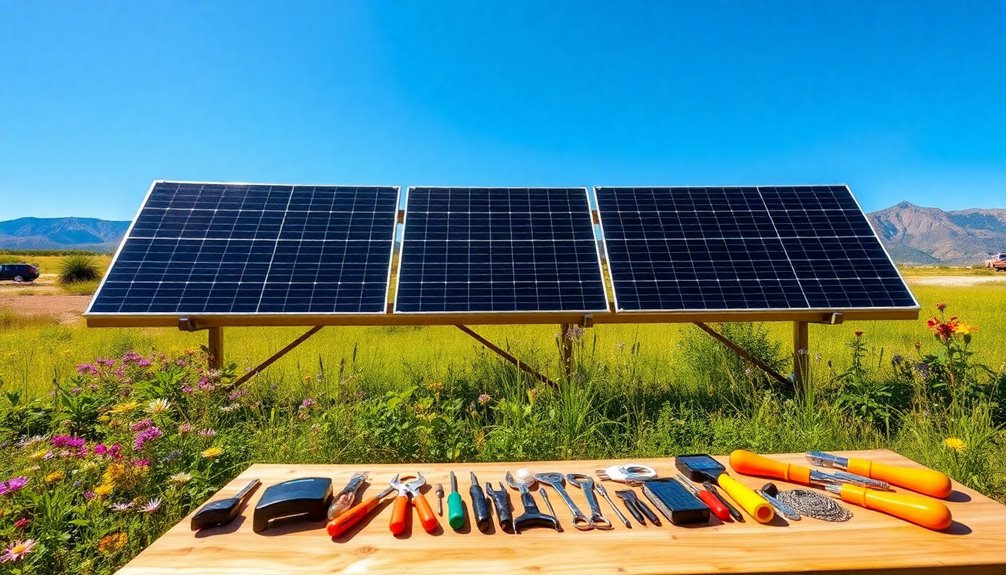
Building your own solar array empowers you to cut electricity costs and boost your home’s value. With the cost of solar panels dropping, you’ll save greatly while enhancing your energy independence. Start by gathering essential materials like panels and inverters, along with safety gear. Research local regulations, and plan your installation methodically. You’ll also want to explore battery storage options for added efficiency. There’s much more to discover about optimizing your DIY solar experience that can transform your project!
The Benefits of DIY Solar Power for Homeowners
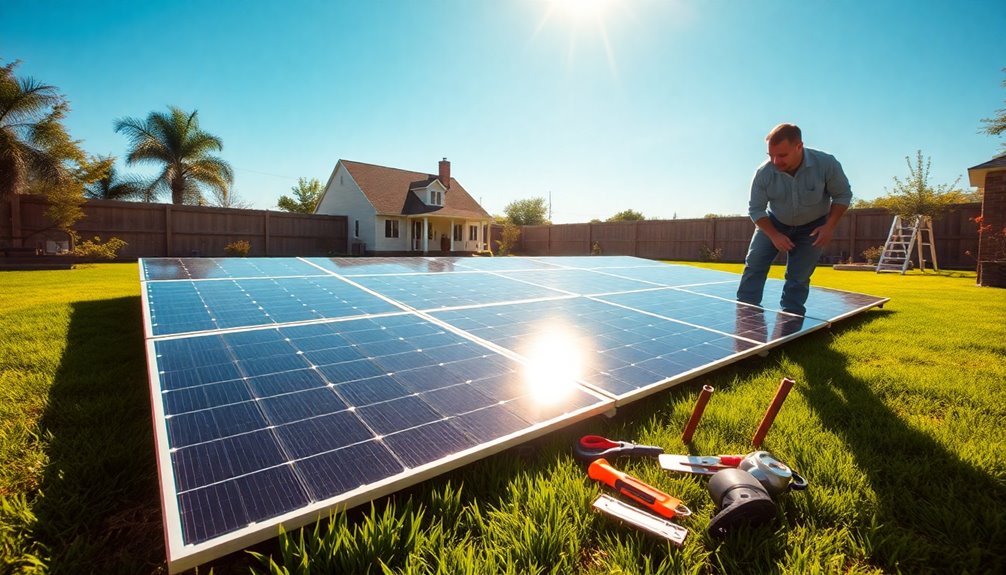
When you choose to commence a DIY solar project, you not only take a step toward renewable energy but also reveal significant savings on your electricity bills.
By generating an average of 6,100 kWh annually, you could save around $732 each year. With solar panel costs dropping below $0.50 per watt, these DIY solar installations are more accessible than ever.
You gain energy self-sufficiency, producing enough power for daily consumption and even electric vehicles. Plus, communities that embrace DIY solar initiatives foster collaboration and knowledge sharing, enriching your experience.
Additionally, installing a solar system can boost your home’s value by 15% due to carbon offset benefits. It’s an investment in both your finances and the environment, paving the way for free electricity. Furthermore, adopting mindful spending habits not only enhances your financial security but also allows you to allocate more resources toward sustainable projects like solar energy.
Understanding Solar Energy Basics: What You Need to Know

To harness solar energy effectively, it’s important to grasp the fundamentals of how it works. Solar energy is a renewable resource that captures sunlight to generate electricity, helping you reduce reliance on fossil fuels and lower greenhouse gas emissions.
The cost of solar panels has plummeted, making them an affordable option for your solar setup—now under $0.50 per watt! With an average annual electricity generation of 6,100 kWh valued at about $732, your investment in solar can yield better returns than traditional options. Additionally, understanding energy efficiency is crucial for maximizing the performance of your solar array.
Essential Materials and Tools for Your Solar Array
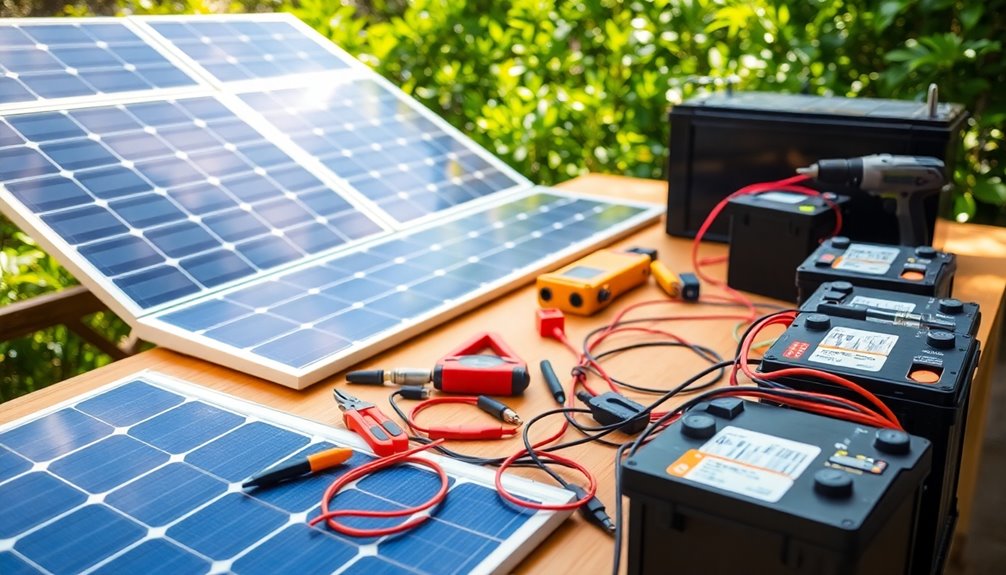
When you’re ready to build your DIY solar array, having the right materials and tools is vital.
You’ll need to gather essential items like solar panels and inverters, along with a checklist of tools for installation.
Let’s explore the best materials to take into account and the tools that will make your project a success. Additionally, using expense tracking apps can help you manage the costs associated with your solar project effectively.
Essential Tools Checklist
Creating a DIY solar array requires a solid set of tools and materials to guarantee a successful installation.
Start with a power drill for securing your racking system; it’s vital for making tight connections. You’ll also need wrenches and a level to make sure everything aligns perfectly. A multimeter is essential for testing voltage and confirming electrical connections are safe.
Don’t forget your safety gear—gloves, goggles, and harnesses protect you while working at heights. Additional materials like cable clips, conduit, and grounding rods help with wire management and compliance.
Finally, keep an instruction manual handy for guidance on assembly and adherence to manufacturer specifications. With these tools, you’re well on your way to a successful solar project!
Recommended Material Selection
With your toolkit ready, it’s time to focus on selecting the right materials for your solar array.
Start with high-efficiency solar panels, and consider sourcing used ones to save money; new panels average around $130 each.
Pair them with a reliable inverter, like a SolarEdge, and optimizer modules to tackle shade issues.
You’ll also need mounting hardware, such as S5! clamps and L feet, to secure everything properly.
Don’t forget a charge controller for setups with battery storage, like the Tesla Powerwall.
Finally, make sure to use durable copper wire for electrical connections, ensuring it can withstand environmental conditions.
Check compatibility between all components, especially at one end of the installation process, for a successful project.
How to Choose the Right Solar Panels for Your Project
How do you choose the right solar panels for your project? Start by evaluating various solar panel types and their efficiency ratings. You want panels that convert sunlight into electricity effectively, especially if you’re tight on space.
Here are some key factors to take into account:
- Cost per watt: Aim for panels averaging under $0.50 per watt, balancing quality and affordability.
- Warranty and lifespan: Look for manufacturers offering 25 to 30-year warranties for durability.
- Temperature coefficient: Select panels with lower coefficients for better performance in high temperatures, boosting energy production during summer.
Also, verify compatibility with your inverter and other components. Additionally, consider the impact of washable electrostatic filters in your overall energy efficiency for a more sustainable project.
Following these installation tips will help you make a sound choice for your DIY solar array!
Step-by-Step Installation Process: From Planning to Powering Up
Before diving into the installation of your DIY solar array, it’s essential to lay the groundwork by researching local regulations and securing the necessary permits.
Next, plan the layout of your panels to enhance solar panel aesthetics and maximize sunlight exposure.
Plan your solar panel layout carefully to boost aesthetics and ensure maximum sunlight exposure for optimal energy production.
Once you’re set, gather mounting hardware like S5! clamps and L feet to guarantee stability on your roof.
Assemble the solar array by connecting panels to rails and optimizers, maintaining strict construction standards.
After installation, check all connections for safety and performance.
If you’re considering solar financing options, explore community solar initiatives that might help offset costs.
Additionally, consider using expense management apps to track any costs associated with your solar installation.
With everything in place, you’ll be ready to power up your home with clean energy!
Tips for Effective Cable Management in Your Solar Setup
To keep your solar setup organized and safe, you need a solid cable management strategy.
Start by planning your wire routing to prevent any interference during installation, and secure your cables with clips that match your mounting system.
Choosing durable materials, like stainless steel clips, can enhance longevity and protect your investment against harsh weather. Additionally, implementing expense tracking tools can help you manage the costs associated with your solar project effectively.
Planning Wire Routing Strategy
Effective cable management is essential for a successful solar setup, and planning your wire routing strategy can make all the difference. By employing smart wire routing techniques, you can enhance safety and streamline installation logistics.
Here are some tips to contemplate:
- Use cable clips compatible with your mounting system for durability.
- Plan routing to avoid panel interference, guaranteeing a smooth installation.
- Stock up on mid-clamps, end clamps, and bonding bolts to meet your wiring needs.
These cable organization strategies not only keep your setup neat but also protect your wiring from harsh weather, especially in hurricane-prone areas.
Assess your hardware needs based on your specific solar array configuration to prevent shortages and guarantee an efficient install.
Secure Cable Clips Usage
A well-planned wire routing strategy sets the foundation for effective cable management, but the right hardware makes all the difference. For your solar setup, opt for stainless steel cable clips to guarantee durability and resistance to corrosion, especially in hurricane-prone areas.
During cable clip installation, make sure the clips are compatible with your mounting system, like Ironridge or Unirac, to secure your cables effectively. Incorporate mid-clamps and end clamps for extra support along the rails.
To enhance storm resistance techniques, tightly secure cables and avoid loose connections. Finally, adopt maintenance best practices by regularly inspecting and tightening cable clips to prevent wear, making certain your solar array operates at peak performance.
Durable Management Solutions
While setting up your solar array, prioritizing durable management solutions for cable management is essential to guarantee long-lasting performance.
Here are some effective cable management techniques to evaluate:
- Use stainless steel clips: They’re durable, especially in harsh weather, ensuring your wiring stays intact.
- Explore long-lasting materials: Opt for Kevlar ties or 20-year tape as alternatives to standard zip ties, enhancing reliability.
- Plan wire routing: This avoids interference during installation and meets local building codes, addressing environmental impact evaluations.
The Importance of Safety and Compliance in Solar Installations
When commencing a DIY solar installation, understanding the importance of safety and compliance is vital to the success of your project.
Research local building regulations and permit requirements to guarantee compliance and avoid costly fines. All components of your solar setup must meet safety measures outlined in local building codes.
Engaging with local authorities and Homeowners Associations (HOAs) will clarify compliance guidelines and help secure necessary approvals.
Thorough planning and consulting installation manuals are essential for a safe installation that adheres to manufacturer specifications.
Don’t overlook regular inspections and strict adherence to safety procedures, especially when working at heights, to overcome any regulatory challenges and maintain a secure solar system that functions effectively. Additionally, ensuring that your installation incorporates high energy efficiency can contribute to long-term savings on energy costs.
How to Optimize Your Solar Array for Maximum Efficiency
To optimize your solar array for maximum efficiency, start by ensuring your panels are properly oriented to capture the most sunlight throughout the day. Efficient cable management is also essential; keeping wires organized not only reduces wear but can enhance overall performance. Additionally, consider integrating whole-home energy monitoring systems to provide real-time insights into your energy usage and identify areas for further efficiency improvements.
Proper Panel Orientation
How can you guarantee your solar array captures the maximum amount of sunlight? Proper panel orientation is key! Here are three important strategies to take into account:
- Panel angle optimization: Position your panels facing true south in the northern hemisphere and tilt them at an angle equal to your latitude for ideal energy production.
- Shading impact analysis: Regularly check for any obstructions, like trees or buildings, as even partial shading can drastically reduce your array’s output.
- Seasonal adjustment strategies: Adjust the angle of your panels seasonally—steeper in winter to capture lower sun angles and shallower in summer to maximize sunlight during longer days.
Using tools like the PVWatts calculator can further guarantee you’re set up for maximum efficiency!
Efficient Cable Management
Effective cable management is essential for optimizing your solar array’s efficiency and safety. Start by implementing smart cable routing strategies to keep wires organized and avoid interference during installation.
Utilize wire organization techniques, like stainless steel cable clips, to secure cables along the rails—this enhances durability, especially in harsh weather. Be mindful of local inspection requirements when planning wire layouts, ensuring compliance and a tidy setup.
Incorporate installation best practices by selecting compatible mid-clamps, end clamps, and bonding bolts to streamline the process. Regularly monitor your cable integrity to prevent shading or obstructions that could diminish your solar array’s performance.
With these methods, you’ll achieve a more efficient and long-lasting solar energy system.
Exploring Battery Storage Options: Do You Need Them?
Why consider battery storage for your solar array? Battery storage systems can greatly enhance your solar experience. Here are a few reasons why you might want to invest in one:
- Battery capacity considerations: Match your storage size to your solar array and energy usage to guarantee you cover peak usage times.
- Energy independence benefits: Enjoy peace of mind knowing you’ll have power during outages, keeping essential systems running.
- Peak usage storage: Store excess energy generated during sunny days for nighttime or cloudy periods, maximizing self-consumption.
While the upfront costs can be high, the long-term savings on electricity bills and the ability to harness 100% solar power make battery storage a worthwhile option for many homeowners. Additionally, regular maintenance, similar to preventative measures for water heaters, can help ensure the longevity and efficiency of your battery storage system.
Real-Life Success Stories From DIY Solar Enthusiasts
Battery storage can add immense value to your solar setup, but the real inspiration often comes from fellow DIY solar enthusiasts who’ve turned their visions into reality.
Take Rob Patterson, for instance; his project generates 6,100 kWh annually, saving him around $732 with a $3,900 investment.
Then there’s Scott Helmann, whose 57-panel array produced impressive energy in just five months, highlighting the benefits of larger systems.
Many DIYers, like Michael Kinder, aim for ambitious goals, even working towards a terawatt of production.
Community support networks play a crucial role here, as sharing experiences and innovative financing options help minimize costs.
By leveraging federal tax credits, homeowners can significantly reduce their initial investment in solar energy systems.
Don’t forget to conduct environmental impact assessments to guarantee your project benefits both you and the planet!
Troubleshooting Common Issues in Solar Power Systems
Troubleshooting issues in your solar power system is essential to maintaining ideal performance and energy production.
Regular checks can help you identify and fix problems before they escalate. Here are key areas to focus on:
- Panel performance monitoring: Watch for significant drops in output, which may indicate shading, dirt, or component failures.
- Electrical connection maintenance: Check all connections for tightness and corrosion to prevent power loss and fire hazards.
- Inverter functionality checks: Verify your inverter’s indicator lights are operating normally. If you see an error message, reset it or investigate further.
Future Trends in Solar Technology and DIY Solutions
As the solar technology landscape evolves, you can expect exciting advancements that make DIY solar solutions more efficient and user-friendly.
Solar panel innovations are pushing efficiencies beyond 25%, allowing you to generate more energy with less space. With smart technology integration, you’ll be able to monitor your energy production and consumption in real-time through user-friendly mobile apps.
Plus, battery storage systems are becoming more powerful, with options like 25kW batteries enhancing your self-sufficiency. As costs continue to drop to around $0.30 per watt, DIY projects will become even more accessible.
Finally, community engagement strategies will flourish, as you connect with others to share knowledge and experiences, fostering a supportive network in your renewable energy journey.
Conclusion
As you plunge into the DIY solar revolution, consider this: homeowners who install solar panels can save an average of $1,500 annually on energy bills. By harnessing the sun’s power yourself, not only do you cut costs, but you also contribute to a sustainable future. Whether you’re just starting or ready to install, you’re part of a growing movement that empowers you to take control of your energy needs. So, roll up your sleeves and let the sun work for you!





Average Rating