 0
0
 0
0
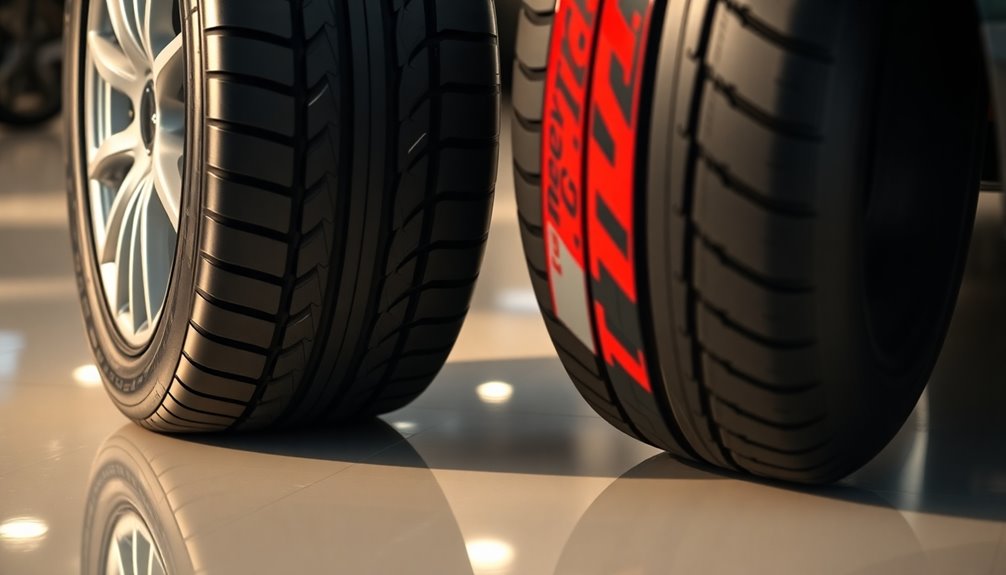
When choosing between Michelin and Bridgestone, premium tires are definitely worth the extra cost. They offer enhanced grip, longer tread life, and better fuel efficiency, saving you money long-term. Michelin excels in dry conditions and offers a quieter ride, while Bridgestone shines in winter traction. Though they cost more upfront, their durability can reduce overall expenses. If you want to make an informed decision that suits your needs, keep exploring the unique features of each brand.
The Evolution of Michelin and Bridgestone Tires
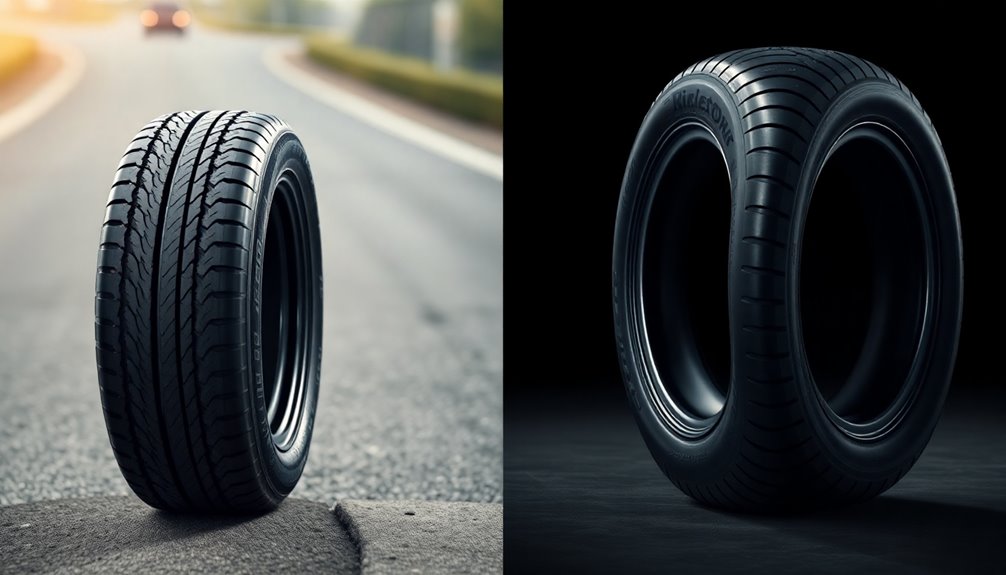
As you explore the evolution of Michelin and Bridgestone tires, you’ll notice how both companies have shaped the tire industry with their groundbreaking innovations.
Michelin made its mark in the 1890s by creating detachable pneumatic tires, later introducing the run-flat tire in 1934. Bridgestone, founded in 1931, quickly gained traction with its innovative designs, especially the radial tire launched in 1967.
Michelin revolutionized tire technology further in 1946 by enhancing safety and fuel efficiency with radial tires. Bridgestone offers advanced features that excel in traction and winter performance, while Michelin emphasizes comfort and longevity. Both companies have greatly impacted the tire landscape, continually pushing boundaries to meet consumer demands and improve driving experiences. The expense tracking apps they utilize reflect their commitment to efficiency and innovation in managing their business operations.
Key Features of Premium Tires
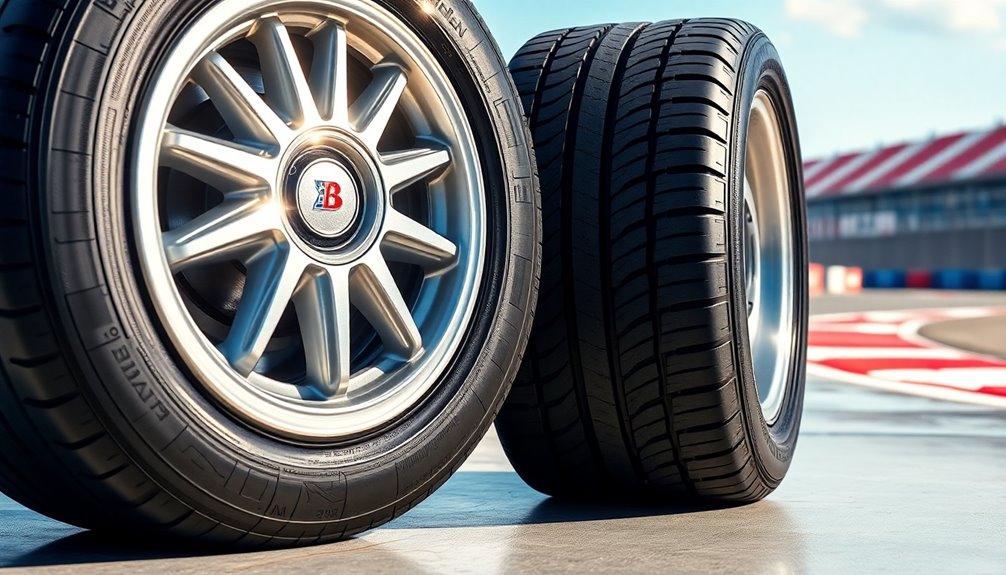
What makes premium tires stand out from their standard counterparts? It’s all about the advanced technology and features designed to enhance your driving experience.
Here are some key aspects that highlight their advantages:
- Enhanced grip for better handling and safety.
- Optimized tread patterns for effective water evacuation and reduced aquaplaning.
- Longer tread life, with many lasting between 45,000 to 85,000 miles.
- Improved fuel efficiency, saving you money at the pump.
- Superior performance in both dry and wet conditions, ensuring stability at high speeds.
Investing in premium tires not only boosts performance but also provides long-term savings through durability and efficiency. Additionally, many premium tires incorporate advanced technology that enhances overall safety and driving comfort.
Bridgestone vs. Michelin: Performance in Various Conditions
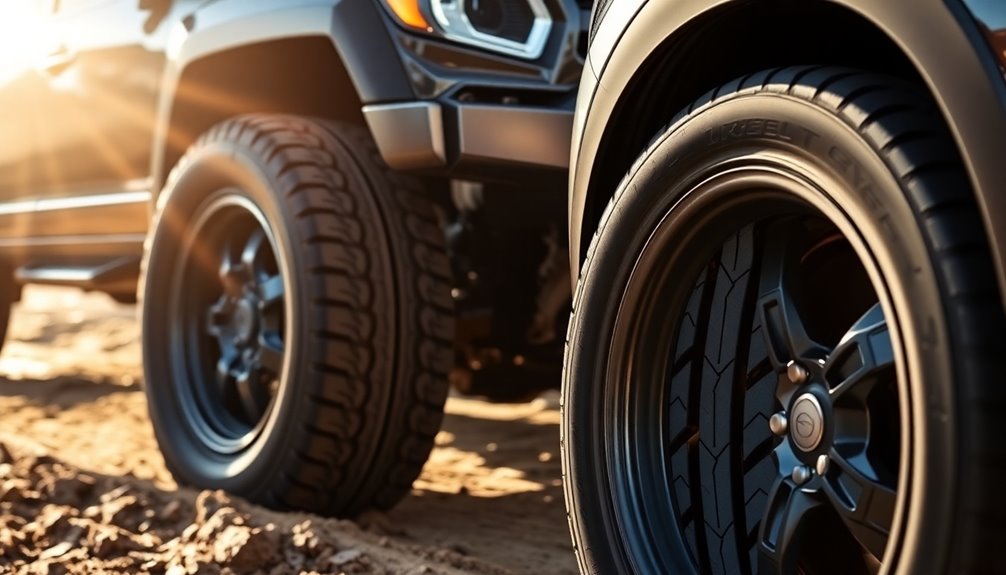
When it comes to choosing between Bridgestone and Michelin tires, understanding their performance in various conditions can greatly impact your driving experience.
Bridgestone tires excel in winter driving scenarios, delivering outstanding traction and stability on snow-covered roads. In contrast, Michelin tires shine in dry conditions, offering superior handling and shorter braking distances for responsive driving.
Both brands maintain excellent performance in wet conditions, thanks to their advanced tread designs that guarantee traction without compromise.
While Bridgestone’s DriveGuard tires provide peace of mind after a flat, Michelin’s EverGrip technology keeps grip as the tire wears down. Additionally, considering the market inefficiencies associated with passive investing can help you make a more informed decision on which tire brand best suits your needs.
Ultimately, your choice may depend on the conditions you frequently encounter, securing peak performance for your specific driving needs.
How Durability Affects Tire Value
When you consider tire value, durability plays a vital role in your decision-making.
For instance, Michelin tires can last up to 85,000 miles, potentially saving you money on replacements compared to Bridgestone’s typical lifespan of 60,000 miles.
This longevity not only impacts your wallet but also enhances the overall cost-effectiveness of your tire investment over time. Additionally, investing in more durable tires can result in lower operational costs over their lifespan, similar to the savings seen with heat pumps compared to oil heating.
Tire Lifespan Comparison
While you might be tempted to choose tires based solely on upfront cost, considering tire lifespan can greatly impact your overall value.
When you look at the tire lifespan comparison between Michelin and Bridgestone, you’ll notice distinct differences in longevity:
- Michelin tires last between 45,000 to 85,000 miles.
- Bridgestone tires typically last up to 60,000 miles.
- Michelin offers warranties covering up to 60,000 miles.
- Some Bridgestone models extend warranties to 65,000 miles.
- Premium tires like Michelin often lead to savings on fuel and maintenance.
If you’re prioritizing longevity and performance, Michelin tires may offer better long-term value despite a higher initial price.
Ultimately, your driving habits and needs should guide your decision.
Cost-Effectiveness Over Time
Choosing the right tires isn’t just about the upfront cost; it’s also about how long they’ll last and how that affects your wallet over time.
Michelin tires, with a lifespan of 45,000 to 85,000 miles, generally offer better cost-effectiveness than Bridgestone’s 60,000 miles. While Michelin’s initial price is higher, their longevity and fuel efficiency can save you money in the long run, especially for high-mileage drivers.
Bridgestone’s competitively priced options cater to budget-conscious consumers without sacrificing performance.
Remember, proper maintenance like regular rotations and pressure checks can maximize the durability of both brands, enhancing their overall value.
Investing in quality tires can lead to significant savings through reduced wear and improved performance down the road.
Noise Levels: What to Expect From Each Brand
Noise levels can greatly impact your driving experience, and understanding what to expect from different tire brands is essential.
When comparing Michelin and Bridgestone tires, you’ll notice some key differences in noise performance:
- Michelin tires often provide a quieter ride due to advanced noise reduction technologies.
- Bridgestone tires can be a bit noisier, especially in certain models.
- Both brands’ noise levels may vary based on tire type and tread design.
- Michelin tires maintain their quiet operation even on rough roads, enhancing comfort on long drives.
- Bridgestone tires may generate more road noise as they wear down, unlike Michelin, which retains quieter performance throughout its lifespan.
- Additionally, choosing tires that support energy-efficient models can contribute to reduced overall vehicle emissions, enhancing your eco-friendly driving experience.
Ultimately, choosing Michelin might lead to a more pleasant driving experience if quiet ride quality is a priority for you.
Warranty Comparisons: Bridgestone vs. Michelin
When selecting premium tires, warranty coverage can play a significant role in your decision-making process.
Bridgestone offers a warranty of up to 3 years or 65,000 miles, showcasing their commitment to quality and durability. On the other hand, Michelin provides a warranty covering up to 60,000 miles, emphasizing their focus on performance and longevity in various driving conditions.
Bridgestone’s warranty of 65,000 miles reflects their quality, while Michelin emphasizes performance with a 60,000-mile coverage.
While both brands are premium options, Bridgestone generally presents a wider range of competitively priced choices within their warranty framework. Michelin tires may be pricier, but their warranty aligns with their reputation for exceptional performance.
Ultimately, warranty comparisons between Bridgestone and Michelin highlight the manufacturers’ confidence in their products, offering you peace of mind regarding potential tire issues. Additionally, understanding financial goals can help you assess whether investing in premium tires aligns with your overall budget and spending habits.
Price Analysis: Are Premium Tires Worth It?
While it might be tempting to opt for budget tires, investing in premium options like Michelin and Bridgestone can lead to significant benefits. A price analysis shows that although these premium tires cost 20% to 50% more upfront, they can save you money in the long run.
Here are some reasons why they’re worth considering:
- Longevity: Michelin tires last 45,000 to 85,000 miles, while Bridgestone lasts around 60,000 miles.
- Fuel Economy: Premium tires improve fuel efficiency, saving you on gas.
- Performance: Better grip and handling enhance your driving experience.
- Warranties: Both brands back their tires with extensive warranties.
- Safety: Premium tires exceed minimum safety standards, providing added peace of mind.
- Additionally, mindful choices in tire selection can lead to hidden savings over time.
Invest wisely!
Fuel Efficiency: How Do Tires Impact Your Wallet?
When it comes to fuel efficiency, the type of tires you choose can make a big difference in your wallet.
Premium tires, like those from Michelin and Bridgestone, are designed to reduce rolling resistance, which directly impacts your vehicle’s fuel economy.
This means you could save considerably on fuel costs over time, especially if you’re a high-mileage driver. Additionally, maintaining clean air filters in your vehicle can further enhance fuel efficiency and reduce overall operational costs.
Tire Rolling Resistance
Understanding tire rolling resistance is essential if you want to save money at the pump; after all, the type of tires you choose can greatly impact your vehicle’s fuel efficiency.
Premium tires, like those from Michelin and Bridgestone, usually feature lower rolling resistance, boosting your mileage.
Consider these benefits:
- Improved fuel efficiency by 5-10%
- Potential savings of up to $400 over the tire’s life
- Michelin tires can last up to 80,000 miles
- Bridgestone’s Ecopia series specifically designed for lower rolling resistance
- Proper tire maintenance, like regular pressure checks, enhances performance
Investing in premium tires not only enhances your vehicle’s performance but also contributes to long-term savings at the pump.
Fuel Economy Impact
Investing in premium tires can greatly impact your wallet by enhancing your vehicle’s fuel economy. Tires like Michelin and Bridgestone use advanced rubber compounds that reduce rolling resistance, improving fuel efficiency. You could save up to 3% on fuel costs compared to standard tires.
Michelin tires are particularly known for their longevity, lasting between 45,000 to 85,000 miles, which translates to fewer replacements and lower overall fuel expenses. Bridgestone’s Ecopia line also focuses on maximizing mileage and fuel economy, making them ideal for high-mileage drivers.
Customer Satisfaction and Reviews for Both Brands
Customer satisfaction plays an essential role in choosing between Michelin and Bridgestone tires, as both brands garner positive feedback for different reasons.
When evaluating Michelin vs Bridgestone, consider these factors that contribute to customer satisfaction:
- Michelin tires are known for a smooth and quiet ride, ideal for long trips.
- Bridgestone tires excel in durability, particularly in tough, snowy conditions.
- Michelin typically offers a longer tire lifespan, averaging 45,000 to 85,000 miles.
- Bridgestone provides good value with competitive pricing for budget-conscious buyers.
- Both brands have strong reputations for customer support, with Michelin’s flat tire assistance and Bridgestone’s clear warranty policies.
- Additionally, consumers often appreciate the sustainable practices employed by both brands, which enhance their overall appeal.
Ultimately, your choice may depend on whether you prioritize performance or longevity in your tires.
Real-World Performance: Drivers’ Experiences
Many drivers have shared their firsthand experiences with Michelin and Bridgestone tires, highlighting distinct advantages for each brand.
If you prioritize a smooth, quiet driving experience during long trips, Michelin tires are often recommended. They typically last between 45,000 to 85,000 miles, providing excellent longevity and fuel efficiency thanks to advanced rolling resistance technology.
On the other hand, Bridgestone tires, known for their durability and performance in tough conditions, usually last around 60,000 miles. Owners of Bridgestone’s winter tires, like the Blizzak, rave about their superior traction on snow.
While Michelin’s initial cost is higher, many drivers find that the savings from fuel efficiency and longevity make them worth the investment compared to Bridgestone’s more budget-friendly options. Additionally, regular maintenance strategies, such as co-washing with economical products, can help extend the life of your tires by improving vehicle performance.
Maintenance Considerations for Premium Tires
While premium tires like Michelin and Bridgestone offer exceptional performance and longevity, neglecting regular maintenance can undermine their potential.
Premium tires deliver outstanding performance, but without regular maintenance, their benefits may be compromised.
To guarantee you get the most out of your investment, focus on these essential tire maintenance practices:
- Check and maintain proper tire pressure regularly.
- Rotate your tires every 5,000 to 8,000 miles.
- Perform tire alignment and balancing to prevent uneven wear.
- Inspect tread depth and overall tire condition frequently.
- Keep tires clean and free from debris.
Making the Right Choice: Which Tire Brand Fits Your Needs?
Choosing the right tire brand is key to maximizing performance and ensuring your vehicle meets your driving needs.
If you prioritize longevity and reliability, Michelin tires might be your best bet, lasting between 45,000 to 85,000 miles. Their innovative technologies, like EverGrip, enhance safety even as the tires wear down.
On the other hand, if you often navigate snowy conditions, Bridgestone tires provide exceptional traction and performance, making them a smart choice for winter driving. Bridgestone also offers a broader range of competitively priced premium options, catering to budget-conscious consumers.
Ultimately, consider your driving habits and conditions—investing in either brand can greatly enhance your vehicle’s comfort and safety, ensuring reliable performance for years to come.
Conclusion
When choosing between Michelin and Bridgestone, consider what matters most to you: performance or price, durability or comfort, noise levels or tread life. Both brands offer unique advantages, but it ultimately comes down to your driving habits and preferences. If you value top-tier performance in all conditions, Michelin might be your best bet. If you’re looking for reliable quality at a competitive price, Bridgestone could be the way to go. Your choice shapes your driving experience!