
 0
0
 0
0
If you’re a frugal driver looking for value, the 2013 Prius is your best bet. It’s priced lower than the 2014 model, making it budget-friendly without sacrificing reliability or fuel efficiency. Both vehicles offer identical performance, averaging 50 miles per gallon. While the 2014 may have minor upgrades, those enhancements don’t outweigh the savings the 2013 brings. Stick around to discover more about features, maintenance, and overall ownership costs for both models.
Comparing Prices: Is the 2013 or 2014 Prius More Affordable?

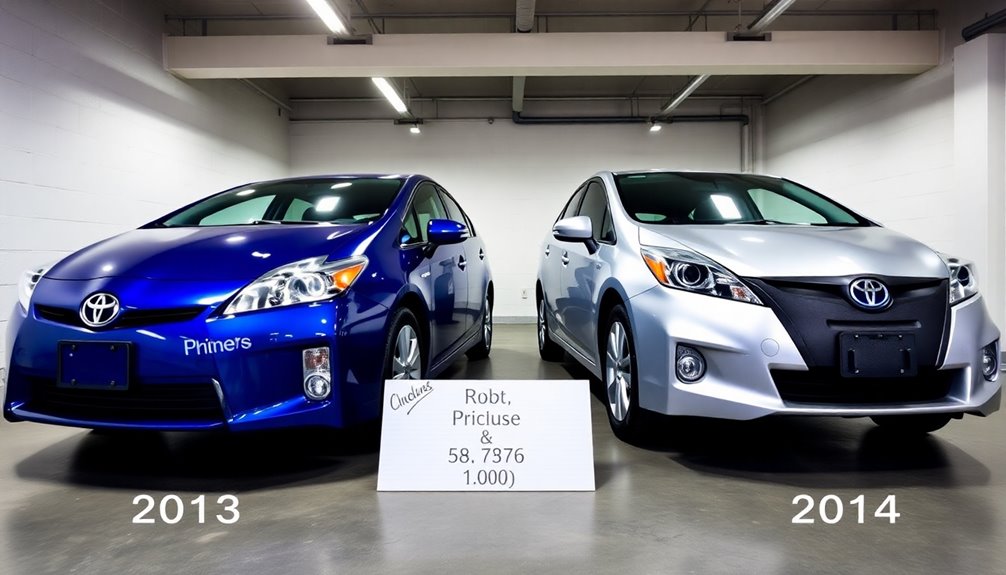
When considering whether the 2013 or 2014 Prius is more affordable, it’s clear the 2013 model stands out. Priced between $5,995 and $14,998, the 2013 Prius generally offers better value than the 2014 Prius, which ranges from $6,498 to $16,989.
This price difference makes the 2013 model a more attractive option for budget-conscious buyers looking for used cars. Even for low-mileage 2013 models, prices hover around $16k-$17k, providing excellent options without breaking the bank.
Both models experience similar depreciation rates of 35.6% over five years, but the lower starting price of the 2013 Prius gives it a financial edge. Additionally, lower insurance premiums for used cars can further enhance the savings for frugal drivers.
Reliability Ratings: Which Model Comes Out on Top?

Although both the 2013 and 2014 Toyota Prius boast impressive reliability ratings, you might wonder which model truly comes out on top.
Both the 2013 and 2014 Toyota Prius offer outstanding reliability, leaving you to ponder which model excels further.
When it comes to dependability, both years of used Toyota are nearly identical, each earning a strong 8.1 out of 10 reliability rating. They also share an overall quality rating of 9.0 out of 10, reflecting high satisfaction among owners.
Additionally, they rank 1 out of 25 in the Best Hybrid Cars category, showcasing their exceptional standing in the hybrid market.
With the same engine specifications and averaging 50 miles per gallon, you can count on either model to deliver reliability.
In the end, both the 2013 and 2014 Prius are excellent choices for frugal drivers seeking dependability. Furthermore, choosing the right app for expense tracking can greatly enhance your financial organization.
Fuel Efficiency and Performance: How Do They Stack Up?
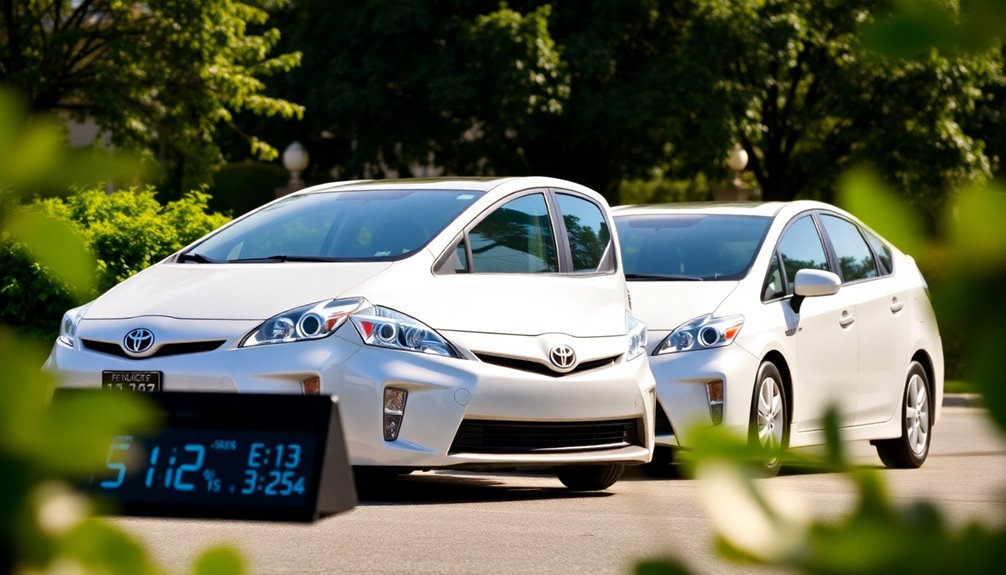
You’ll find that both models offer identical specs, featuring a base engine with 134 horsepower.
With an impressive average fuel efficiency of 50 miles per gallon, either used Prius is a fantastic choice for budget-conscious drivers.
Both years guarantee you get a solid highway range of about 571 miles, letting you travel long distances without frequent refueling.
There aren’t any significant differences in engine performance or fuel efficiency between the two models, cementing them as equally economical options.
Whether you opt for the 2013 or the 2014 Prius, you’ll enjoy reliable hybrid performance that aligns perfectly with your frugal lifestyle. Additionally, choosing a smart appliance can help you further enhance your savings on utility costs.
Key Features and Upgrades: What’s New in the 2014 Prius?
Here are the key features that set the 2014 Prius apart:
- Increased Length: The 2014 Prius is slightly longer at 176.4 inches, offering marginally more interior space.
- Same Fuel Efficiency: Like the 2013 model, it averages an impressive 50 miles per gallon.
- Consistent Specifications: Both models share the same curb weight (3042 lbs) and dimensions, ensuring stable handling.
- Enhanced Features: The 2014 Prius may include minor enhancements in available features and packages over the 2013 version.
Additionally, investing in a vehicle like the Prius aligns with cost-effective strategies that can lead to long-term savings.
When considering the 2013 vs. 2014 Prius, these upgrades might just make the newer model worth your attention.
Maintenance and Ownership Costs: Which Year Is More Cost-Effective?
When considering the maintenance and ownership costs of the 2013 vs. 2014 Toyota Prius, which year proves to be more cost-effective?
Both models have similar annual repair costs averaging around $408, indicating low ownership costs. With reliability ratings of 8.1 out of 10, you can expect comparable maintenance needs over time for both years.
However, the 2013 Prius generally comes at a lower price range of $5,995 to $14,998, making it the more budget-friendly choice. Additionally, both models feature long-lasting batteries with no significant issues, keeping maintenance costs stable.
Given their 35.6% depreciation rate over five years, the initial savings on a 2013 Prius may offer better overall value for frugal drivers. Furthermore, high monthly payments associated with larger vehicles like trucks can strain budgets, making smaller cars like the Prius a more viable option for cost-conscious consumers.
Conclusion
So, you’ve weighed the 2013 and 2014 Prius, and it seems you’ve got a real dilemma on your hands. Do you go for the barely-better 2014 model, or save some cash with the 2013? It’s like choosing between a slightly fresher avocado and one that’s just a tad more ripe — both can make your wallet weep. Just remember, whether you drive off with the ’13 or ’14, you’ll still look like a frugal genius in that stylish hybrid!




Average Rating