
 0
0
 0
0
When buying a used VW TDI, focus on model years 2009-2014 and 2015, checking for emissions compliance and any Dieselgate fixes. Always ask for the full maintenance history, especially timing belt replacements, to avoid costly repairs down the road. Inspect the engine for unusual noises and the emission system for warning lights. Engaging with the TDI community can provide valuable insights and support. There’s a lot more you could uncover to make a smart purchase.
Understanding the VW TDI Models
When you’re diving into the world of used VW TDI models, it’s essential to understand the different options available. The TDI engine lineup features variations like the 2.0L and 1.9L diesel engines, each offering unique performance and reliability characteristics.
You’ll find that these vehicles are renowned for their fuel efficiency, often exceeding 40 MPG on the highway, making them a cost-effective choice. However, be aware that model years 2009-2014 (Gen1) and 2015 (Gen3) faced emissions compliance issues.
It’s vital to check for proper Dieselgate fix documentation, as this impacts both performance and resale value. Engaging with the TDI community can also connect you with experienced TDI mechanics who can provide valuable insights into maintenance and expectations. Additionally, utilizing budgeting apps for beginners can help you manage your finances effectively while saving for your TDI.
Importance of Maintenance History
When you’re considering a used VW TDI, the maintenance history can’t be overlooked.
Knowing the timeline of service records, especially for the timing belt and emissions compliance, helps you gauge the vehicle’s reliability.
Solid documentation not only indicates proper care but also protects you from potential future issues and costly repairs. Additionally, thorough records can reveal enhanced accuracy in tracking any past repairs or modifications made to the vehicle.
Service Records Significance
Service records play a pivotal role in evaluating the value and condition of a used VW TDI. They provide significant insights into how well the previous owner maintained the car, especially for critical components requiring regular servicing.
A complete service history reveals necessary repairs and maintenance, helping you avoid future issues and ensuring compliance with emissions standards. Documentation of routine oil changes, fuel filter replacements, and emissions checks indicates a well-maintained TDI, essential for its longevity and performance.
Additionally, checking for records of any warranty work related to the Dieselgate scandal is important. The absence of service records can signal hidden problems or neglect, so always verify a vehicle’s maintenance history before you buy that used car.
Timing Belt Replacement Importance
A well-documented timing belt replacement history is crucial for any used VW TDI, as neglecting this important maintenance can lead to severe engine damage.
Typically, you should replace the timing belt every 100,000 to 130,000 miles. If you can’t verify this replacement in the maintenance history, you’re risking costly repairs and decreased reliability.
It’s not just the timing belt itself; make sure that other components like water pumps and tensioners were also replaced. A well-maintained timing belt can enhance your engine’s performance and longevity, while an overdue replacement might drop drivability and power considerably.
Consequently, understanding the vehicle’s maintenance history regarding the timing belt is critical for evaluating its overall reliability and potential future costs.
Emissions Compliance Documentation
Emissions compliance documentation is essential for anyone considering a used VW TDI, especially given the regulatory changes that have impacted these models.
To guarantee you’re making a wise purchase, pay attention to the following aspects:
- Maintain a complete service history to understand the vehicle’s maintenance and compliance with emissions standards.
- Document the Dieselgate fix to verify that the vehicle meets EPA emissions requirements.
- Check the vehicle history report for past issues that could affect emissions compliance, like accidents or prior emissions failures.
- Confirm the emissions warranty status through the VIN for clarity on your rights and protections regarding emissions-related repairs.
These steps will help you secure a reliable and compliant used VW TDI.
Key Inspection Areas Before Purchase
Before you finalize your purchase of a used VW TDI, it’s crucial to conduct a thorough inspection of key areas that can reveal potential issues.
Start by checking the engine and drivetrain for unusual noises, excessive exhaust smoke, and oil leaks. These signs can indicate deeper problems in the used vehicle.
Inspect the engine and drivetrain for unusual noises, smoke, and oil leaks to uncover potential issues with the vehicle.
Verify the timing belt’s condition; it should’ve been replaced between 100,000-130,000 miles to avoid costly repairs.
Examine the emissions system for any check engine lights and inspect the DEF system for leaks.
Don’t overlook rust on rocker panels and wheel arches, which can signal structural integrity issues.
Finally, request complete service records and confirm documentation for oil changes and the Dieselgate fix to guarantee reliability. Additionally, consider using expense tracking tools like automated reporting to help manage the costs associated with maintaining your vehicle.
Utilizing Diagnostic Tools Effectively
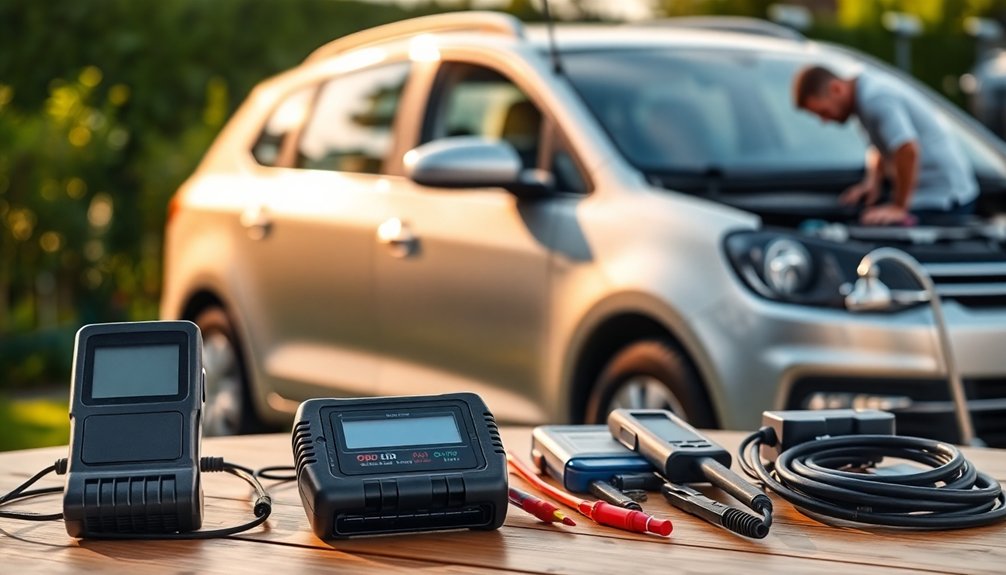
When you’re considering a used VW TDI, utilizing diagnostic tools can be a game changer in uncovering hidden issues.
These tools provide essential insights into the vehicle’s health, especially concerning transmission fluid and other systems. Here’s what to focus on:
- Check transmission fluid color; ideal should be maroon/red.
- Use advanced scanners like the MaxiSys Elite to diagnose complex errors.
- Verify important components’ functionality, such as the A/C and electrical systems.
- Review fault codes to uncover the vehicle’s repair history.
- Regular monitoring of investment performance can also be crucial for ensuring you’re making a sound financial choice when purchasing a used vehicle.
Evaluating Emissions Compliance
How can you guarantee your used VW TDI meets emissions standards?
First, check for documentation confirming the Dieselgate emissions fix, which includes a software adjustment and possibly hardware changes involving the Control Module.
Look for a VW sticker indicating these modifications have been performed; it’s essential for legal compliance and warranty coverage.
Don’t forget to review the emissions warranty status through the VIN, as it may cover repairs related to the emissions systems.
A vehicle history report will provide insights into past emissions testing and any previous issues.
Finally, keep in mind that post-fix models might show performance changes, such as increased engine noise and altered torque delivery, which you should consider during your evaluation. Additionally, supporting sustainable businesses that prioritize environmentally friendly practices can enhance your overall impact while shopping for a used vehicle.
Post-Purchase Considerations for Your TDI

After ensuring your used VW TDI meets emissions standards, your focus shifts to maintaining its performance and reliability.
Regular upkeep is essential for optimizing fuel economy and extending the vehicle’s lifespan. Here are some key considerations:
- Adhere to the recommended maintenance schedule, including timely oil changes and servicing the timing belt at 100,000-130,000 miles.
- Engage with TDI communities for maintenance tips and updates on recalls or emissions modifications.
- Conduct regular inspections of emissions components and the drivetrain to catch potential issues early.
- Find a reputable mechanic familiar with diesel engines to address specific concerns, especially regarding the oil pan and other vital parts.
- Consider using a budgeting tool like expense tracking to help manage the costs associated with ongoing maintenance and repairs.
Conclusion
Buying a used VW TDI can be a rewarding experience, but it requires careful attention to both the car’s history and its current condition. You might find a great deal, yet overlook vital maintenance records that could lead to costly repairs later. Balancing your excitement for a low price with the need for thorough inspections guarantees you make a wise investment. In the end, the journey of owning a TDI can be both economical and enjoyable if approached thoughtfully.