
 0
0
 0
0
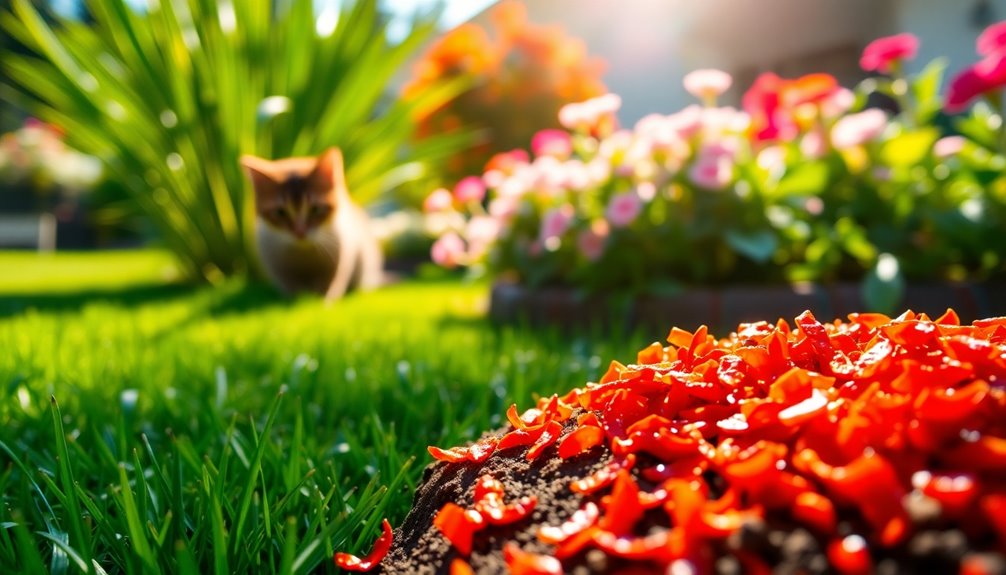
Cayenne pepper can effectively keep cats and raccoons away from your garden without costing a fortune. The capsaicin in cayenne irritates their senses, causing discomfort and deterring them from your plants. Just sprinkle it around your garden every couple of weeks, especially after rain. It’s a safe and eco-friendly option, but be cautious near edible plants to avoid altering their taste. Want to discover more tips on enhancing your pest control strategy? Keep exploring!
Why Use Cayenne Pepper for Pest Control?
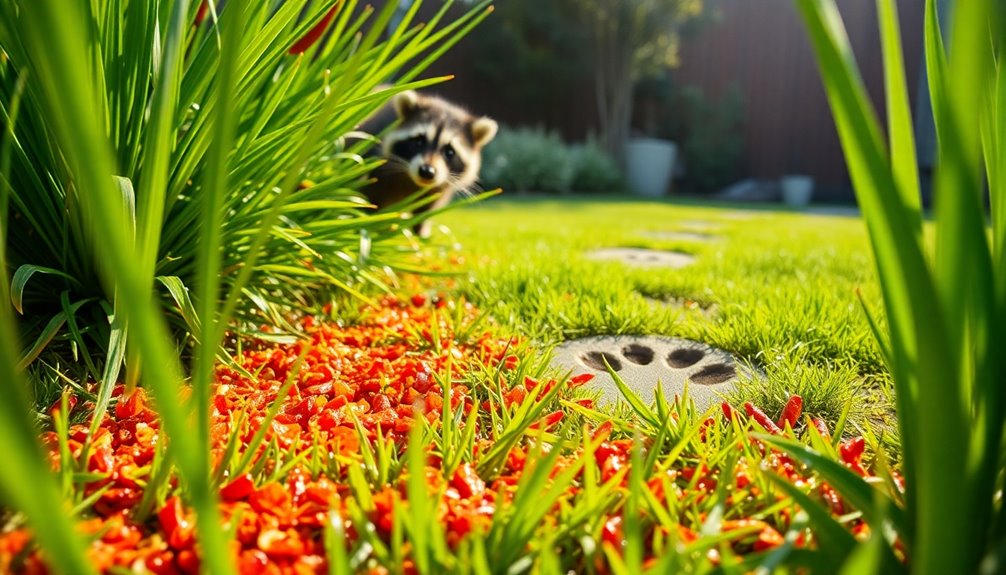
When you’re looking for a natural way to keep pests like cats and raccoons at bay, cayenne pepper is a fantastic option. This organic deterrent works effectively due to its strong scent and spiciness, making it uninviting for these animals.
It’s a non-toxic choice, so you don’t have to worry about harming your plants or the environment. To get the best results, make sure to apply cayenne pepper regularly, ideally twice a week.
It’s also an affordable solution, easily found at local dollar stores or grocery outlets. Just exercise caution when using it near edible crops like lettuce, as it might alter their taste. Additionally, embracing sustainable living practices through natural pest control methods like cayenne pepper helps reduce your environmental impact.
With cayenne pepper, pest control can be simple and budget-friendly!
How Cayenne Pepper Works to Deter Cats and Raccoons
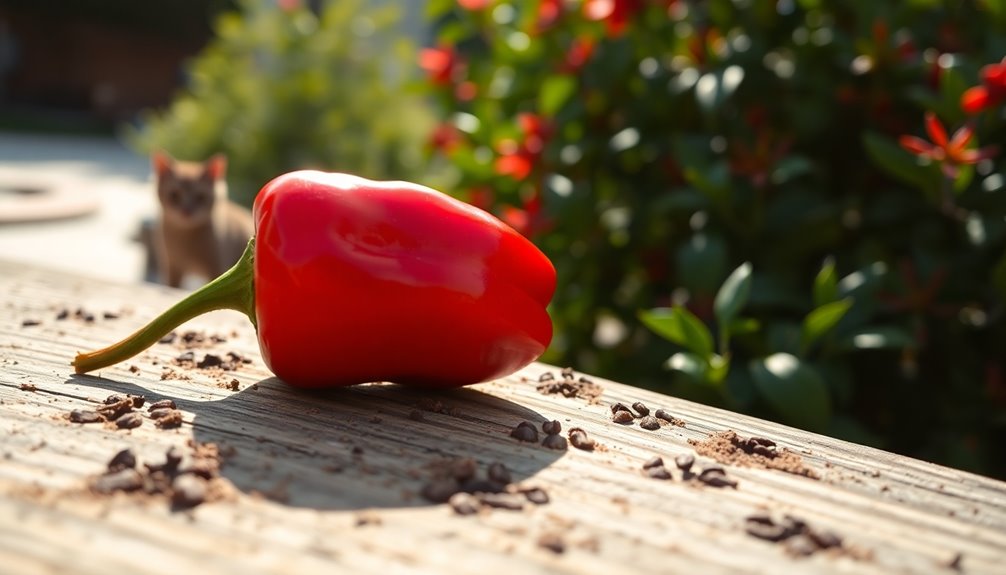
Cayenne pepper’s effectiveness as a pest deterrent hinges on its active ingredient, capsaicin. This compound irritates the sensitive noses and eyes of cats and raccoons, creating an unpleasant experience that discourages them from approaching your garden or coop.
Here’s how cayenne works to change animal behavior:
Cayenne pepper alters animal behavior by causing irritation, making areas less appealing for unwanted pests.
- Irritation: Capsaicin triggers discomfort in animals, making areas less inviting.
- Natural Repellent: Unlike synthetic options, cayenne is non-toxic, safe for plants, and minimizes harm to beneficial insects.
- Regular Reapplication: For ideal cayenne effectiveness, reapply every two weeks to combat rain or wind.
- Cautious Use: Be careful around edible plants, as residue can alter taste. Additionally, using cayenne pepper is a budget-friendly solution for keeping unwanted animals at bay.
Safe Application Methods for Your Garden
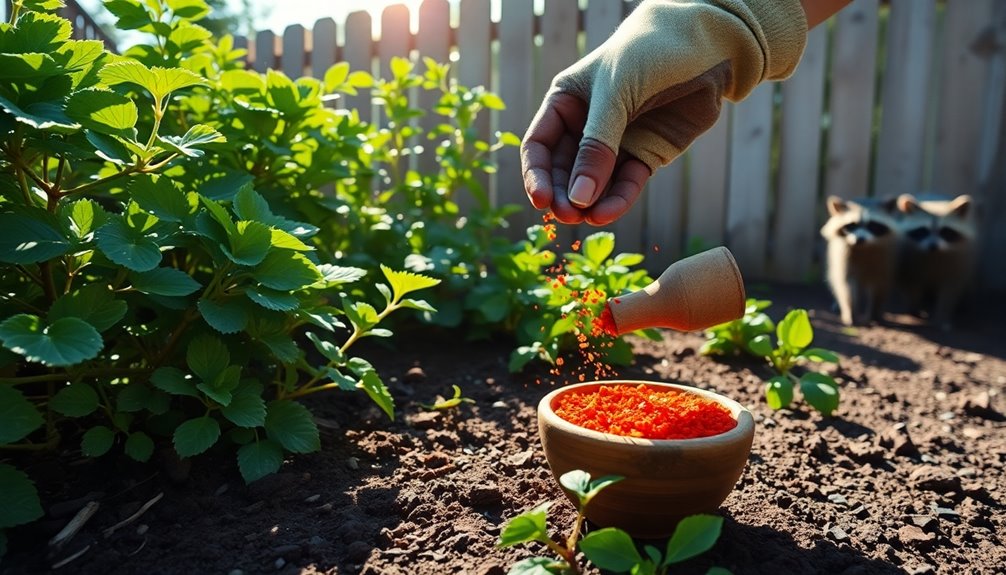
When it comes to applying cayenne pepper in your garden, you’ll want to focus on effective techniques and timing. Sprinkling it consistently around your plants can help keep cats and raccoons at bay. Remember to reapply it twice a week for the best results while being mindful of edible plants. Additionally, using eco-friendly practices when applying cayenne pepper can enhance your garden’s health and sustainability.
Application Techniques Overview
Creating a safe and effective pest control strategy for your garden starts with understanding the right application techniques. Here’s an application techniques overview for using cayenne pepper effectively:
- Sprinkle cayenne pepper around the perimeter of your garden and on affected plants to deter cats and raccoons.
- Apply sparingly to avoid overwhelming your plants; focus on areas showing animal activity.
- Reapply twice a week to maintain cayenne pepper benefits as a potent repellent.
- Wash edible plants thoroughly if applying near crops like lettuce to remove any residual spice before consumption.
Timing and Frequency Tips
How can you guarantee your pest control efforts are most effective? Start by employing solid application timing strategies. Aim to sprinkle cayenne pepper twice a week, focusing on leaves and garden perimeters.
This ideal frequency helps deter cats and raccoons while enhancing effectiveness over time. Pay attention to seasonal pest patterns; certain times of the year may require more frequent applications as animal activity increases.
Always monitor your plants for signs of pest activity and adjust your cayenne pepper applications accordingly. If you’re using cayenne around edible crops, remember to wash your produce, like lettuce, to avoid any unwanted spiciness.
Consistent application and observation guarantee your garden remains a pest-free haven.
Frequency of Application: How Often Should You Reapply?
To keep your cayenne pepper barrier effective, you should reapply it twice a week. Consistency in your application schedule not only helps maintain its potency but also enhances its ability to repel cats and raccoons. Remember to take into account weather conditions, as rain or wind may require you to apply it more often. Additionally, utilizing a user-friendly interface in your pest control methods can streamline the process and ensure consistent application.
Recommended Application Schedule
While maintaining a pest-free environment, it’s crucial to establish a consistent application schedule for cayenne pepper.
For maximum effectiveness, follow these application frequency strategies:
- Apply cayenne pepper twice a week to guarantee a strong barrier against cats and raccoons.
- Reapply after rainfall or watering since moisture can reduce its deterrent effect.
- Monitor treated areas regularly to assess pest activity and determine if further applications are needed.
- Consider cayenne pepper alternatives to enhance your pest control efforts and potentially decrease reapplication frequency.
Consistency Enhances Effectiveness
Maintaining a pest-free environment hinges on the frequency of your cayenne pepper applications. For ideal effectiveness, you should apply cayenne pepper twice a week. This consistent application frequency helps create a barrier against pests like cats and raccoons, reinforcing its deterrent presence.
Regularly sprinkling cayenne on plant leaves and around garden areas enhances the deterrent effect and guarantees ongoing protection from potential infestations. Keep in mind that environmental factors, such as rain or wind, can diminish the pepper’s effectiveness over time.
As a result, adjusting your garden maintenance routine to account for these elements is essential. By staying consistent with your cayenne pepper reapplications, you’ll greatly reduce pest behavior and maintain a thriving, pest-free garden.
Seasonal Considerations for Reapplication
As the seasons change, so does the need for adjusting your cayenne pepper reapplication schedule.
To effectively deter pests like cats and raccoons, consider these reapplication strategies:
- Twice a week: Maintain consistency to strengthen the deterrent effect.
- After rain: Reapply more frequently during wet seasons, as moisture washes away the pepper.
- Dry conditions: In dry weather, cayenne pepper may last longer, but check regularly for touch-ups.
- Peak activity times: Be extra vigilant during seasonal pest behavior spikes, as increased activity requires more frequent applications.
Precautions to Take When Using Cayenne Pepper Near Edibles
Using cayenne pepper near edible plants can be effective for deterring pests, but you need to take certain precautions to guarantee your produce remains safe and tasty.
First, always wash your vegetables thoroughly before consuming them to remove any cayenne residue. This is especially important for tender or leafy crops, like lettuce, which can experience flavor alteration if not cleaned properly.
Always wash your vegetables thoroughly to eliminate cayenne residue, especially leafy crops like lettuce, to preserve their flavor.
To avoid unintended taste changes, maintain a safe distance when applying cayenne pepper around your food crops. Regularly conduct pest inspections in your garden to check for signs of activity, as this will help you determine if additional measures are necessary alongside cayenne pepper use. Additionally, consider implementing detailed billing statements to track your pest control expenses effectively and ensure your harvest stays delicious and pest-free.
Taking these steps assures your harvest stays delicious and pest-free.
Effective Combinations: Pairing Cayenne With Other Organic Deterrents
Here are some effective combination strategies to boost your deterrent effectiveness:
- Motion-Activated Lights: Pair cayenne with lights to create a multi-faceted deterrent strategy.
- Noise-Making Devices: Incorporate wind chimes or ultrasonic deterrents to disrupt the environment further.
- Predator Urine: Use cayenne alongside natural repellents to exploit both scent and taste aversions.
- Regular Monitoring: Combine cayenne with good maintenance practices, like securing food sources, to strengthen your layered approaches. Additionally, consider using smart appliances that can help manage energy use while deterring pests with their efficiency.
Understanding the Limitations of Cayenne Pepper as a Repellent
Although cayenne pepper can be a useful deterrent for some pests, it has its limitations, especially against intelligent and persistent animals like raccoons.
Raccoon behavior often involves clever tactics to access food, making them less susceptible to cayenne’s spicy deterrent. Additionally, the potency of cayenne diminishes over time, which means you’ll need to reapply it frequently for any chance of effectiveness.
Since raccoons rely more on their keen senses than taste, they may ignore cayenne if they detect a food source. To enhance your pest control efforts, consider using alternative repellents and reinforce your barriers. Combining cayenne with stronger preventative measures, like securing coops, will yield better results in keeping these crafty critters at bay. Furthermore, understanding the role of budgeting in your pest control efforts can help allocate resources effectively to deter these unwanted visitors.
Monitoring Your Garden: Signs of Effectiveness or Failure
To gauge the effectiveness of cayenne pepper as a pest deterrent, regularly monitoring your garden is key. You should look for specific pest activity signs and changes in wildlife behavior.
Here are four steps to help you evaluate its impact:
- Inspect for Tracks and Droppings: Check for signs of raccoons or cats around your plants.
- Monitor Plant Health: Assess your plants’ growth post-application to verify cayenne isn’t harming them.
- Track Pest Frequency: Record the number of pest visits before and after using cayenne to measure reduction.
- Weather Conditions: Keep a log of rainfall and application times, as these can influence cayenne’s effectiveness. Additionally, consider implementing energy-saving habits to create a less inviting environment for unwanted pests.
Community Experiences: Success Stories and Tips for Using Cayenne Pepper
Many users report significant reductions in raccoon activity by sprinkling cayenne pepper around their gardens and chicken coops. Community feedback highlights the importance of targeting areas where raccoons have been spotted for better results. Some participants recommend combining cayenne with motion-activated lights and noise-making devices for enhanced effectiveness. Regular reapplication, especially after rain, is essential, according to user testimonials. Additionally, utilizing homemade vegetable stock can help create a pest-repellent environment by promoting plant health and resilience.
Conclusion
In the world of pest control, cayenne pepper can be your secret weapon—think of it as the spicy shield in your garden arsenal. While it won’t turn your backyard into Fort Knox, it might just send those sneaky cats and raccoons packing. Remember, like any hero’s journey, persistence is key. Keep an eye on your garden and combine forces with other natural deterrents for the best results. With a little effort, you can reclaim your space without breaking the bank!





Average Rating