

 0
0
 0
0
Paying $80 for an oil change at a dealership can seem excessive when you can do it yourself for around $30. While dealerships offer services like multi-point inspections, their marked-up parts can catch you off guard with hidden fees. By opting for DIY maintenance, you not only save money but also gain confidence in your skills. Maintaining a log of your oil changes is smart too. There’s more to reflect on regarding your maintenance choices, so keep exploring!
Understanding the True Cost of an Oil Change
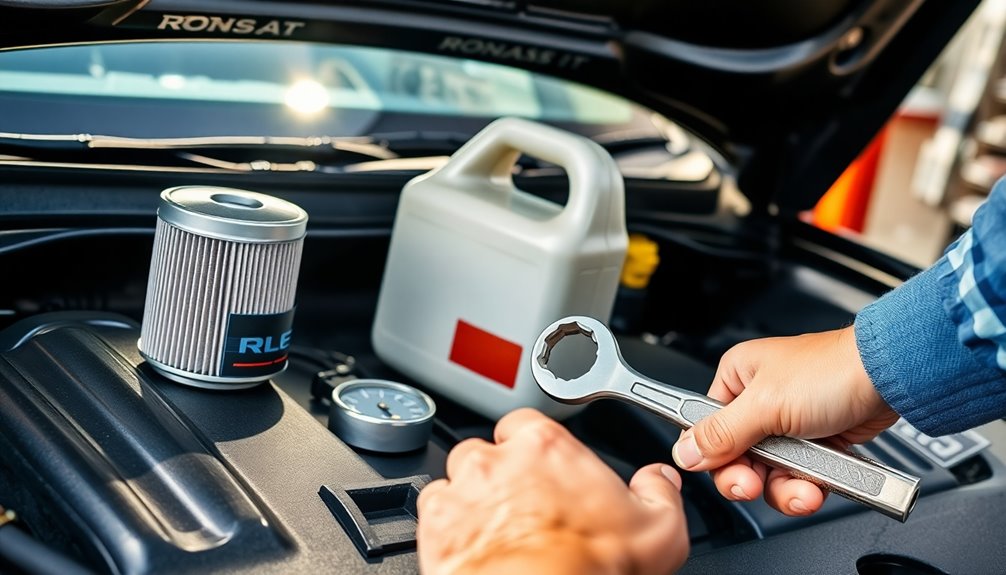
When it comes to understanding the true cost of an oil change, have you considered both the financial and practical aspects? A typical dealership might charge you around $80 for an oil change, which is considerably higher than the $30 you could spend if you handle it yourself.
While dealerships provide free multi-point inspections that can help keep your vehicle in good condition, you might want to weigh this against the costs. Expense tracking apps can assist you in managing the financial aspects of maintenance effectively.
Keeping detailed service records, whether you go DIY or use a dealership, is vital for maintaining your car’s value. Balancing convenience and expenditure lets you make informed decisions, ensuring your vehicle stays in top shape without breaking the bank.
Comparing DIY Oil Changes vs. Dealership Services

Choosing between DIY oil changes and dealership services can greatly impact your wallet and your vehicle’s upkeep.
If you opt for a DIY approach, you might spend around $30 compared to a dealership’s $80. That’s significant savings! However, you need to possess some maintenance knowledge and keep documentation for resale value.
Dealerships, on the other hand, often provide a free multi-point inspection, which can be handy for evaluating your car’s health. Additionally, consider that long-term costs of cheaper oil change options may add up over time due to potential issues arising from improper maintenance.
Remember, if you go the dealership route, you might feel regret about the higher costs within two weeks of the service.
Choosing dealership services may lead to buyer’s remorse over costs just weeks after your visit.
Weigh your options carefully—while DIY offers savings, dealership services can provide peace of mind and additional insights into your vehicle’s condition.
What’s Included in a Multi-Point Inspection?

A multi-point inspection is designed to give you a thorough overview of your vehicle’s health, covering critical components like the battery, brakes, tires, fluid levels, and belts.
During this inspection, you’ll benefit from early identification of potential issues, which can save you from costly repairs later on. Many dealerships even offer these inspections for free as part of service visits, making them an excellent option for regular maintenance.
The recommended inspection frequency is every 5,000 to 7,500 miles or during significant service intervals, ensuring you stay informed about your vehicle’s condition.
Plus, having detailed inspection results can serve as valuable documentation when presenting your vehicle to potential buyers, showcasing its maintenance history and boosting its resale value. Regular inspections can catch potential issues early, saving money in the long run.
Hidden Fees: Are Dealerships Marking Up Parts?
When you take your car to a dealership, you might be shocked to see the markup on parts.
For example, a simple touch-up paint could cost you over $20, while you could find the same product for much less elsewhere.
Understanding these hidden fees can help you compare costs and make smarter choices for your vehicle’s maintenance. Additionally, being aware of low expense ratios can lead to significant savings when budgeting for your car’s upkeep.
Markup On Parts
Although you might expect fair pricing at dealerships, many vehicle owners are surprised to find that parts often come with significant markups. For instance, a simple touch-up paint priced at $21.23 could be marked up well beyond its actual cost. This reflects the parts pricing strategies dealerships use to boost their profit margins.
When you compare the cost of an oil change at a dealership—around $75—against a DIY option for just $30, the difference becomes glaring. Hidden fees and inflated parts prices can leave you regretting your spending.
Being aware of these markups is essential for making informed choices about your vehicle maintenance and budgeting for future services, emphasizing the importance of consumer awareness initiatives.
Transparency In Pricing
Many vehicle owners discover hidden fees and inflated parts prices at dealerships that can catch them off guard.
Dealerships often employ pricing strategies that lead to significant markups, like a $75 oil change that balloons to $80 after tax, while a DIY option might only cost around $30.
Parts like touch-up paint, priced at $21.23 at dealerships, are frequently available for less elsewhere.
This lack of dealership transparency can leave you questioning the true cost of services.
By increasing consumer awareness of these discrepancies, you can make informed decisions about your vehicle maintenance.
Understanding the breakdown of dealership costs can reveal the potential savings of choosing DIY alternatives, ultimately empowering you to save money.
Comparing Dealer Costs
Hidden fees and inflated parts prices often plague dealership visits, leaving customers feeling overwhelmed by unexpected costs.
When you see an oil change priced at $80, you might wonder why DIY options only cost around $30. Dealers often mark up parts considerably; for example, a simple touch-up paint costs over $21, adding to your total.
This practice can undermine dealer reputation, especially if you feel you’re not receiving fair service quality. Many consumers don’t realize these hidden fees can lead to inflated bills, affecting customer loyalty.
The Long-Term Benefits of DIY Maintenance
The savings benefits are significant; spending around $30 instead of $80 for an oil change really adds up over time. By using quality oil and OEM filters, you guarantee peak performance and longevity for your vehicle. As you learn more about maintenance, you build DIY confidence, empowering you to tackle potential issues before they escalate. This hands-on experience provides valuable maintenance education, equipping you with skills that make you more self-sufficient. Plus, regular self-maintenance reduces costly dealership visits, letting you budget more effectively for your vehicle’s overall upkeep. Additionally, understanding the importance of battery health and maintenance history can significantly enhance your vehicle’s performance and longevity.
How to Document Your Oil Changes Effectively
To keep your vehicle in top shape, you need to document your oil changes effectively.
Start by maintaining detailed records of each change, including dates and mileage, and consider using visual documentation like photos. Creating a consistent schedule for updates will help you stay organized and demonstrate responsible ownership. Additionally, utilizing expense management apps with receipt scanning technology can help you track and categorize your oil change expenses efficiently.
Maintain Detailed Records
Maintaining detailed records of your oil changes is essential for tracking your vehicle’s health and ensuring you stay on top of maintenance.
Start by keeping a dedicated maintenance log that notes each oil change date, mileage, and the type of oil and filter used. Include receipts and invoices from both dealership visits and DIY oil changes to create a clear service history and financial record.
You might find it helpful to use a digital app or spreadsheet to categorize all maintenance activities, which can aid in tracking oil changes and sharing information with potential buyers.
Don’t forget to document any additional services performed, like multi-point inspections, to maintain a thorough view of your vehicle’s maintenance frequency and needs.
Use Visual Documentation
Keeping thorough records is only part of effective vehicle maintenance; visual documentation can enhance your understanding of the oil change process.
By incorporating visual proof, you not only track your efforts but also create a detailed maintenance log that reflects your diligence.
Here are some tips for effective photo documentation:
- Record Details: Maintain a dedicated log with the date, mileage, oil type, and filter brand for each change.
- Capture the Process: Take clear photos of the oil change, including the used oil and filter.
- Save Receipts: Keep receipts for all oil, filters, and tools purchased, ensuring complete financial records.
- Document Inspections: If done, save reports from any multi-point inspections to complement your oil change records.
This strategy will serve you well, especially when selling your vehicle.
Create Consistent Schedule
Creating a consistent schedule for oil changes is vital for maintaining your vehicle’s health and performance.
Start by keeping a dedicated maintenance log to record each oil change, noting the date, mileage, oil type, and filter used. This documentation helps with mileage tracking and guarantees you adhere to recommended service intervals.
Use a digital app or spreadsheet for scheduling reminders, so you know when your next oil change is due.
Don’t forget to save receipts or invoices as proof of maintenance, which can be beneficial for warranty claims or future buyers.
Regularly review and update your log to reflect any changes in your routine, making sure it remains an accurate resource for your vehicle’s upkeep.
Making Informed Choices for Vehicle Maintenance
How do you make informed choices about vehicle maintenance without getting lost in a sea of options? Start by conducting a thorough cost analysis and comparing services. Here are four key steps to guide you:
- Evaluate Maintenance Frequency: Know how often you need oil changes and other services to avoid overspending.
- Compare Costs: Look at dealership prices versus DIY options. An $80 oil change can be reduced to $30 at home.
- Check for Added Value: Consider what dealerships offer, like free inspections, which may justify the higher price.
- Document Everything: Keep records of all maintenance to enhance your vehicle’s resale value and show potential buyers it’s well cared for. Additionally, understanding financial benefits of used cars can help you allocate funds more effectively for maintenance expenses.
Making informed choices can save you money and keep your vehicle in top shape.
Conclusion
In summary, understanding the true cost of an oil change can save you money and keep your vehicle running smoothly. Did you know that a DIY oil change can cost as little as $30, compared to up to $80 at a dealership? By weighing the benefits of DIY maintenance against dealership services, you can make informed choices that fit your budget and preferences. Remember, keeping track of your oil changes is essential for your car’s longevity and performance.