 0
0
 0
0
When you’re in the store, look for reddish-brown, rough-skinned red yams, which have a starchy, earthy flavor. Sweet potatoes, with their smooth skin and varying colors, offer a sweet, creamy taste. Freshness is key: choose firm pieces without blemishes or soft spots. Red yams are great for roasting, while sweet potatoes shine in desserts. Both are nutritious and versatile. Keep going to discover more about their unique qualities and cooking methods!
Red Yam vs. Sweet Potato: What’s the Difference?
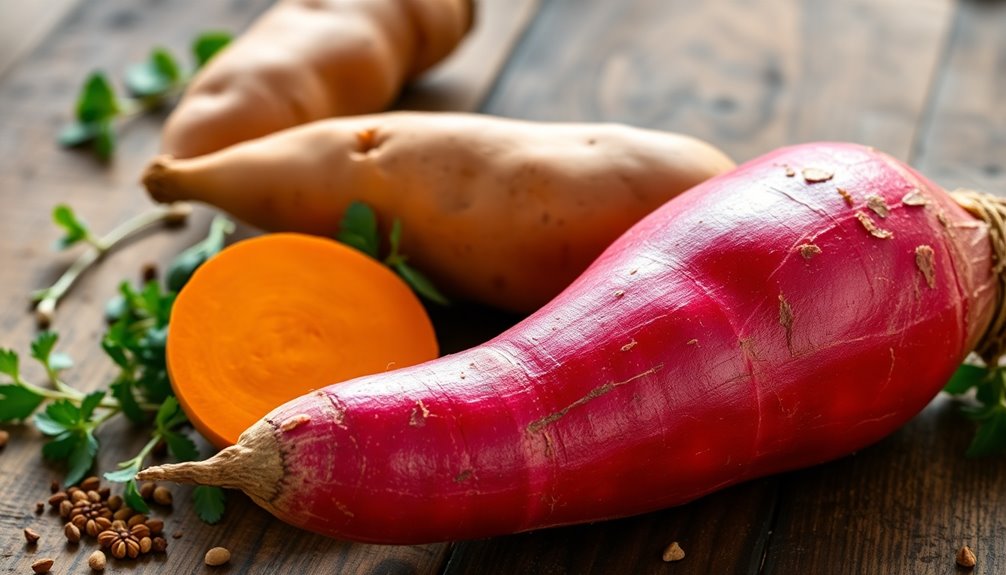
Have you ever wondered how red yams and sweet potatoes differ? While they may look similar, they come from different plant families. Nutritional comparisons reveal that sweet potatoes tend to be richer in vitamins A and C, while red yams are higher in potassium. Historically, yams have been a staple in African, Caribbean, and Asian cuisines, often used in savory dishes. In contrast, sweet potatoes have been a part of Native American diets and are frequently enjoyed in both savory and sweet recipes. Knowing these differences can help you choose the right one for your meals. Whether you’re aiming for nutrition or experimenting with flavors, understanding their unique characteristics can elevate your cooking game.
How to Identify Red Yams in the Store
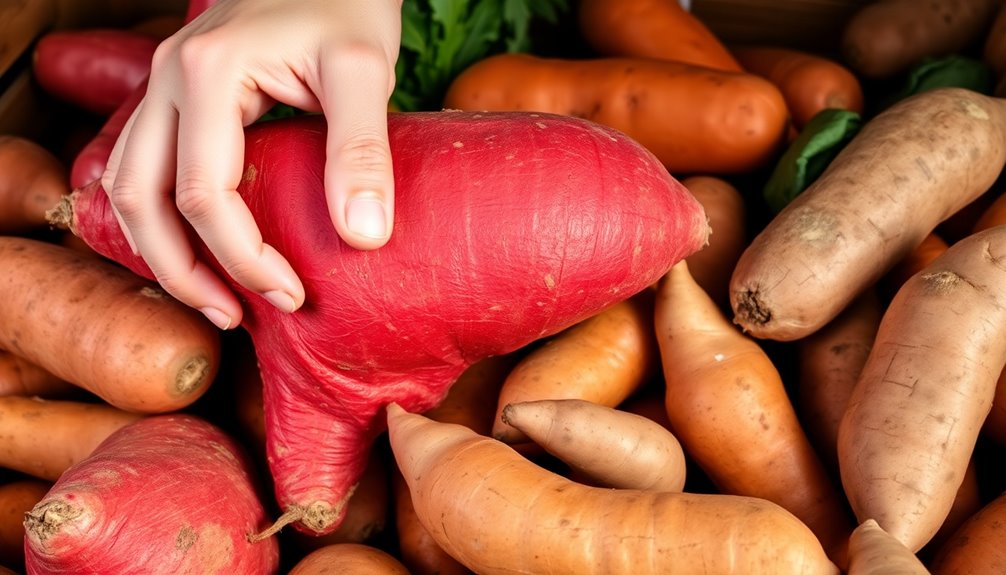
When you’re in the store, look closely at the skin color of the yams; red yams often have a reddish-brown hue. Pay attention to their shape and size, as they tend to be more elongated compared to sweet potatoes. Knowing these key differences will help you pick out the right tuber. Additionally, consider sourcing your produce through sustainable delivery practices, which can enhance your overall shopping experience.
Skin Color Variations
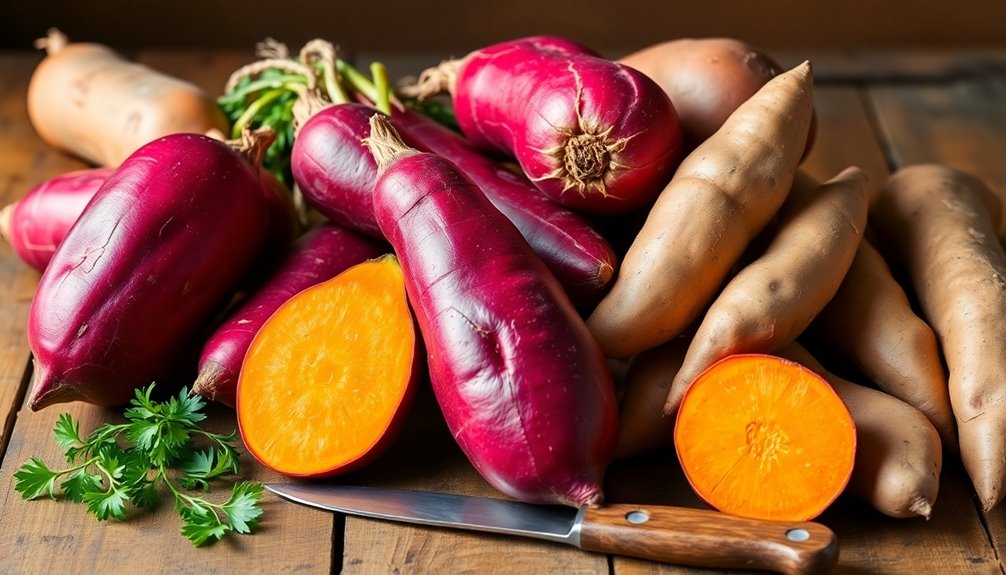
While maneuvering through the produce aisle, you’ll want to pay close attention to skin color variations to identify red yams accurately. Look for a reddish-brown hue, which distinguishes them from sweet potatoes.
The skin texture variations can also be a clue; red yams often have a rough, scaly surface, while sweet potatoes are generally smoother. You’ll notice color depth differences too—red yams tend to have a richer, deeper color compared to the lighter tones of sweet potatoes.
When selecting red yams, verify the skin isn’t too blemished or wrinkled, as this can indicate age or spoilage. By focusing on these characteristics, you can make a confident choice in the store.
Shape and Size Differences
Identifying red yams also involves paying attention to their shape and size.
You’ll notice that red yams generally have a more elongated, cylindrical shape compared to sweet potatoes, which can be rounder or more irregular.
When you pick one up, check for size variations; red yams can be quite large, often reaching up to 2 feet in length, while sweet potatoes tend to be smaller and more uniform in size.
Look for a smoother, less bumpy texture, as red yams usually have fewer protrusions.
Recognizing Sweet Potatoes: Tips and Tricks
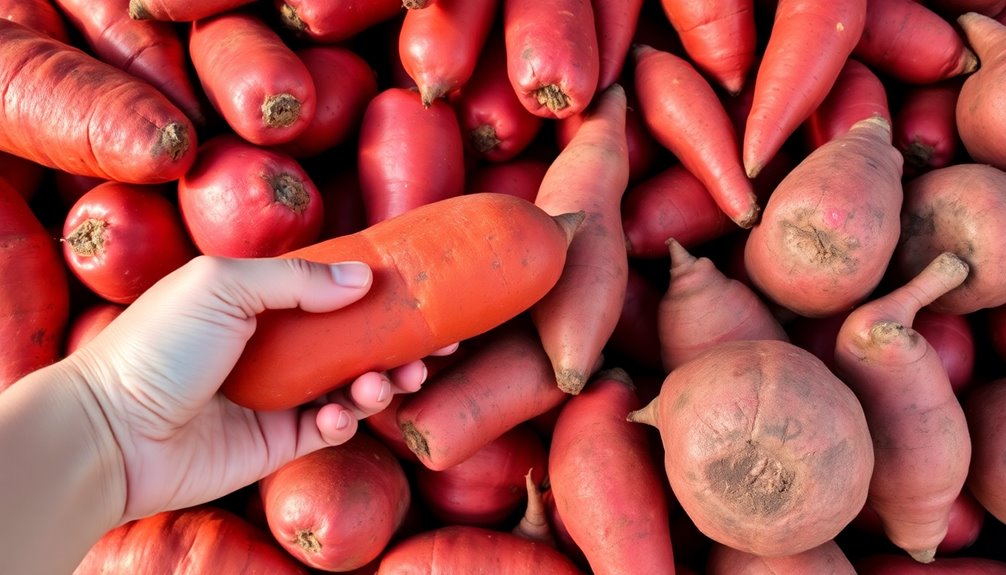
To distinguish sweet potatoes from other root vegetables, you’ll want to focus on a few key characteristics. First, look at the skin; sweet potatoes usually have a smooth, thin skin that can range in color from orange to purple. Their flesh varies as well, with many sweet potato varieties featuring vibrant orange or yellow interiors.
When you pick one up, feel for a firm texture—soft spots indicate spoilage. For cooking tips, remember that sweeter varieties work well in desserts, while starchier ones are great for savory dishes. Always choose sweet potatoes that are free of blemishes and wrinkles to guarantee freshness. Additionally, understanding culinary uses of sweet potatoes can help you select the best variety for your recipes.
With these tips, you’ll easily spot sweet potatoes at the store and make informed choices for your meals.
Flavor Profiles: What to Expect From Each
How do red yams and sweet potatoes differ in flavor? When you take a bite, you’ll notice distinct taste nuances that set them apart.
Red yams offer a starchy, earthy flavor, often likened to a nutty profile. In contrast, sweet potatoes are sweet, creamy, and rich, making them a favorite in both savory and sweet dishes.
Red yams bring a starchy, earthy nuttiness, while sweet potatoes delight with their sweet, creamy richness in diverse dishes.
Here’s what you can expect:
- A comforting warmth from red yams
- The natural sweetness of sweet potatoes
- Versatile culinary uses in both dishes
- The depth of flavor in roasted red yams
- Sweet potato’s ability to shine in desserts
- A reminder that seasonal fruit availability can impact your ingredient choices.
Choosing between them depends on your dish and desired flavor impact. Embrace their differences to elevate your cooking experience!
Texture Comparison: Red Yam vs. Sweet Potato
When you compare red yam and sweet potato, you’ll notice distinct differences in their flesh consistency. The cooking texture can vary widely between the two, affecting how they feel in your mouth. Understanding these contrasts helps you appreciate each ingredient’s unique qualities. Additionally, true yams, which belong to the Dioscorea genus, are starchier and rougher in texture compared to the smoother and creamier sweet potatoes.
Flesh Consistency Differences
The flesh consistency of red yam and sweet potato can greatly influence your cooking experience. When you’re choosing between them, consider their unique qualities.
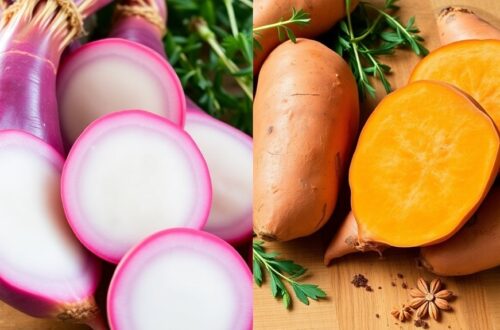
Red yam typically has a firmer flesh, with a slightly dense texture. Its flesh color ranges from white to pale yellow, making it perfect for hearty dishes.
On the other hand, sweet potatoes offer a softer, creamier texture, with flesh colors that can be orange, yellow, or even purple.
- You’ll enjoy the contrast in mouthfeel.
- Each bite brings a different flavor experience.
- The right choice can elevate your dish.
- Finding your favorite can be a culinary adventure.
- You’ll impress your family and friends with your knowledge!
Understanding these differences helps you create the perfect meal.
Cooking Texture Variations
Cooking with red yam and sweet potato offers distinct texture variations that can considerably affect the outcome of your dishes.
Red yam has a firmer, denser texture, making it ideal for roasting or baking, while sweet potato becomes creamy and soft, perfect for mashing or making soups. Your texture preferences will dictate which tuber to choose based on your dish.
For example, if you’re preparing a hearty casserole, red yam’s sturdiness holds up well in layered dishes. Alternatively, if you’re whipping up a creamy side, sweet potato will provide that luscious mouthfeel.
Experiment with different preparation techniques to find the right cooking methods, and consider how each tuber’s texture enhances your favorite dish pairings.
Taste and Mouthfeel Contrast
While you might think both red yam and sweet potato are similar, their taste and mouthfeel offer distinct experiences.
Red yams have a starchy, slightly nutty flavor with a firmer texture, making them ideal for savory dishes. Sweet potatoes, on the other hand, are sweeter and creamier, perfect for both sweet and savory culinary uses.
Consider these contrasts:
- Flavor pairing: Red yams with spices, sweet potatoes with honey.
- Texture contrasts: Firm vs. creamy.
- Culinary uses: Savory soups vs. sweet pies.
- Seasonal availability: Yams often in winter, sweet potatoes year-round.
- Regional preferences: Yams popular in Caribbean cuisines, sweet potatoes in Southern U.S.
Use these preparation tips to explore their unique flavors!
Nutritional Benefits of Red Yams
Red yams pack a powerful nutritional punch that can enhance your diet considerably. They’re rich in vitamins, particularly vitamin C and B6, which support your immune system and energy metabolism.
Red yams are a nutritious powerhouse, packed with vitamins C and B6 to boost immunity and energy metabolism.
You’ll also find essential minerals like potassium, promoting heart health and muscle function. The fiber content in red yams aids digestion and helps maintain a healthy weight.
When it comes to culinary uses, red yams are incredibly versatile. You can roast, mash, or incorporate them into soups and stews, making them a delicious addition to various dishes.
Their natural sweetness pairs well with both savory and sweet flavors, allowing you to enjoy their health benefits in numerous ways. Additionally, budget-friendly brands can help you incorporate nutritious ingredients like red yams into your meals without breaking the bank. So, consider adding red yams to your meals for a nutritious boost!
Nutritional Benefits of Sweet Potatoes
Sweet potatoes pack a powerful nutritional punch, offering a wealth of vitamins, especially vitamin A, that your body craves. They’re also rich in antioxidants, which help fight free radicals and promote overall health. Plus, their dietary fiber content supports digestion, making them a smart addition to your meals. Additionally, sweet potatoes are often considered the healthier choice due to their nutrient density compared to yams.
High In Vitamins A
Packed with vitamins, sweet potatoes are a nutritional powerhouse, especially when it comes to vitamin A. This essential nutrient offers numerous health benefits, promoting better vision, skin health, and immunity.
By including sweet potatoes in your diet, you can enhance nutrient absorption and support overall well-being.
- Boosts your immune system
- Improves night vision
- Supports healthy skin
- Aids in cell growth
- Enhances overall vitality
Incorporating sweet potatoes as a dietary source of vitamin A not only nourishes your body but also fills your meals with vibrant color and flavor.
Rich Antioxidant Content
While you might already know about the benefits of vitamins in sweet potatoes, their rich antioxidant content is equally impressive.
These vibrant tubers are packed with antioxidants like beta-carotene, which can help combat oxidative stress in your body. By incorporating sweet potatoes into your diet, you’re not just savoring a delicious dish; you’re also gaining substantial antioxidant benefits.
Research suggests that these compounds may lower the risk of chronic diseases, including heart disease and certain cancers. The health implications of consuming sweet potatoes regularly can be significant, as they support overall well-being.
Dietary Fiber Benefits
When you incorporate sweet potatoes into your meals, you’re not just indulging in a tasty side; you’re also boosting your dietary fiber intake. This versatile vegetable is one of the best fiber sources, bringing a wealth of health advantages to your diet.
Increased fiber intake supports your digestive health, helping you feel fuller longer and aiding in regularity.
- Reduces the risk of chronic diseases
- Promotes healthy weight management
- Enhances gut health and microbiome balance
- Stabilizes blood sugar levels
- Elevates overall energy levels
Cooking Methods: Best Ways to Prepare Each
Whether you’re roasting, boiling, or mashing, knowing the best cooking methods for red yams and sweet potatoes can elevate your dishes.
For baking, try using specific baking techniques to achieve that perfect caramelization. Steaming methods work wonders for retaining nutrients and flavor, while roasting tips can give you that crispy exterior you crave.
If you’re feeling adventurous, explore frying options for a delightful crunch, or experiment with grilling styles to add a smoky flavor.
For mashing ideas, blend in spices or herbs to enhance the taste. Casserole variations can make a comforting side dish, and don’t forget about soup recipes that highlight their creamy textures. Incorporating detailed billing statements in your meal prep can also ensure you have all the ingredients covered.
Each method brings out unique flavors, so have fun experimenting!
Common Dishes Featuring Red Yams
Red yams shine in a variety of delicious dishes, showcasing their versatility and rich flavor. You’ll love exploring these yam recipes that elevate your meals and delight your taste buds.
Red yams bring versatility and rich flavor to your dishes, transforming everyday meals into delightful culinary experiences.
Whether you’re preparing a cozy dinner or a festive gathering, red yams can take center stage.
- Creamy red yam mash with garlic
- Roasted red yams drizzled with honey
- Spicy red yam and black bean tacos
- Red yam curry bursting with spices
- Sweet red yam pie for dessert
These culinary uses not only make your dishes vibrant but also add a comforting touch. Additionally, incorporating red yams can enhance your meals with nutritional benefits that support overall health.
Popular Recipes Using Sweet Potatoes
Exploring the world of sweet potatoes opens up a treasure trove of delicious possibilities. You can whip up comforting sweet potato casseroles or enjoy perfectly roasted sweet potatoes as a side dish.
Craving a snack? Try making crispy sweet potato fries or crunchy sweet potato chips. For a warm meal, sweet potato soup is both hearty and satisfying.
If you’re feeling adventurous, stuff your sweet potatoes with your favorite fillings for a delightful twist. Don’t forget to indulge in classic sweet potato pie or a light sweet potato salad.
And for breakfast, sweet potato pancakes are a fantastic choice, while creamy mashed sweet potatoes make a perfect accompaniment to any meal. Enjoy experimenting with these versatile ingredients! Additionally, using nutritional benefits of sweet potatoes can enhance your meals and boost overall health.
Conclusion
When you’re in the store, remember that red yams and sweet potatoes each bring something unique to your meals. By knowing their differences in flavor, texture, and nutrition, you can make a savvy choice. So, whether you’re whipping up a classic casserole or a trendy mash-up, trust your taste buds to guide you. After all, just like a good vinyl record, the right ingredient can spin your dish to perfection! Happy cooking!