 0
0
 0
0
Yams and sweet potatoes might look similar, but they’re quite different. Yams, originating from Africa and Asia, have rough, dark skin and a starchy flavor. Sweet potatoes, coming from Central and South America, feature smoother skin and a sweeter, creamier taste. Nutritionally, sweet potatoes usually pack more vitamins, while yams offer a hearty source of carbohydrates. Knowing these differences can enhance your cooking. You’ll discover even more insights about these tubers as you explore further.
What Are Yams and Where Do They Come From?
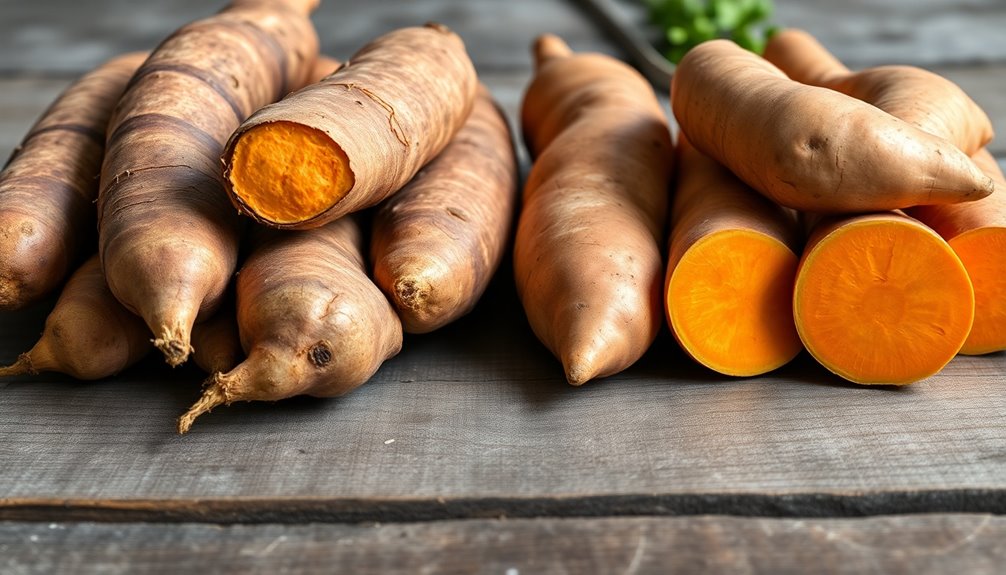
Yams are often confused with sweet potatoes, but they’re a distinct tuber with a rich history. Originating in Africa and Asia, yam cultivation has spread globally, with many different yam varieties available. These varieties can range in texture and flavor, offering unique options for your meals. When you explore yam nutrition, you’ll find they’re packed with vitamins, minerals, and fiber, making them a healthy choice. Plus, they’re incredibly versatile in the kitchen. From hearty yam recipes like stews and casseroles to simple roasted yams, you can enjoy them in various ways. Additionally, true yams have a rough, bark-like skin that distinguishes them from sweet potatoes.
The Origins of Sweet Potatoes Explained
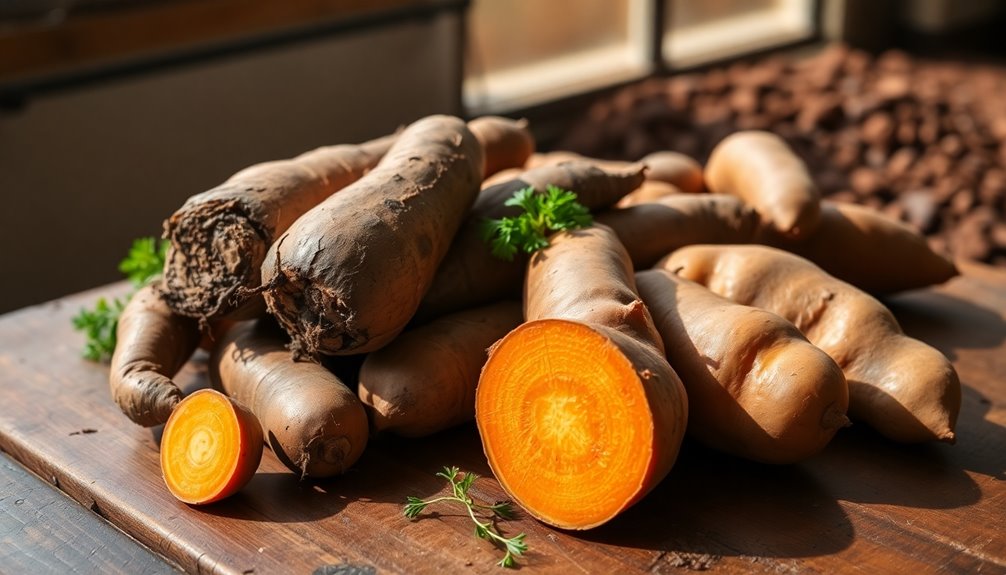
While yams have their own rich history, sweet potatoes offer a fascinating story of their own. Originating in Central and South America, these tubers have been cultivated for thousands of years.
You might be surprised to learn that there are numerous sweet potato varieties, each with unique flavors and textures. The most popular ones include the orange-fleshed Beauregard and the purple-skinned Okinawan. Their historical significance can’t be overstated, as they’ve been a staple food source for many indigenous cultures. When sweet potatoes made their way to Europe and beyond, they quickly gained popularity, shaping cuisines around the world. Understanding their origins helps you appreciate the depth of flavor and tradition behind this beloved vegetable. Additionally, sweet potatoes are known for their high levels of beta-carotene, contributing to their nutritional appeal.
Key Differences in Appearance: Yams vs. Sweet Potatoes
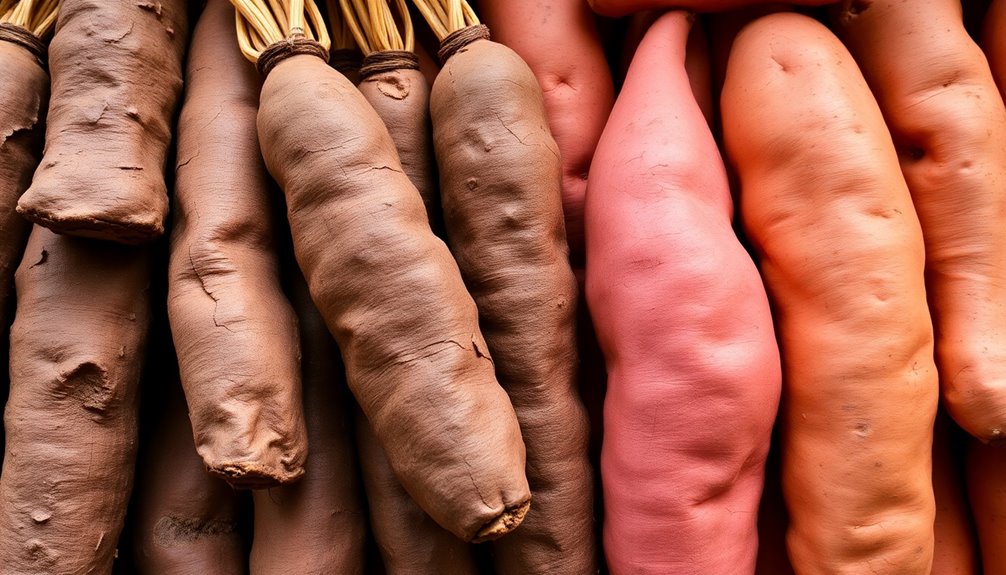
When you compare yams and sweet potatoes, their appearances can be strikingly different.
You’ll notice variations in skin texture, with yams often having rough, scaly skin, while sweet potatoes tend to be smoother.
Plus, the flesh colors and sizes vary, giving each type its unique character. True yams belong to the Dioscorea genus, while sweet potatoes come from the morning glory family.
Skin Texture Variations
Although they’re often confused, the skin textures of yams and sweet potatoes reveal key differences in their identities.
Yams typically have thicker, rougher skin, often resembling tree bark, while sweet potatoes boast smoother, thinner skins.
When you pick them up, you’ll notice the distinct texture sensations: yams feel more rugged and coarse, while sweet potatoes offer a softer, more polished touch.
These skin thickness variations not only affect appearance but also influence how you prepare them.
If you’re aiming for a dish that highlights skin texture, knowing these differences can enhance your culinary experience.
Flesh Color Differences
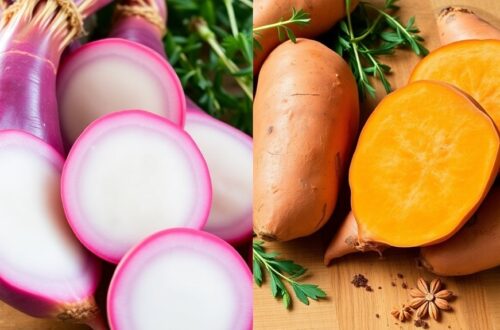
The flesh color of yams and sweet potatoes can vary considerably, making it easy to distinguish between the two. Yams typically have a starchy, white or purple flesh, depending on the variety, while sweet potatoes showcase a range of colors, from pale yellow to vibrant orange and even purple.
This difference in flesh color can influence your cooking methods, as orange-fleshed sweet potatoes are sweeter and creamier when baked, while white-fleshed yams are denser and starchier. If you’re aiming for a specific flavor or texture in your dish, knowing the flesh color can be key.
Next time you’re at the grocery store, remember to check the flesh color to choose the best option for your recipe!
Size and Shape
After understanding the differences in flesh color, it’s important to recognize how size and shape further set yams and sweet potatoes apart.
Yams typically boast substantial size variations, often reaching up to three feet long and weighing several pounds. Their skin is rough and scaly, with a more cylindrical shape.
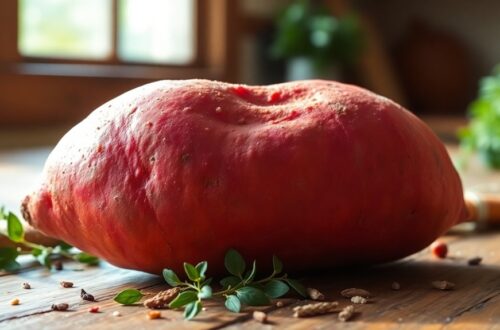
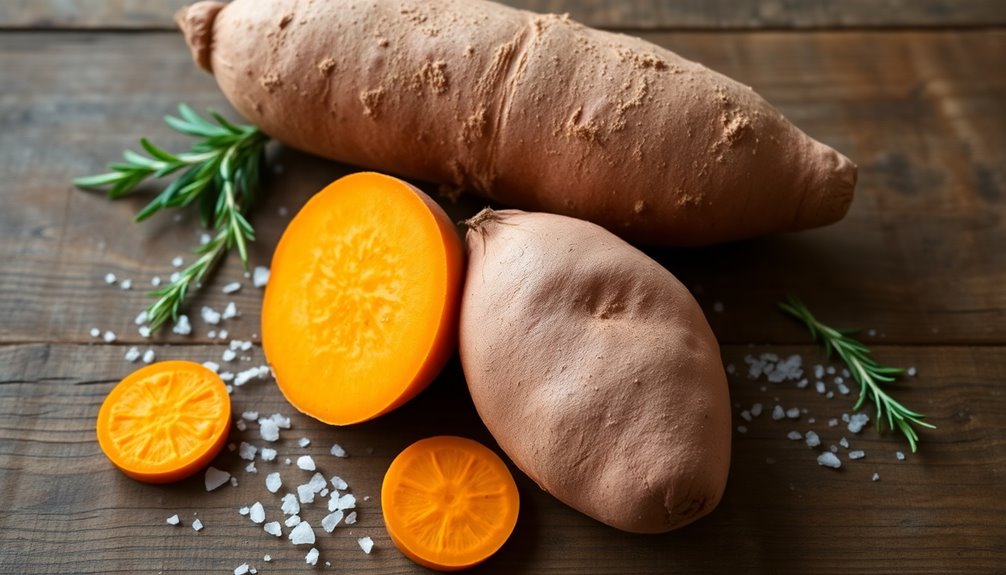
On the other hand, sweet potatoes usually come in smaller, more varied sizes, often resembling a tapered, oval form. Their skin can be smooth or rough, depending on the variety.
While yams are generally uniform in shape, sweet potatoes display greater shape distinctions, making them visually unique.
Flavor Profiles: How Do Yams and Sweet Potatoes Taste?
How do yams and sweet potatoes differ in flavor? The taste differences are quite striking. Yams have a more starchy, earthy flavor, often described as nutty, while sweet potatoes are sweeter and creamier, with a hint of vanilla.
When you cook them, the methods can enhance these flavors. Roasting sweet potatoes caramelizes their sugars, intensifying their sweetness. In contrast, boiling yams can bring out their natural earthiness, making them perfect for savory dishes.
If you mash them, sweet potatoes will yield a smooth, buttery texture, while yams can be drier and more fibrous. Choosing the right cooking method can really elevate the distinct flavors of each, so experiment to find what you enjoy most! Additionally, incorporating budget-friendly ingredients into your meals can make it easier to enjoy these delicious root vegetables without breaking the bank.
Nutritional Comparisons: Yams vs. Sweet Potatoes
When considering the flavor profiles of yams and sweet potatoes, it’s important to look at their nutritional differences as well.
Sweet potatoes generally pack more nutritional benefits than yams, offering higher levels of vitamins A and C, potassium, and fiber. This makes them a fantastic choice for boosting your immune system and promoting digestive health.
Yams, while lower in calories, provide a good source of carbohydrates and are rich in vitamin B6. If you’re watching your calorie content, yams could be a better option.
However, both are nutritious in their own right, so incorporating a variety of these tubers into your diet guarantees you get a broad range of nutrients. Additionally, sweet potatoes, particularly Jewel sweet potatoes, are known for their high beta-carotene content, contributing to overall health.
Choose based on your taste preferences and health goals!
Common Culinary Uses for Yams
While yams may not be as widely recognized as sweet potatoes, they offer a variety of culinary uses that can elevate your dishes. You can explore different yam varieties, each bringing unique flavors and textures to the table.
In savory dishes, try roasting or mashing yams for a hearty side. For a twist, incorporate them into soups or stews for added creaminess.
If you’re in the mood for something sweet, yams work beautifully in pies or puddings, lending a rich taste. There are countless yams recipes out there, from curries to casseroles, allowing you to experiment and discover your favorites. Additionally, expense tracking apps can help you manage the costs associated with purchasing ingredients for your culinary adventures.
Delicious Ways to Cook Sweet Potatoes
Transform your meals with the delicious versatility of sweet potatoes! You can whip up creamy mashed sweet potatoes for a comforting side, or enjoy roasted sweet potatoes seasoned with your favorite spices.
Craving something crispy? Try making sweet potato fries or sweet potato chips for a healthy snack. For a heartier dish, consider stuffed sweet potatoes filled with black beans, cheese, and veggies.
A warm bowl of sweet potato soup makes for a cozy meal, while sweet potato salads offer a rejuvenating twist, especially when paired with greens and nuts.
Don’t forget the classic sweet potato casseroles, perfect for gatherings. With these options, you’ll never run out of tasty ways to enjoy sweet potatoes! Additionally, incorporating affordable hair care can enhance your overall self-care routine.
Are Yams or Sweet Potatoes Healthier?
Determining whether yams or sweet potatoes are healthier depends on your nutritional needs and preferences.
Sweet potatoes are often praised for their high fiber content, vitamin A, and antioxidants, which can support vision and immune health. They also have a lower glycemic index, making them a better choice for blood sugar control.
On the other hand, yams are rich in potassium and vitamin C, offering different nutritional benefits that can aid in muscle function and overall health. Additionally, incorporating nutritious superfoods like chia seeds can further enhance your diet.
When considering health comparisons, it’s essential to think about how you plan to use them in your diet.
Both can be nutritious options, so choose based on your dietary goals and taste preferences.
Storage Tips: How to Keep Yams and Sweet Potatoes Fresh
To keep yams and sweet potatoes fresh, it’s crucial to store them properly. Use breathable storage containers to minimize moisture control and prevent spoilage.
The ideal temperature for storage is between 55°F and 60°F, so place them in a cool, dark pantry rather than the refrigerator. High humidity levels can help extend their shelf life, but avoid excess moisture. If you need to store them long-term, consider freezing methods after cooking. For raw yams and sweet potatoes, curing techniques can enhance their flavor and longevity; simply let them sit in a warm, humid environment for a week.
Additionally, ensuring proper temperature management can prevent spoilage and maintain quality. Finally, limit light exposure, as it can lead to sprouting and deterioration. Follow these tips to enjoy your root vegetables longer!
Common Misconceptions About Yams and Sweet Potatoes
What do you really know about yams and sweet potatoes? Many folks get them mixed up due to culinary confusion and cultural misidentification.
While both are starchy tubers, yams are often mistaken for sweet potatoes, especially in the U.S. This leads to texture misconceptions, as yams are drier and starchier compared to the creamy sweetness of sweet potatoes.
Myths about their origins also abound, with some claiming yams have mythical origins tied to African traditions. In reality, the two are distinct botanically, with yams belonging to the Dioscorea genus and sweet potatoes to the Ipomoea family.
Understanding these differences can enhance your cooking and appreciation for each tuber. So, next time you’re at the store, remember: they’re not interchangeable, and knowing the truth can elevate your culinary game.
The Role of Yams and Sweet Potatoes in Global Cuisines
Yams and sweet potatoes play essential roles in cuisines around the world, each bringing unique flavors and textures to dishes.
You’ll find them featured in everything from hearty stews to sweet desserts, showcasing their versatility.
Plus, their nutritional benefits and cultural significance add to their appeal, making them staples in many households.
Culinary Uses Worldwide
While both yams and sweet potatoes hold a significant place in various cuisines around the globe, their culinary uses often reflect the traditions and flavors of different cultures.
In West Africa, you might find yams boiled, pounded, or fried, creating a staple dish known as “yam porridge.”
Meanwhile, sweet potatoes shine in dishes like American casseroles or Japanese tempura, showcasing diverse cooking techniques.
In Latin America, you can enjoy sweet potatoes roasted or mashed in global recipes that highlight their sweetness.
Whether you’re exploring Caribbean stews with yams or Thai curries featuring sweet potatoes, you’ll discover how these tubers enhance flavors and textures across continents, making them beloved ingredients in countless kitchens worldwide.
Nutritional Differences Explored
When comparing yams and sweet potatoes, you’ll find that their nutritional profiles reflect their unique properties and benefits.
Yams, often starchier, are lower in vitamin content but offer a good source of potassium and fiber.
Sweet potatoes, on the other hand, shine in nutrient density, packed with vitamins A and C, which support immune function and skin health. Their vibrant orange color indicates high beta-carotene levels, essential for eye health.
While both provide carbohydrates, sweet potatoes generally have a lower glycemic index, making them a better choice for blood sugar management.
Incorporating either into your diet can enhance your overall nutrition, but sweet potatoes often take the lead regarding vitamins and health benefits.
Cultural Significance Across Regions
Across the globe, yams and sweet potatoes play essential roles in various cuisines, often reflecting the cultural heritage of the regions they inhabit. In many cultures, these tubers are more than just food; they’re embedded in cultural traditions.
For instance, sweet potatoes are often featured in festival foods during harvest celebrations, symbolizing gratitude and abundance. Yams, particularly in West Africa, hold significant historical importance, forming the basis of numerous regional dishes.
Each bite connects you to a rich culinary heritage, showcasing unique flavors and preparation methods. The symbolic meanings attached to these foods highlight their importance in rituals and gatherings, reminding you of the diverse ways these ingredients enrich lives across different cultures.
How to Identify Real Yams in the Grocery Store
How can you spot real yams in the grocery store? First, check for their appearance. Authentic yams are often long and cylindrical, with rough, scaly, or bark-like skin. They can be white, purple, or yellow inside, unlike sweet potatoes.
Use these yams identification tips: look for a firm texture; avoid any that feel soft or have dark spots.
Next, consult your grocery store guide—yams are usually found in the international or ethnic foods section. If you’re unsure, ask a store employee for help.
Sweet Potato Varieties: What’s the Difference?
When it comes to sweet potatoes, the variety you choose can greatly impact your dish.
You’ll find an array of colors, from creamy white to vibrant orange, each offering unique flavor profiles.
Let’s explore how these differences can enhance your meals.
Color Variations Explained
Sweet potatoes come in a stunning array of colors, each indicating different flavors and textures. Their vibrant hues not only enhance culinary aesthetics but also carry color symbolism that can influence your dish’s appeal.
Here’s a quick look at some common varieties:
- Orange: Sweet and creamy, perfect for pies or casseroles.
- White: Mildly sweet with a firmer texture, great for roasting.
- Purple: Earthy flavor and vibrant color, ideal for visually striking dishes.
- Yellow: Slightly nutty, perfect for mashing or frying.
Each color brings its own unique qualities, allowing you to create visually appealing meals while exploring a range of textures and flavors.
Flavor Profiles Overview
While many people associate sweet potatoes with a single flavor, each variety offers distinct taste profiles that can elevate your dishes.
For instance, the orange-fleshed sweet potato is known for its creamy texture and sweet, caramel-like flavor, making it perfect for pies and casseroles. In contrast, the white-fleshed variety boasts a more subtle taste, which pairs well with savory dishes.
You might also encounter purple sweet potatoes, which have an earthy sweetness and a slightly nutty flavor.
When you explore taste comparisons, you’ll discover these flavor nuances enhance your culinary creations.
Whether you’re roasting, mashing, or baking, exploring different sweet potato varieties can add depth and excitement to your meals.
Can You Substitute Yams for Sweet Potatoes in Recipes?
Can you really swap yams for sweet potatoes in your favorite recipes? While they might seem similar, there are some key differences. Here’s what you should know about yam substitutions and sweet potato alternatives:
- Texture: Yams are starchier and drier, while sweet potatoes are creamier and sweeter.
- Cooking Time: Yams may take longer to cook, which can affect your dish’s timing.
- Flavor: The distinct flavors can change the overall taste of your recipe.
- Nutritional Value: Yams and sweet potatoes offer different vitamins and minerals, impacting your meal’s health benefits.
In many cases, you can substitute one for the other, but be prepared for the nuances in flavor and texture.
Tips for Choosing the Best Yams and Sweet Potatoes at the Market
When you’re at the market, look closely at the skin color of yams and sweet potatoes; it can tell you a lot about their freshness.
You’ll also want to give them a gentle squeeze—firmness indicates quality.
Don’t forget to weigh them too; heavier ones often mean more moisture and flavor.
Skin Color Indicators
Choosing the best yams and sweet potatoes starts with observing their skin color. Many culinary misconceptions exist, but understanding skin color associations can guide your selection.
Here are some tips to help you pick the right ones:
- Yams typically have a rough, dark brown or purplish skin.
- Sweet potatoes often showcase a smooth, light tan or reddish hue.
- Look for consistent color without blemishes or soft spots.
- The skin should feel tight; loose skin may indicate age.
Firmness and Weight
After you’ve assessed the skin color, the next step in selecting quality yams and sweet potatoes is to evaluate their firmness and weight.
Gently squeeze each one; you want a firm texture without any soft spots, which can indicate spoilage.
In a texture comparison, yams generally feel denser than sweet potatoes, which are often lighter.
When weighing them in your hands, choose the heavier options, as they typically have more moisture and better flavor.
This can greatly impact your cooking methods, whether you’re baking, boiling, or roasting.
Remember, the right firmness and weight can enhance your dishes and guarantee a delicious outcome.
Happy shopping!
Conclusion
So, whether you’re drawn to the earthy, starchy bite of yams or the sweet, creamy richness of sweet potatoes, both bring unique flavors to your table. Imagine a warm, comforting dish where yams’ heartiness contrasts with the vibrant sweetness of sweet potatoes. Each has its place in your kitchen, ready to elevate your meals. Next time you shop, remember their differences, and let your taste buds decide which one steals the show!