 0
0
 0
0
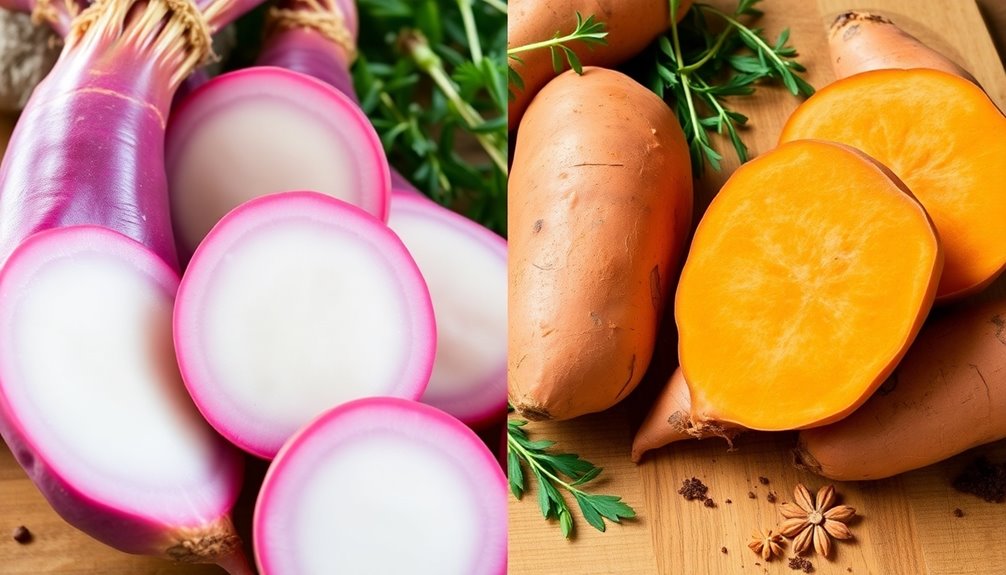
When comparing Japanese yams and sweet potatoes, you’ll find each has unique flavors and culinary uses. Japanese yams offer a creamy texture and nutty taste, perfect for grilling or roasting. Sweet potatoes, known for their vibrant colors and sweetness, shine in both savory and sweet dishes. Nutritionally, they provide vitamins A and C, with sweet potatoes being higher in antioxidants. If you’re curious about their specific health benefits and cooking methods, you’ll find more insights just ahead.
What Are Japanese Yams and Sweet Potatoes?
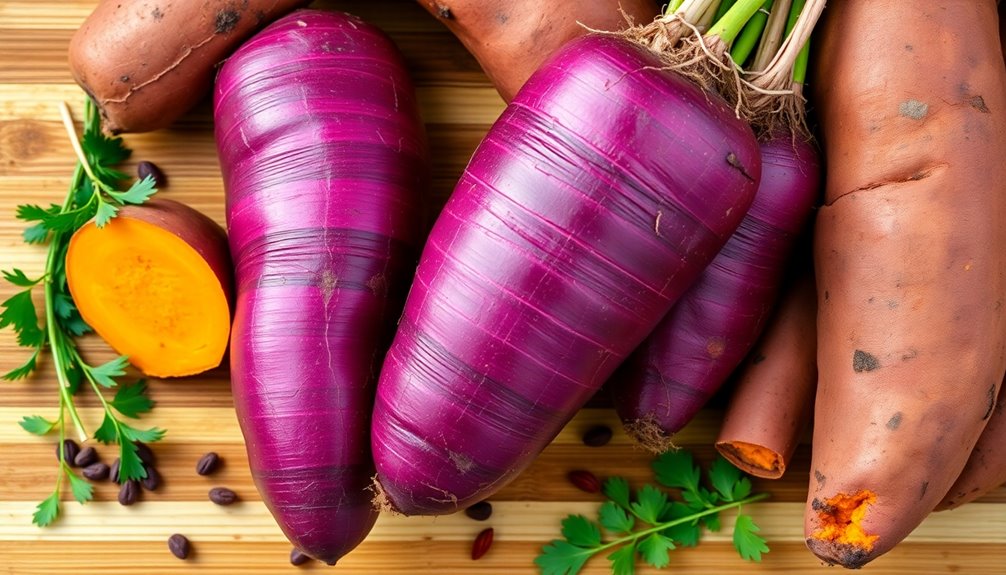
When you think of root vegetables, Japanese yams and sweet potatoes often come to mind. Both have distinct characteristics and rich histories, with Japanese origins adding to their uniqueness.
Japanese yams, or “yakiimo,” are starchy tubers with a creamy texture and nutty flavor, often enjoyed grilled or roasted.
Japanese yams, or “yakiimo,” boast a creamy texture and nutty flavor, making them a delightful choice for grilling or roasting.
Sweet potatoes, on the other hand, come in various varieties, each offering a sweet taste and vibrant colors. Their culinary versatility allows you to use them in both savory and sweet dishes, from soups to desserts. Both types are rich in vitamins A and C, making them excellent nutritious options for your meals.
While they share some similarities, their preparation and culinary uses can differ greatly. Exploring these root vegetables can enhance your meals and introduce you to delightful new flavors in your cooking repertoire.
How Do Japanese Yams and Sweet Potatoes Differ in Flavor?
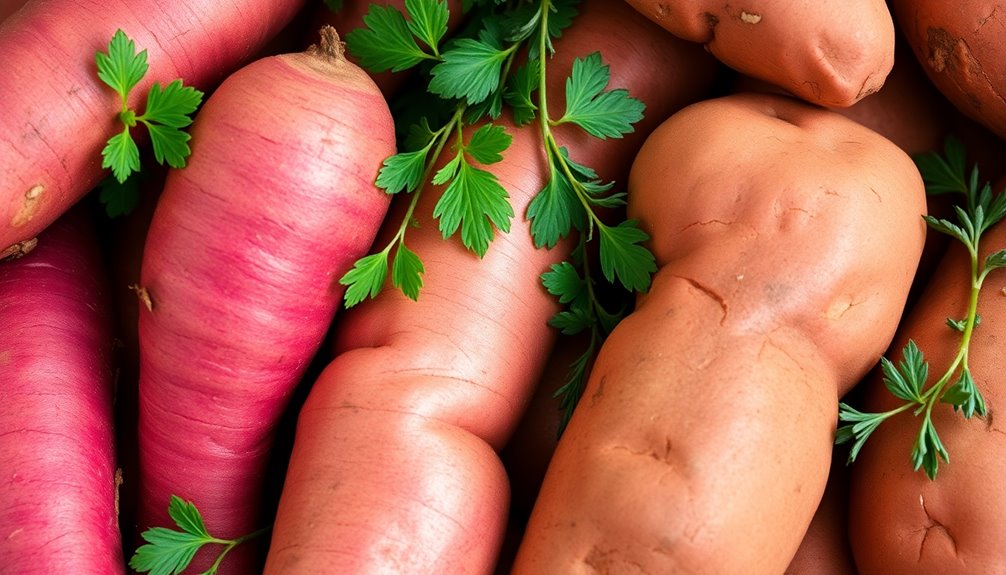
When you taste Japanese yams, you’ll notice their subtly sweet, nutty flavor and creamy texture. In contrast, sweet potatoes pack a richer sweetness and a denser, more fibrous feel. Understanding these differences can help you choose the right ingredient for your next dish. Additionally, Japanese yams are often used in savory dishes due to their drier texture compared to the sweeter profile of sweet potatoes.
Flavor Profiles
Japanese yams and sweet potatoes each offer distinct flavor profiles that can elevate your dishes in unique ways.
Japanese yams tend to have a subtly sweet and earthy flavor, making them perfect for roasting or steaming. You might enjoy them paired with savory ingredients like miso or garlic, enhancing their natural taste.
On the other hand, sweet potatoes are sweeter and creamier, ideal for baking or mashing. Their flavor pairs wonderfully with cinnamon, nutmeg, or even spiced dishes, creating a comforting experience.
Depending on your cooking techniques, you can highlight these flavors to suit your meals. Experimenting with different combinations will help you discover which yam or potato best complements your favorite recipes.
Texture Variations
While flavor plays a significant role in choosing between Japanese yams and sweet potatoes, texture variations also set them apart.
Japanese yams have a creamy, smooth texture that makes them ideal for mashing or blending into soups. When you cook them, they often become velvety, enhancing dishes with a luxurious mouthfeel.
On the other hand, sweet potatoes boast a denser, firmer cooking texture. When baked, they can turn slightly flaky, offering a more substantial bite.
These texture differences can influence your cooking choices; for instance, if you want a silky puree, go for Japanese yams, but if you prefer a heartier side dish, sweet potatoes are your best bet.
Understanding these variations helps elevate your culinary creations.
Nutritional Profiles: Japanese Yams vs. Sweet Potatoes
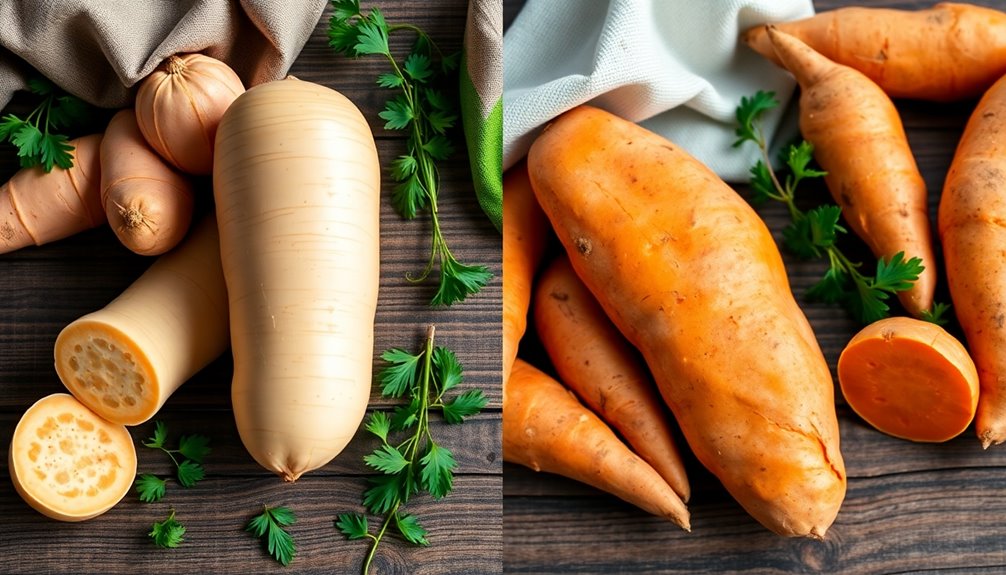
When you compare the nutritional profiles of Japanese yams and sweet potatoes, you’ll notice some interesting differences. From their caloric content to their vitamin and mineral makeup, each offers unique benefits. Plus, understanding their glycemic index can help you make better choices for your diet. Additionally, sweet potatoes are significantly higher in vitamin A compared to yams, contributing to immune health and vision.
Caloric Content Comparison
How do the caloric contents of Japanese yams and sweet potatoes stack up against each other?
When you look at the caloric comparison, you’ll find that Japanese yams generally contain around 118 calories per 100 grams, while sweet potatoes hover closer to 86 calories for the same serving size.
This difference in energy content can influence your meal planning. If you’re aiming for a lower-calorie option, sweet potatoes might be the way to go.
However, if you’re seeking a more calorie-dense food for energy, Japanese yams could fit your needs.
Both options offer delicious flavors and unique textures, so consider your dietary goals when choosing between them.
Balancing taste and caloric content is key!
Vitamin and Mineral Differences
Understanding the vitamin and mineral differences between Japanese yams and sweet potatoes can greatly impact your nutritional choices. Both options offer unique benefits, but their nutrient density varies.
- Vitamin Absorption: Sweet potatoes are rich in vitamin A, enhancing your body’s absorption of essential nutrients.
- Mineral Content: Japanese yams provide higher potassium levels, supporting heart health and muscle function.
- Antioxidant Levels: Sweet potatoes have higher antioxidant levels, which can help combat oxidative stress.
Incorporating these foods into your diet can maximize your intake of vitamins and minerals.
Choosing the right one for your needs can enhance your overall well-being while keeping your meals flavorful and nutritious.
Glycemic Index Insights
The glycemic index (GI) plays a significant role in how carbohydrates in foods affect blood sugar levels.
When comparing Japanese yams and sweet potatoes, you’ll find that sweet potatoes typically have a lower GI, meaning they cause a slower, steadier increase in blood sugar. This results in a more controlled insulin response, which can be beneficial for managing energy levels and cravings.
However, the glycemic load (GL) also matters; it considers the amount of carbohydrates in a serving. While both options are nutritious, sweet potatoes often have a lower GL, making them a better choice for those watching their blood sugar.
Cooking Methods: Best Ways to Prepare Each Tubers
When it comes to cooking Japanese yams and sweet potatoes, there are several delicious methods you can try. Each tuber shines with different techniques, enhancing their unique flavors.
Explore the delightful versatility of Japanese yams and sweet potatoes through various cooking techniques that elevate their unique flavors.
Here are three popular options:
- Roasting Techniques: Cut them into cubes, toss with olive oil, and roast until crispy and caramelized.
- Steaming Methods: Steam until tender, then mash or puree for a creamy side dish.
- Grilling Strategies: Slice into thick rounds, brush with seasoning, and grill for a smoky flavor.
You can also explore frying options for crispy chips, baking tips for a sweet, fluffy texture, or sautéing styles for a quick dish. Utilizing vegetable scraps can enhance your cooking experience by reducing waste and adding flavor.
Each method brings out the best in these versatile tubers!
Unique Uses in Culinary Traditions
While both Japanese yams and sweet potatoes are celebrated in various culinary traditions, their unique flavors and textures lend themselves to distinct uses.
Japanese yams often shine in regional dishes, where their creamy texture pairs beautifully with seasonal ingredients like miso and ginger. In contrast, sweet potatoes are integral to festive recipes, often roasted or mashed, enhancing flavor pairings with spices like cinnamon and nutmeg.
Each tuber holds cultural significance; for example, sweet potatoes are a staple during Thanksgiving in the U.S., while Japanese yams feature in traditional soups and stews.
Preparation techniques vary, too, as you might see yams steamed or grated, while sweet potatoes are frequently baked or fried, showcasing their historical uses across different cultures. Additionally, the nutritional benefits of both tubers make them valuable components in diverse diets.
Health Benefits of Incorporating Japanese Yams and Sweet Potatoes
Incorporating Japanese yams and sweet potatoes into your diet can greatly boost your health, thanks to their rich nutritional profiles.
Here are some key health benefits and nutritional advantages:
- High in Fiber: Both options are excellent sources of dietary fiber, promoting healthy digestion and helping you feel full longer.
- Rich in Vitamins: They’re packed with vitamins A and C, supporting your immune system and skin health.
- Antioxidant Properties: These roots contain antioxidants that combat oxidative stress, reducing inflammation and promoting overall well-being.
- Cost-Effective Nutrition: Incorporating budget-friendly meals into your diet with these ingredients can help you save money while eating healthily.
Can You Substitute One for the Other in Recipes?
Can you really swap Japanese yams for sweet potatoes in your recipes? The short answer is yes, but it comes with some caveats.
When considering substitution guidelines, think about texture and flavor. Japanese yams are creamier and less sweet than their orange-fleshed counterparts. If you’re making a dish that relies on sweetness, you might need to adjust the sugar or spices.
When swapping Japanese yams for sweet potatoes, remember they’re creamier and less sweet—adjust sugar or spices as needed.
Recipe adjustments like cooking time may also be necessary, as Japanese yams can take longer to soften. For savory dishes, the swap is often seamless, but keep an eye on the moisture content.
Experimenting with your favorite recipes can lead to delightful surprises, so don’t hesitate to try both!
Storage Tips for Fresh Japanese Yams and Sweet Potatoes
To keep your Japanese yams and sweet potatoes fresh and flavorful, it’s essential to store them properly. Here are some key storage tips to enhance their shelf life:
- Choose the Right Conditions: Store them in a cool, dark place with good ventilation. Ideal temperatures are between 55°F and 60°F.
- Avoid Moisture: Keep them dry; moisture can lead to mold and rot. Don’t wash them until you’re ready to use them.
- Use Breathable Containers: Place them in a basket or a paper bag, avoiding plastic, which traps moisture. Additionally, consider using airtight containers similar to how cut onions are stored to further prevent spoilage.
Creative Recipe Ideas to Enjoy Both Tubers
Now that you’ve stored your Japanese yams and sweet potatoes properly, it’s time to get creative in the kitchen. Explore the culinary versatility of these tuber varieties by whipping up a comforting sweet potato and Japanese yam mash, mixed with butter and spices for a delightful side dish.
For a nutritious breakfast, try a sweet potato hash with sautéed veggies and a poached egg on top. If you’re in the mood for something sweet, bake a Japanese yam pie with cinnamon and nutmeg.
Don’t forget about roasting—toss both tubers with olive oil, salt, and herbs for a delicious, caramelized medley. Each dish highlights their unique flavors while celebrating their incredible versatility. To analyze historical data effectively, consider incorporating both tubers into your weekly meal planning for a nutritious boost. Enjoy experimenting!
Conclusion
In the epic showdown of Japanese yams and sweet potatoes, you can’t go wrong! Each tuber is a superstar in its own right, bursting with flavor and packed with nutrients. Whether you’re roasting, mashing, or tossing them into a stir-fry, these beauties will transform your meals into culinary masterpieces! So, go ahead and stock up—your taste buds will thank you, and your dinner table might just throw a party in their honor!