

 0
0
 0
0
To save money, aim to keep your car for at least three to six years. This timeframe helps you avoid steep depreciation and high repair costs. Selling in spring or early summer boosts your chances of a better resale price. If you find your car needing frequent repairs or changes, it might be time to upgrade. Learn more about maneuvering market conditions, maximizing savings, and ensuring your car serves your needs effectively.
Understanding Depreciation and Its Impact on Car Value
Have you ever wondered how much value your new car loses over time? In the first two years of ownership, expect a staggering depreciation of about 30%.
After that, your vehicle continues to lose value at a rate of 8%-12% annually. If you want to minimize financial losses, consider keeping your car for at least three years, as it helps maintain better resale value.
To minimize financial losses, hold onto your car for at least three years to enhance its resale value.
Cars with mileage under 60,000 are more desirable, making them easier to sell. Additionally, selling between three to six years can help you avoid hefty maintenance costs.
Don’t forget to re-evaluate your car insurance as its value decreases, ensuring you’re not overpaying for coverage on an asset that’s losing worth. Moreover, utilizing expense management apps can help you track costs associated with car ownership, allowing for better financial planning.
The Ideal Time to Buy a Car
Timing your car purchase can save you a lot of money.
By focusing on seasonal deals, year-end benefits, and key negotiation periods, you can maximize your savings.
Being strategic about when you buy can make all the difference in getting the best price. Additionally, using tools like price comparison tools can help ensure you’re getting the best deal available.
Seasonal Deals and Discounts
When you’re looking to buy a car, knowing the best times to shop can lead to significant savings. Seasonal demand fluctuations create ideal opportunities for discounts and pricing reductions.
Late summer and early fall are fantastic for snagging deals on outgoing models as dealerships clear inventory for new releases. Holidays like Memorial Day, Labor Day, and Black Friday often come with promotional opportunities that can further lower prices.
Additionally, the end of the month and quarter, especially in March, June, September, and December, can yield better deals as salespeople work to meet quotas.
Year-End Purchase Benefits
As the year winds down, you’ll find that October through December presents an incredible opportunity for purchasing a car. Dealerships are keen to meet their sales goals, leading to substantial discounts on outgoing inventory. This is the perfect time to snag deals on last year’s models before new models hit the lot.
You can enjoy significant savings as dealerships clear space for fresh inventory. Plus, don’t overlook the holidays; events like Black Friday and New Year’s Eve often come with special promotions and incentives.
Shopping during the last days of the month can further enhance your savings, as salespeople become more flexible with pricing. Seize this year-end advantage to make a smart, frugal purchase!
Timing for Negotiation Advantage
While many buyers overlook the strategic aspects of car purchasing, knowing the right moments to negotiate can greatly impact your savings.
The best times to buy include the end of the month or quarter when dealerships push to meet monthly sales goals. Shopping in October, November, and December can also lead to significant discounts, as dealers aim to clear out inventory before the new year.
Consider visiting on Mondays or Tuesdays for less foot traffic, allowing for better negotiation time. Major holidays like Black Friday and New Year’s often feature enticing promotions.
Finally, stay aware of model release schedules; dealers are motivated to sell outgoing models at reduced prices, enhancing your bargaining power.
When to Consider Upgrading Your Vehicle
If your vehicle’s repair costs are piling up or if you’re facing frequent breakdowns, it might be time to think about an upgrade.
Additionally, as your lifestyle changes—like needing more space for a growing family—enhanced safety features and utility in a new car can be beneficial. Evaluating these factors can help you decide if it’s worth investing in a newer, more reliable vehicle. Moreover, maintaining financial clarity with tools like expense tracking tools can aid in budgeting for such an upgrade.
Safety Feature Enhancements
When considering the safety of your vehicle, upgrading to a newer model often means gaining access to advanced safety features that can greatly reduce the risk of accidents.
Modern cars frequently include enhanced safety features like automatic emergency braking, lane departure warnings, and adaptive cruise control.
Statistics show that vehicles less than five years old are 50% less likely to be involved in fatal accidents, making them a smart choice for vehicle selection.
Investing in a car with a high safety rating from organizations like IIHS or NHTSA notably lowers the risk of injury for you and your passengers.
If you have teenagers starting to drive, prioritizing safety features can help ease your anxiety about their driving safety.
Repair Costs vs. Value
As your vehicle ages, the balance between repair costs and its overall value becomes increasingly important.
After three to six years, many cars start racking up significant maintenance costs, making it wise to contemplate upgrading before those bills accumulate.
Remember, new cars typically lose around 30% of their value in the first two years, so holding onto your vehicle for at least three years can minimize depreciation.
Selling your car before it hits 60,000 miles can also improve resale value.
If repair expenses exceed a certain percentage of your car’s current value, investing in a new vehicle often becomes a smarter financial choice.
Weigh your repair costs against the potential resale value to make an informed decision.
Evaluating Your Needs: Family vs. Individual Transportation

How do you decide between a family vehicle and one suited for individual use? If you have kids, a larger vehicle with enhanced safety features is often vital.
Think about vehicle size and seating capacity—can it comfortably accommodate your family? Prioritizing advanced safety technologies, like automatic emergency braking, can reduce risks, especially with teenage drivers on the road.
Consider the vehicle’s size and safety features to ensure it meets your family’s comfort and protection needs.
Reliability is important, too; regular maintenance guarantees your family car stays safe for frequent trips. If you have teenagers, consider delaying their vehicle purchase until they’re closer to 21. Encourage them to contribute towards their own car, fostering a sense of responsibility. Additionally, consider budgeting with zero-based budgeting to ensure all expenses related to owning a vehicle are accounted for.
Ultimately, your choice should align with your family’s needs and safety priorities.
The Financial Benefits of Purchasing Used or Certified Pre-Owned Cars
Although buying a new car might seem appealing, opting for used or certified pre-owned vehicles often proves to be a smarter financial choice.
By choosing a used car, you can save up to 30% compared to new models, avoiding the steep depreciation that hits new vehicles hard in their first two years.
Certified pre-owned cars provide added reliability, often coming with extended warranties and thorough inspections, all at lower prices.
The average price for a used car in 2022 was $28,337, making it a budget-friendly option.
Plus, with used vehicles, you usually enjoy lower insurance premiums, translating to significant long-term savings.
Investing in a reliable, used car is a wise financial move that pays off. Additionally, strategic timing of purchases can lead to even greater savings when buying used or certified pre-owned vehicles during sales events.
Timing Your Vehicle Maintenance for Cost Efficiency
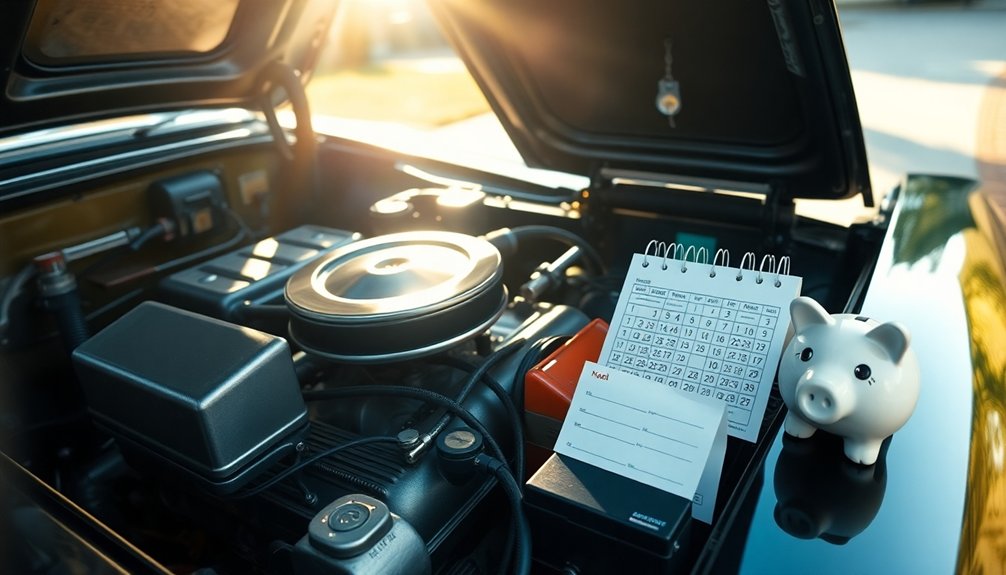
Timing your vehicle maintenance can greatly impact your overall costs. By staying on top of regular car maintenance, you can avoid major repairs that lead to a financial burden down the road.
Here are some tips to keep in mind:
- Follow the manufacturer’s schedule for oil changes and tire rotations, usually every 5,000 to 7,500 miles.
- Plan for major repairs, like brakes and engine work, around the three to six-year mark.
- Schedule maintenance before high-usage seasons to prevent breakdowns.
- Consider selling or trading in your vehicle before it hits 60,000 miles to maintain better resale value.
- Regular maintenance can also help you track your expenses and manage your budget effectively.
With proper timing, you can guarantee your vehicle remains reliable and cost-efficient throughout its lifespan.
Navigating Market Conditions for Better Deals
To maximize your vehicle’s value, aim to sell or trade it between three to six years of ownership, just before major repairs kick in. The best time to sell is often in spring and early summer when demand spikes, leading to higher car prices. Conversely, fall typically sees a drop in prices as dealerships clear inventory for new models. Keep an eye on seasonal trends; for instance, the demand for SUVs and trucks tends to wane in late spring and summer. Monitoring dealership sales targets can also help you negotiate better prices, especially at the end of the month or quarter. Utilizing price comparison tools can also enhance your purchasing power, ensuring you find the best deals when buying or selling a vehicle.
Planning for Future Vehicle Needs as Your Family Changes
Planning for future vehicle needs confirms you choose a reliable vehicle that meets your family’s evolving demands.
Consider these factors:
- Shifting to larger vehicles with enhanced safety ratings for added protection.
- Keeping your current car for at least three years to minimize depreciation costs.
- Anticipating future requirements, like additional car seats or preparing for teenage drivers.
- Evaluating resale value as your children approach driving age, deciding whether to keep or upgrade your vehicle.
Additionally, incorporating a structured framework for budgeting can help you save for your next vehicle purchase effectively.
Strategies for Selling Your Car at the Right Time
When it’s time to evaluate your family’s changing vehicle needs, considering when to sell your current car plays an essential role in getting the best return.
Aim to sell your car between three and six years of ownership to avoid high repair costs and maximize resale value, as significant maintenance can creep up afterward.
Timing is key—sell before the first two years to dodge steep depreciation. Spring and early summer are ideal for sales, while prices can drop in fall.
If you’re trading in, try to do it near the end of the month when dealerships are keen to meet targets.
Finally, selling a car privately often yields higher returns than trading it in, so invest the effort for greater payout. Additionally, using a budget app can help track your spending and ensure you’re financially prepared for your next vehicle purchase.
Conclusion
In your journey of car ownership, timing’s truly essential. By tracking trends and tuning into your needs, you can turn depreciation into a delightful decision. Whether you’re eyeing an upgrade or savoring your savings with a used vehicle, staying savvy guarantees you steer clear of costly mistakes. So, as life’s lanes change, don’t hesitate—hustle to harness your vehicle’s value and make wise moves for your wallet, your family, and your future on the road!