

 0
0
 0
0
No, a window AC unit doesn’t have to be in a window, but it’s designed for that setup to maximize cooling efficiency and heat expulsion. You can contemplate creative indoor placements, like on a table near a window, but be mindful of airflow and drainage to avoid problems. Proper installation and maintenance are still essential for effective cooling. If you want to explore more about unique solutions, there are plenty of options to ponder!
What Is a Window AC Unit and Its Purpose?
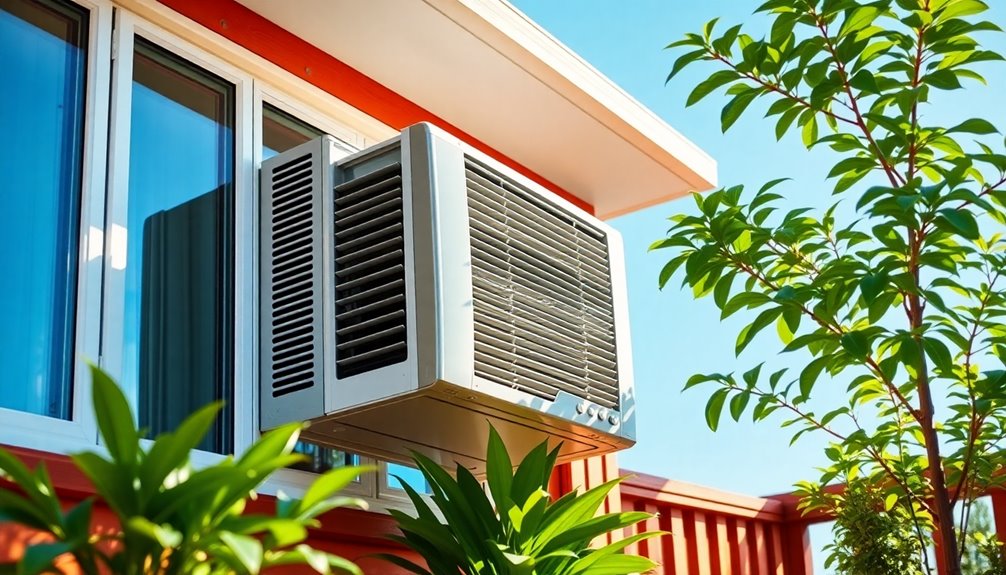
A window AC unit is a compact and efficient solution for cooling individual rooms. Designed to fit in a window opening, these self-contained systems expel heat outside while cooling indoor air.
You’ll find that window AC units consist of essential components like a compressor, evaporator, and condenser, which work together to remove heat and humidity effectively. Air intake occurs through side vents, while the unit discharges hot air from the back, creating a continuous cooling cycle.
Most window units have a cooling capacity measured in BTUs, meaning higher BTUs can cool larger spaces better. If you don’t have central air conditioning, a window AC unit provides an affordable and practical way to keep your living space comfortable during hot weather. Additionally, using a washable electrostatic filter can improve air quality by trapping airborne dust and allergens while reducing waste.
Can You Use a Window AC Unit Indoors?
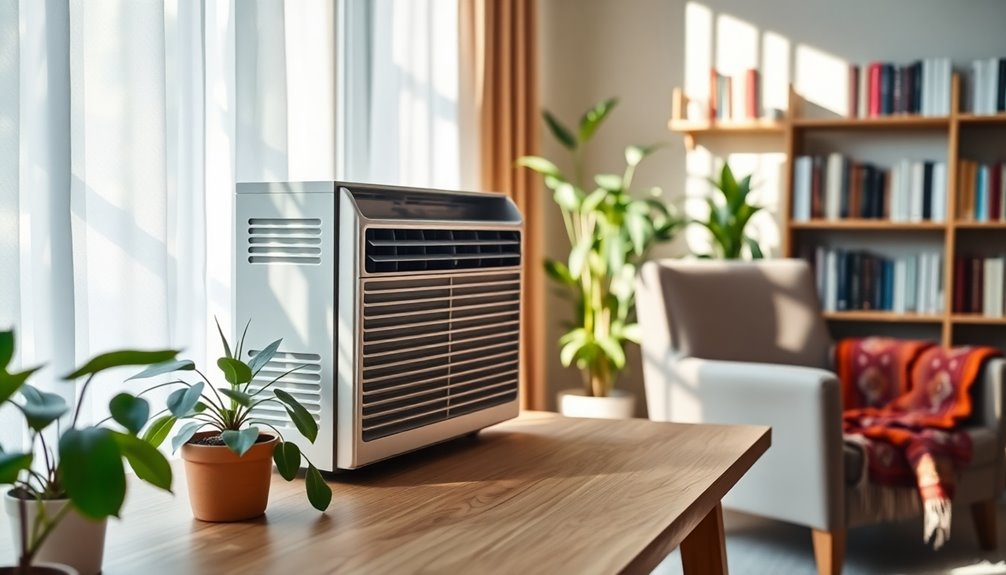
While window AC units are designed for installation in a window to maximize their cooling efficiency, you might wonder if they can be used indoors.
Technically, you can use a window AC unit indoors, but it’s not ideal. The unit’s design focuses on expelling heat outside, which can lead to inefficiencies when used in enclosed spaces.
Using a window AC unit indoors is possible, but it can lead to inefficiencies due to its design for outdoor heat expulsion.
- Indoor air may become warmer due to heat circulating back.
- Noise levels can be higher without the sound-dampening effect of a window.
- Proper drainage is essential to avoid water pooling.
Keep in mind, using a window AC indoors can provide temporary relief, but it’s not a long-term solution. Adjustments will be necessary for safety and efficiency. Additionally, heat pumps offer high energy efficiency, making them a more effective long-term cooling solution.
Exploring Creative Placement Options for Window Units
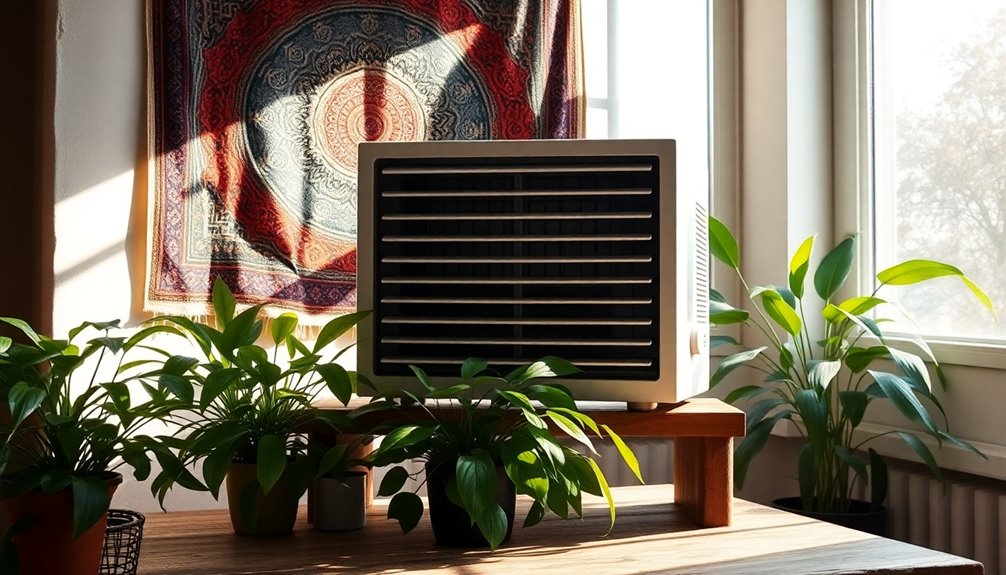
When you’re looking for effective ways to cool your space, exploring creative placement options for window AC units can make a significant difference.
Although window units are designed for window installation, you can temporarily place them on a table or platform nearby, ensuring the back is flush with the opening to expel heat effectively.
Remember to orient the side vents indoors, but be aware this might lead to inefficiencies similar to single-hose portable AC units.
To manage condensation, direct a drainage tube outside to prevent pooling.
Building a custom frame or using foam project boards can enhance airflow and cooling efficiency. Regular inspections of your cooling setup can help identify any potential issues before they become problematic.
While these setups are temporary, prioritize safety and stability to avoid any hazards.
How to Ensure Proper Airflow and Efficiency?
To guarantee your window AC unit operates at peak performance, it’s essential to prioritize proper airflow and efficiency from the start. Here are some vital steps you can take:
- Make sure the back of the unit is flush against a stable surface for effective heat expulsion.
- Position the AC away from walls or objects that block air intake and exhaust vents.
- Regularly clean or replace the air filter to maintain high airflow efficiency.
Additionally, tilt the unit slightly for proper drainage and consider using fans to circulate the air if installed indoors. Incorporating energy-efficient systems can also enhance cooling effectiveness and reduce overall energy costs.
The Importance of Drainage Solutions for Indoor Use
When using a window AC unit indoors, proper drainage is essential to prevent water from pooling and causing damage. You need to set up a drainage tube that directs condensation outside, keeping your space dry and comfortable. Without this solution, you risk indoor puddles and increased humidity, which can compromise your AC’s efficiency. Additionally, implementing simple insulation techniques can further enhance the overall efficiency of your cooling system.
Proper Drainage Techniques
Proper drainage techniques are essential for anyone using a window AC unit indoors. Without proper management, water condensation can pool inside, leading to potential damage.
To guarantee effective drainage:
- Tilt the unit slightly towards the outside during installation to promote proper condensate flow.
- Regularly check and clean the drainage system to prevent clogs that can result in overflow.
- Direct a drainage tube to an appropriate outlet to avoid water accumulation and enhance efficiency.
Avoiding Indoor Puddles
Effective drainage solutions are essential for preventing indoor puddles when using window AC units. These units can generate significant condensation, especially in humid environments, leading to potential water pooling inside your space.
To manage this, verify you’ve installed a drainage tube or pan to direct excess water outside. Without proper drainage, the evaporator coil might freeze, reducing efficiency and risking system failure from ice buildup.
Regularly check and maintain your drainage systems to avoid unwanted puddles. Additionally, consider tilting the AC unit slightly during installation to enhance condensate drainage.
What Are the Noise Levels of Window AC Units?
When you’re considering a window AC unit, noise levels can really impact your comfort.
Units typically range from 50 to 70 decibels, which might disrupt your sleep or daily activities, especially if you’re a light sleeper.
If you need quieter operation, some models come with features designed to minimize sound during use. Additionally, many expense tracking apps offer user-friendly interfaces that can help freelancers manage their finances more efficiently while enjoying a cooler environment.
Noise During Operation
Noise can be a significant factor when choosing a window AC unit, especially if you value a peaceful home environment.
Window AC units typically produce noise during operation that ranges from 50 to 70 decibels, which can be disruptive in quiet spaces. However, some models operate as quietly as 40 decibels, similar to a refrigerator hum.
Consider these points:
- The noise often comes from compressor activity, fan operation, and vibrations.
- Placement of the unit and surrounding environment can affect perceived noise levels.
- It’s wise to check product specifications and customer reviews for sound ratings before buying.
Impact on Sleep Quality
Choosing the right window AC unit can greatly affect your sleep quality, especially if you’re a light sleeper. Many window AC units can be quite loud, particularly during startup, with noise levels often reaching 50 to 60 decibels. This can disrupt your sleep and make it difficult to rest peacefully.
Fortunately, newer models are quieter, operating at around 40 decibels, making them better suited for bedrooms. Continuous exposure to high noise levels can lead to sleep disturbances, reducing your overall sleep quality.
To enhance your sleep experience, consider effective placement of the unit and proper insulation around the window, which can help mitigate noise levels and create a more conducive environment for restful nights.
Understanding Installation Challenges for Non-Traditional Setups
Installing a window AC unit in a non-traditional setup, like on a table indoors, presents unique challenges that can affect its performance. Since these air conditioners are designed to work with a window frame, improper placement can lead to inefficiencies.
- Restricted airflow may cause overheating and decreased cooling.
- Indoor air may be drawn in through side vents, increasing noise and reducing effectiveness.
- Without proper drainage, condensation can pool indoors, risking damage.
To enhance cooling efficiency, consider tilting the unit slightly and building a frame for better integration with the window structure. This approach guarantees stability and peak airflow, allowing your AC unit to perform more effectively while minimizing potential issues. Additionally, ensuring proper insulation levels can help reduce energy loss and improve overall cooling efficiency.
Tips for Securing Your Window AC Unit Safely
Securing your window AC unit safely is vital for peak performance and safety, especially when you’ve navigated the challenges of non-traditional setups.
Start by using a sturdy shelf or bracket that can support the unit’s weight, which can be up to 80 pounds. Proper installation is necessary; create an effective seal around the unit to prevent air leaks that can drive up energy costs.
Tilt your AC slightly to guarantee proper drainage of condensation, avoiding water pooling indoors. Regularly check the stability of the unit to prevent it from falling, which could lead to injury or property damage.
Finally, use foam project boards or similar materials to direct airflow outside, enhancing efficiency and safety. Additionally, consider implementing clear payment terms to streamline any associated installation costs and ensure a smooth transaction.
What Are the Pros and Cons of Using a Window AC Inside?
Using a window AC indoors might seem convenient, but it comes with some significant drawbacks. You’ll likely face efficiency issues and airflow challenges since these units are designed to work best when installed in a window. Plus, the noise and potential for water damage can turn your temporary cooling solution into a bigger headache. Additionally, prompt replacement of any malfunctioning parts is crucial to prevent costly repairs and ensure the unit operates effectively.
Installation Flexibility and Options
While many people appreciate the convenience of window AC units, placing one indoors comes with both advantages and drawbacks. You gain installation flexibility, but it’s vital to contemplate the consequences.
- Increased noise levels might disrupt your daily activities or sleep.
- Air circulation issues can occur since the unit’s side vents are designed for outdoor air intake.
- Proper drainage is essential to manage condensation and prevent water pooling.
Additionally, verify the window AC unit is securely mounted to avoid safety hazards.
Weigh the pros and cons carefully, as the effectiveness of your cooling solution may diminish indoors.
Ultimately, it’s about balancing comfort with practicality when choosing where to install your window AC unit.
Efficiency and Airflow Challenges
When considering the placement of a window AC unit, efficiency and airflow challenges must be at the forefront of your decision-making.
Using a window AC indoors can reduce its efficiency, as the side vents designed for outside air might restrict airflow, causing indoor heat buildup. Additionally, these units typically expel heat through the back, making them less effective for cooling spaces when placed inside.
You’ll also notice increased noise levels, which can disrupt your daily activities and sleep in quieter settings.
Furthermore, condensation management becomes critical; improperly drained units can lead to water pooling and potential flooding.
Ultimately, the cooling capacity is limited to the immediate area, making it ineffective for larger rooms or open spaces.
How Do Alternative Cooling Solutions Compare?
When you’re weighing options beyond traditional central AC or window units, consider the unique benefits of each alternative:
- Portable AC units offer flexibility, cooling specific areas without window installation, perfect for renters.
- Evaporative coolers are energy-efficient, dropping temperatures by 5-7 degrees, but require water and excel in dry climates.
- Wall-mounted systems provide a permanent solution, effectively cooling enclosed spaces but often demand professional installation.
Assessing these cooling solutions involves examining installation ease, energy efficiency, and the specific cooling needs of your space. Additionally, understanding the importance of expense categorization can help you make informed decisions about your overall cooling investment.
Maintenance Tips for Window AC Units in Unique Installations
Maintaining your window AC unit is essential, especially in unique installations where airflow and support can be compromised.
Start with basic maintenance tips like regularly cleaning or replacing the air filter every few weeks to guarantee ideal airflow and efficiency.
Next, check the drainage tube to make sure it directs condensation outside; improper drainage can cause water damage.
Periodically inspect the unit for wear or loose components to maintain stability.
Don’t forget to schedule a thorough cleaning of the evaporator and condenser coils at least once a season, as dirt can hinder cooling effectiveness.
Finally, monitor the ambient temperature around the unit to guarantee it operates efficiently, especially if you’re relying on it as a primary cooling solution like a central unit.
When to Consider Professional Help for Installation?
Considering professional help for your window AC installation might be wise if you’re uncertain about your skills or tools.
Hiring a professional guarantees your unit is safely mounted, helping you avoid damage and personal injury.
Here are a few scenarios when you should definitely consider professional assistance:
- If your window frame isn’t strong enough to support the AC unit, they can reinforce it or suggest alternative mounting options.
- Professionals know local building codes, preventing potential legal issues from improper installation.
- For non-traditional setups, like through a wall, they’ll guarantee proper sealing and airflow for efficiency.
Ultimately, professional help can save you time and provide the peace of mind you need during installation.
Conclusion: Finding the Right Cooling Solution for Your Space
As you explore options for cooling your space, it’s crucial to evaluate your specific needs and the limitations of each solution.
While window AC units can be temporarily used indoors, they may lead to decreased efficiency and increased noise. Proper drainage management is essential to prevent condensation damage.
For a more permanent solution, consider portable AC units or wall-mounted systems, which offer effective cooling without the restrictions of window installation.
Regardless of the type of unit you choose, make sure it’s securely positioned and well-ventilated to maintain airflow and prevent overheating.
Conclusion
In the quest for comfort, think of your window AC unit as a lighthouse guiding you through the sweltering summer seas. While it’s typically anchored in a window, you can navigate creative waters by exploring alternative placements. Just remember, proper airflow and drainage are your compass points to guarantee efficiency. So, whether you’re sailing solo or seeking professional help, find the right solution that transforms your space into a cool haven, steering you clear of the heat.