
 0
0
 0
0
If your AC can’t keep your house under 80°F, it might be struggling with high outdoor temperatures, dirty filters, low refrigerant, or poor insulation. These issues can cause your system to work harder, leading to inadequate cooling. Check for air leaks, clean the condenser coils, and replace dirty filters to start. If you notice big temperature differences or unusual noises, it might be time to learn more about professional help and maintenance options.
Understanding AC Limitations: Why It Struggles in High Heat
When outdoor temperatures soar, your air conditioning system can struggle to keep your home cool.
As outdoor temperatures rise, your air conditioning system may find it difficult to maintain a cool home.
Designed to cool spaces to about 20°F below the outdoor temperature, your AC unit faces challenges when it’s over 95°F outside. This extreme heat can lead to performance issues, causing your system to work harder, much like a marathon runner in the heat.
Factors like poor insulation and solar heat gain can increase the heat inside, making it even tougher for your AC. Additionally, low refrigerant levels or a dirty filter can further hinder its efficiency. Furthermore, heat pump efficiency can play a significant role in overall home cooling, especially in extreme temperatures.
Don’t forget to check for air leaks around windows and doors, as they can let in hot air, pushing your AC system to its limits.
Common Problems That Prevent Your AC From Cooling Below 80°F
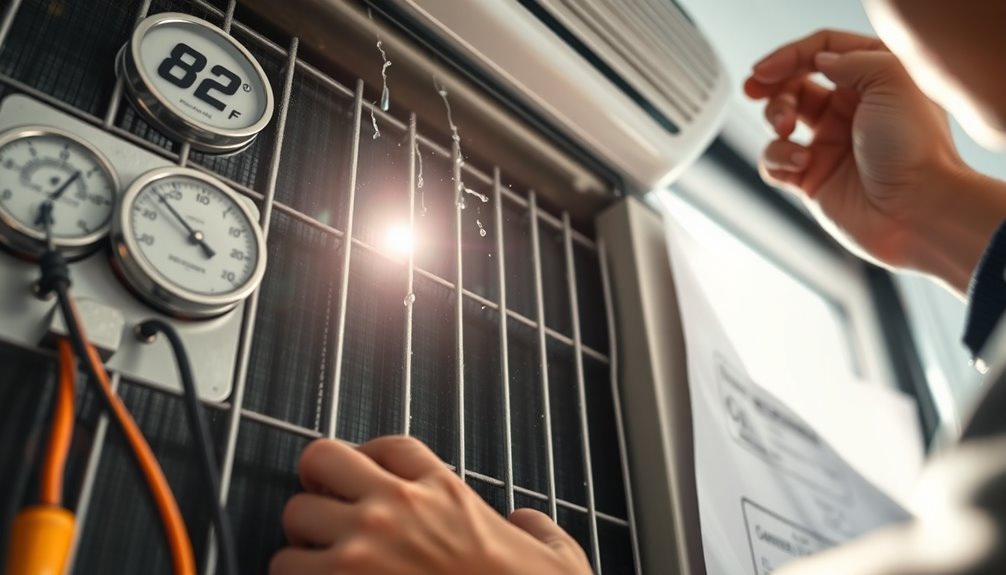
If your AC isn’t cooling below 80°F, a couple of common issues might be to blame.
A dirty air filter can block airflow, forcing your system to work overtime, while low refrigerant levels could indicate a leak that’s hindering performance. Regularly inspecting insulation for wear can also help ensure optimal performance by maintaining temperature control and efficiency. Addressing these problems can help restore your home’s comfort.
Dirty Air Filter
A dirty air filter can be one of the most common culprits behind your AC struggling to cool your home below 80°F. When the filter gets clogged, it considerably restricts airflow, forcing your AC to work harder and reducing its cooling efficiency.
This not only leads to inadequate cooling but can also cause performance issues over time. Additionally, a dirty filter can contribute to poor indoor air quality by allowing dust and allergens to circulate in your home, which might affect your health.
Neglecting to replace or clean the filter every 1-3 months can result in your AC running longer, using more energy, and ultimately leading to higher utility bills.
Keep an eye on that filter to maintain peak performance!
Low Refrigerant Levels
Low refrigerant levels can greatly hinder your AC’s ability to cool your home effectively. When there’s low refrigerant, your AC can’t absorb heat properly, leading to warm air blowing from the vents instead of the cold air you expect.
You might notice ice forming on the refrigerant lines or even hear hissing sounds, which indicate a leak. It’s important to address these signs quickly, as refrigerant leaks won’t self-repair and can cause further damage to the air conditioner’s system.
Regular maintenance, like checking your furnace and refrigerant levels, is key to preventing low refrigerant issues. If you suspect a problem, don’t hesitate to call for professional AC repair to restore your cooling efficiency.
Quick Fixes: What Can You Do Before Calling a Technician?
Before you call a technician, there are a couple of quick fixes you can try.
First, check your air filter and replace it if it’s dirty, as this can drastically improve airflow. Regularly replacing your filter can lead to extended filter life and better overall HVAC performance.
Next, inspect the outdoor unit for debris and verify it’s clear, which helps your AC run more efficiently.
Check Air Filter
Checking your air filter is a simple yet essential step in troubleshooting your AC. A dirty air filter can greatly hinder airflow, causing your system to struggle to keep your home cool.
If your filter looks gray and gunky, it’s time to replace it. Regularly inspecting and changing the air filter every month guarantees ideal cooling efficiency and prevents unnecessary strain on your AC’s performance.
Think of it like trying to drink a milkshake through a coffee straw—reduced airflow leads to inadequate cooling. Many homeowners overlook the air filter as a cause of cooling issues, making it a key first step in troubleshooting AC problems.
Keep your air filter clean for better airflow and improved comfort.
Inspect Outdoor Unit
Inspecting your outdoor unit is essential for maintaining your AC’s efficiency. Start by guaranteeing there’s at least two feet of clearance around the unit for proper airflow, allowing hot air to escape easily.
Check the condenser coils for dirt or debris; a dirty condenser can force your system to work harder, reducing cooling performance. Use a garden hose to clean them gently.
Also, inspect the outdoor fan to make sure it operates correctly, as a malfunctioning fan can hinder cooling. Look for ice forming on the refrigerant lines or unit, which may indicate low refrigerant levels or airflow issues that need immediate attention.
Finally, verify the unit is plugged in and the circuit breakers aren’t tripped.
When to Seek Professional Help for Your AC Troubles?
When should you call in the professionals for your AC troubles? If your air conditioning unit struggles to cool your home below 80°F, it’s time to seek professional help.
Here are some signs that indicate you need expert assistance:
- Temperature discrepancies: If your thermostat setting differs by more than 5 degrees from the actual indoor temperature.
- Unusual noises: Hissing or grinding sounds may signal refrigerant leaks or mechanical issues.
- Rising energy bills: A significant increase without a change in usage often suggests inefficiencies.
- Routine checks: Ice formation on refrigerant lines or frequent cycling on and off requires professional evaluation to guarantee peak system performance.
Additionally, ensure that your air filter maintenance is up to date, as dirty filters can greatly affect system performance and efficiency. Don’t hesitate to reach out for help when you notice these issues!
The Importance of Regular AC Maintenance for Optimal Performance
Regular maintenance of your air conditioning system is key to keeping it running smoothly and efficiently. Changing the air filter every 1-3 months guarantees ideal airflow, preventing inadequate cooling caused by restricted airflow.
Additionally, cleaning the condenser coils helps maintain efficient heat transfer; dirt can greatly slow down the cooling process.
Scheduling annual professional inspections can identify potential issues like low refrigerant pressure and duct leaks before they lead to costly repairs.
This regular AC maintenance not only extends the lifespan of your unit but also improves energy efficiency, resulting in lower utility bills. By investing in proper upkeep, you’ll create a more comfortable indoor environment, especially during extreme heat conditions. Moreover, maintaining indoor humidity levels between 30% and 50% can enhance your AC’s cooling performance and overall efficiency.
Don’t overlook the importance of maintaining your AC!
Upgrading Your AC: Signs It’s Time for a Replacement
As your air conditioning unit ages, it may become less efficient and more prone to breakdowns, signaling that it might be time for an upgrade.
Here are some signs to watch for:
- Your AC is over 10 years old, making it a good candidate for replacement.
- Frequent repairs cost more than 50% of a new unit’s price, indicating it’s time for a reliable system that’s more efficient.
- If your current unit can’t cool your home effectively, especially after a home addition, you likely need an air conditioner that’s the right size.
- Significant increases in energy bills without changes in usage suggest your AC is working too hard, making a replacement a smart choice to save money.
Additionally, effective attic insulation can significantly reduce cooling costs, making it an important consideration for overall energy efficiency.
Conclusion
To sum up, if your AC can’t keep your home under 80°F, it’s likely a combination of external heat and internal issues. While quick fixes might provide temporary relief, they can’t replace the benefits of regular maintenance or the need for professional help when problems persist. Remember, your comfort isn’t just about the temperature; it’s about ensuring your system’s efficiency. If your AC struggles consistently, it might be time to contemplate an upgrade for lasting coolness and comfort.