 0
0
 0
0
If you’re considering a Dutch oven replacement knob, it can be a cheap fix that extends your cookware’s life. Plastic knobs are affordable but may not handle high heat, while metal and silicone options offer durability and comfort. Repairing saves money and reduces waste, but if your oven shows cracks or poor heat distribution, you might want to invest in a new one. Discover more tips on maintaining your Dutch oven for better performance and longevity.
Assessing the Costs of a Replacement Knob
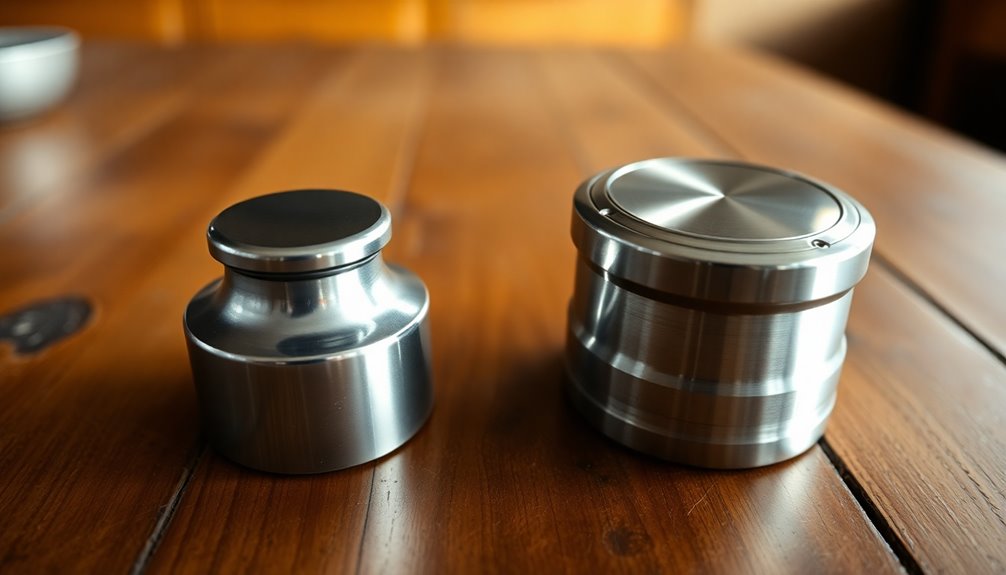
When you’re considering a replacement knob for your Dutch oven, it’s essential to assess the costs upfront to avoid any surprises.
Start by doing a cost comparison between different knob materials. You’ll find options like plastic, metal, and silicone, each with its own price range.
Consider comparing costs of knob materials like plastic, metal, and silicone to find the best option for your needs.
Plastic knobs are often the cheapest but may not withstand high temperatures. Metal knobs tend to be more durable, while silicone offers heat resistance and comfort.
Factor in shipping costs, especially if you’re ordering online, since they can add up quickly.
Consider the longevity of each material, as a slightly higher initial investment might save you money in the long run. Knowing these details helps you make an informed choice and guarantees you get the best value. Additionally, investing in long-term savings can make a significant difference in your overall budget.
Benefits of Repairing vs. Buying New
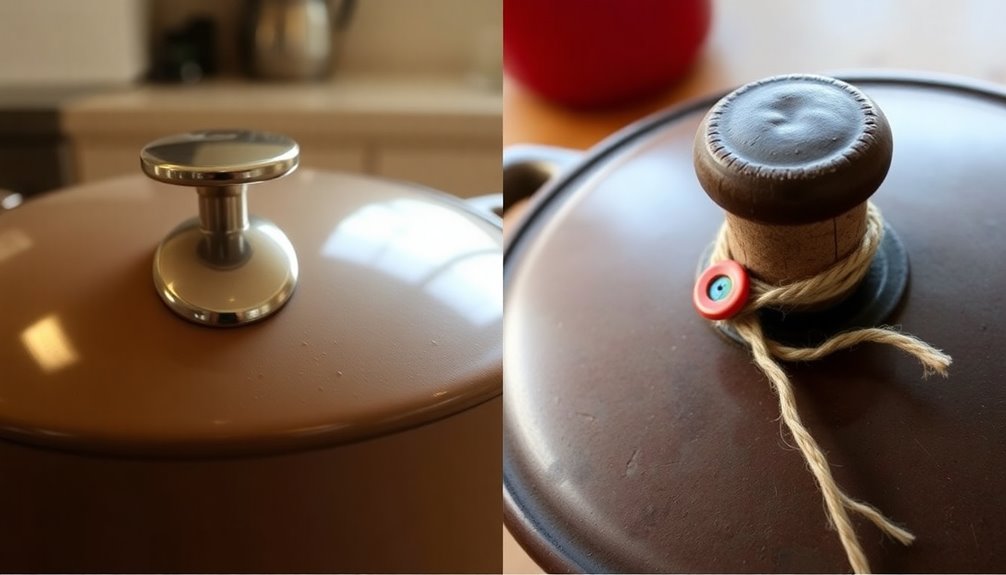
While it might be tempting to purchase a new Dutch oven, repairing your existing one often offers significant benefits. Here are some key repair advantages you’ll appreciate:
- Cost Savings: Repairing a knob is usually much cheaper than buying a new Dutch oven, which can save you money in the long run.
- Environmental Impact: Keeping your old oven reduces waste and lessens your carbon footprint, contributing positively to the environment.
- Sentimental Value: Your Dutch oven likely has memories attached, and repairing it allows you to continue creating new ones.
- Mindful Spending: Choosing to repair can encourage mindful spending habits, making it a smart choice for both your wallet and the planet.
What to Look For in a Replacement Knob
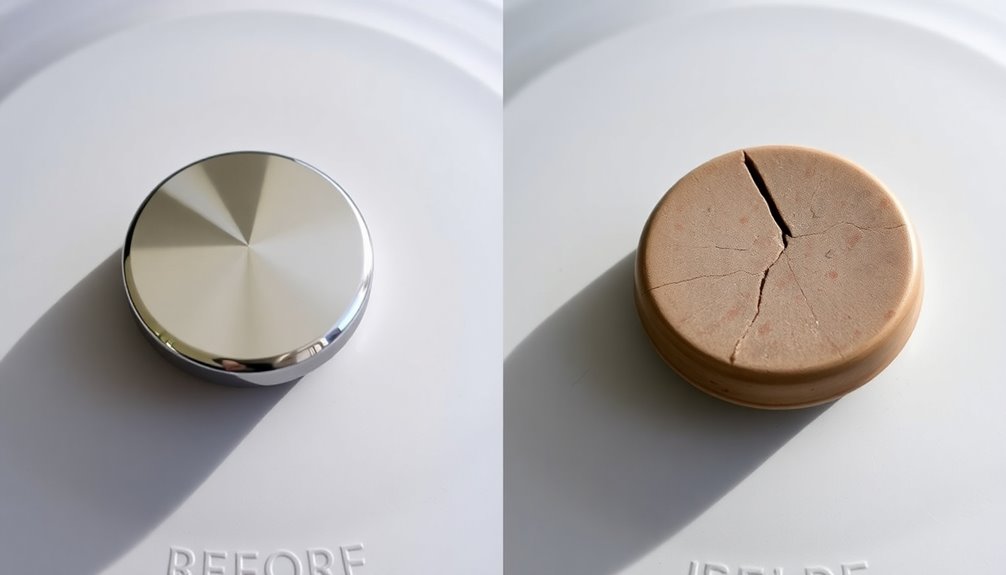
Repairing your Dutch oven is a smart choice, and finding the right replacement knob is key to keeping it functional.
First, consider knob materials—look for durable options like stainless steel or heat-resistant plastic. These materials can withstand high temperatures and regular use.
Next, check for knob compatibility with your specific Dutch oven model. Not all knobs fit every pot, so make sure to measure the size and shape of your existing knob or consult the manufacturer’s specifications.
Additionally, think about the design; a comfortable grip is essential for safe handling. Choosing materials that are eco-friendly and affordable can also enhance your cooking experience while promoting sustainability.
When Does It Make Sense to Buy a New Dutch Oven?
Is it time to invest in a new Dutch oven? If you’re facing durability concerns or a drop in cooking performance, it might be worth considering.
Here are three signs it’s time for an upgrade:
Here are three key indicators that signal it’s time to invest in a new Dutch oven.
- Cracks or Chips: Visible damage can compromise your oven’s integrity and lead to uneven cooking.
- Poor Heat Distribution: If your dishes aren’t cooking evenly, it’s a sign the material has degraded, affecting performance.
- Rust or Stains: Persistent rust or stains can signal that your oven isn’t safe for cooking anymore.
When you notice these issues, a new Dutch oven can enhance your cooking experience. Investing in robust performance tools can elevate your culinary skills and ensure delicious outcomes.
Don’t let a worn-out pot hold you back from delicious meals!
Tips for Maintaining Your Dutch Oven After Repair
Once you’ve repaired your Dutch oven, keeping it in top shape is essential for long-lasting performance. Start by adopting proper cleaning techniques; avoid abrasive scrubbers that can scratch the surface. Instead, use a soft sponge and mild soap, rinsing thoroughly to remove any residue.
After washing, dry it completely to prevent rust.
Next, don’t forget to follow seasoning tips. Once in a while, apply a thin layer of vegetable oil or shortening to maintain its non-stick surface. Heat it in the oven for an hour to set the seasoning.
Regularly check for any wear and tear on the knob and other parts. By following these steps, you’ll enjoy delicious meals from your Dutch oven for years to come! Additionally, maintaining your cookware can help reduce the need for costly replacements, similar to how regular maintenance of air filters enhances HVAC efficiency and saves money.
Conclusion
In the end, whether you choose a cheap replacement knob or invest in a new Dutch oven, it’s all about weighing your options. Think of it like patching a tire versus buying a new car; sometimes a quick fix is all you need, while other times, it’s better to start fresh. No matter your choice, maintaining your cookware will guarantee it serves you well for years, making every meal a delicious adventure.