
 0
0
 0
0
Making lye soap from scratch is easier than you think! First, gather natural oils and lye, while keeping safety gear handy. Measure your ingredients accurately and mix lye with water in a ventilated area. Combine this lye solution with your oils, then pour the mix into molds. Let it cure for four to six weeks. You can also customize your soap with essential oils or herbs. There’s so much more to explore, so keep going to uncover all the tips!
Understanding Lye: What You Need to Know
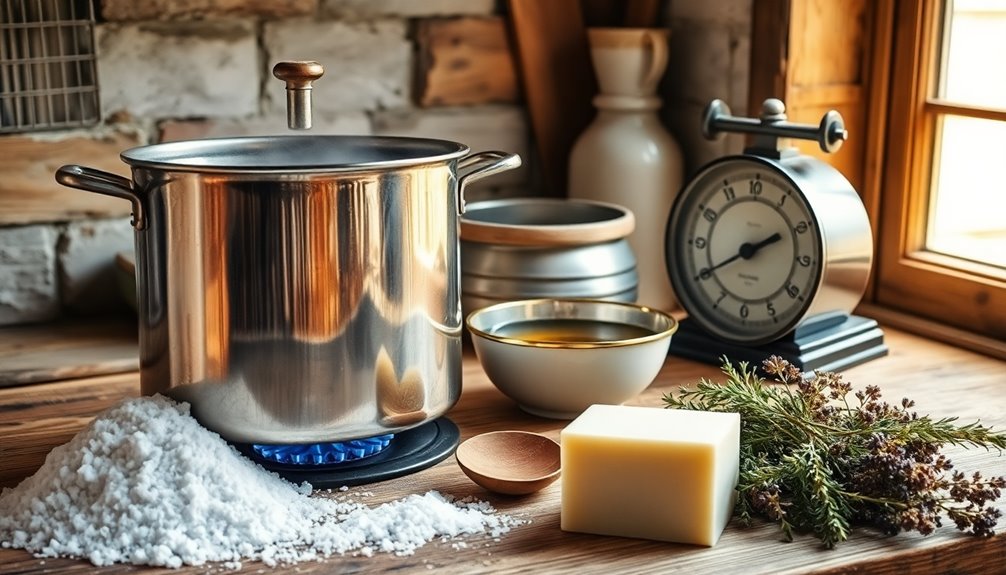
Before diving into soap-making, it’s vital to understand lye, as it’s the key ingredient that transforms oils into soap.
Lye, or sodium hydroxide, is a caustic substance that reacts with fats in a process called saponification. Knowing lye properties is important; it’s highly alkaline and can cause burns if mishandled.
Always wear gloves and goggles when working with it to guarantee lye safety. Store lye away from children and pets, and never mix it with water in a closed container, as it generates heat and can cause explosions. Using eco-friendly practices when making soap can further enhance your sustainable living efforts.
Understanding how to handle lye responsibly sets the foundation for a successful soap-making experience, allowing you to create beautiful, homemade lye soap safely.
Essential Ingredients for Lye Soap
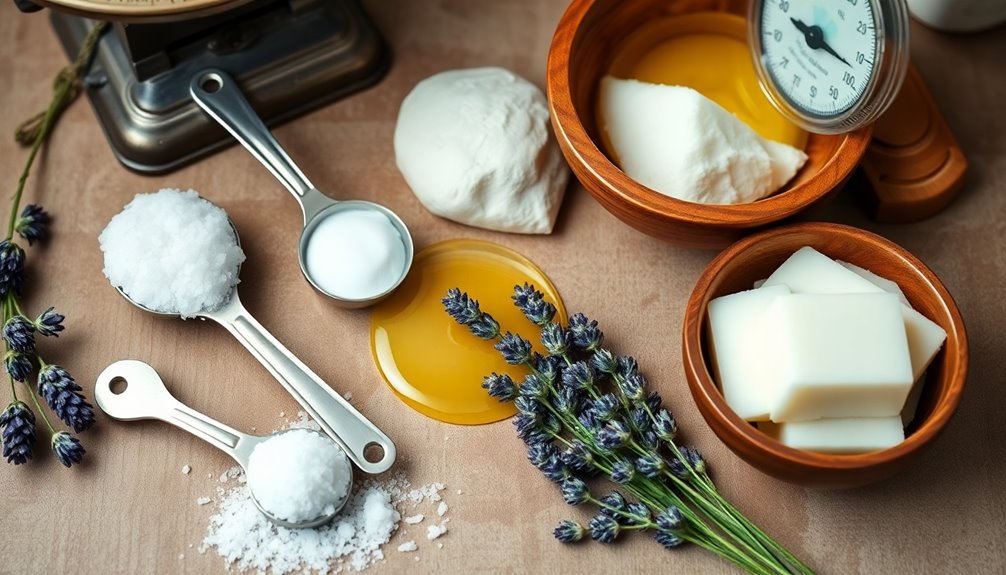
Now that you’re familiar with lye and its safety, it’s time to gather the key ingredients for making lye soap. You’ll want to focus on a few essentials to create a nourishing bar. Here’s what you need:
Now that you understand lye safety, gather essential ingredients for crafting nourishing lye soap.
- Natural Oils: Choose moisturizing agents like olive, coconut, or palm oil. These will provide hydration and lather.
- Lye Alternatives: If you’re hesitant about lye, consider using lye alternatives, but remember they may alter the soap-making process.
- Fragrance Oils and Color Additives: Enhance your soap with fragrance oils and color additives, or add herbal infusions for a natural touch. Additionally, using expense tracking apps can help you manage costs associated with your soap-making supplies.
With these ingredients, you’ll set the stage for a successful soap-making experience!
Choosing the Right Equipment for Soap-Making
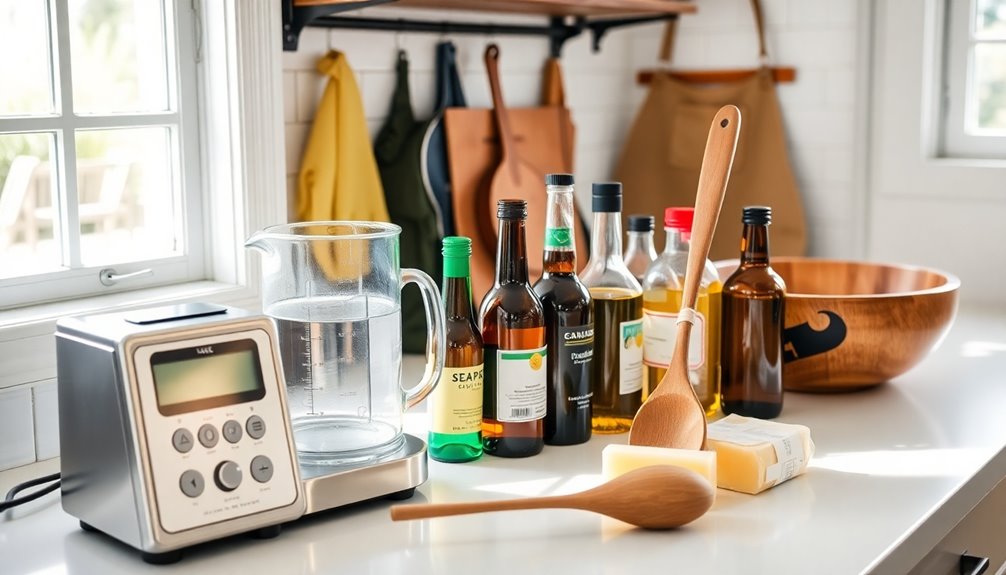
When you’re ready to make lye soap, having the right equipment is vital for success and safety.
You’ll need essential tools, proper safety gear, and precise measuring instruments to guarantee everything goes smoothly. Additionally, using accurate measuring instruments ensures that your soap-making process is both safe and effective.
Let’s explore what you’ll need to get started.
Essential Soap-Making Tools
Crafting lye soap requires the right tools to guarantee a smooth and successful process. Here are three essential items you shouldn’t overlook:
- Mixing Tools: Invest in sturdy mixing tools to blend your lye and oils thoroughly. A stick blender works wonders.
- Soap Molds: Choose durable soap molds to shape your creations. Silicone molds are easy to work with and release soap effortlessly.
- Soap Scales: Accurate measurements are vital. Use soap scales to make sure you’re adding the correct amounts of lye, oils, fragrance oils, and color additives.
Don’t forget lye storage for safety, cutting tools for shaping your bars, and recipe journals for tracking your formulas.
Finally, keep cleanup supplies handy to make the process smoother!
Safety Gear Necessities
Safety should always be a priority in soap-making, especially when working with lye, which can be hazardous if not handled properly.
Start with appropriate safety gear: wear protective clothing, like long sleeves and pants, to shield your skin. A good gloves choice is essential; opt for thick, chemical-resistant gloves to prevent burns.
Don’t forget eye protection—safety goggles are a must to guard against splashes. If you’re working in a confined space, consider wearing a respiratory mask to avoid inhaling fumes.
Finally, maintain workspace organization to minimize accidents; keep your tools and ingredients neatly arranged, and always have vinegar on hand to neutralize spills.
Following these guidelines will help guarantee a safer soap-making experience.
Measuring Ingredients Accurately
Accurate measurement is crucial for successful lye soap making, as even a small error can lead to undesirable results. To achieve perfect ingredient ratios, use the right equipment:
- Measuring Scales: Invest in digital scales for precise weight conversions. This guarantees you’re accurately measuring lye, oils, and additives.
- Liquid Measurements: Use liquid measuring cups for accurate volumes, especially when dealing with water or other liquid ingredients.
- Lye Calculator: Always utilize a lye calculator to confirm your ingredient ratios and ensure safety.
Additionally, keep temperature control in mind for consistency checks throughout the process.
Proper ingredient sourcing and batch sizes also play critical roles in achieving the ideal soap texture and quality.
Safety First: Precautions When Working With Lye
When working with lye, you must prioritize safety to protect yourself.
Always wear proper protective gear and guarantee your workspace is well-ventilated. Additionally, understanding how to track spending habits can help ensure you allocate funds for safety equipment and supplies. Plus, knowing first aid measures can be essential in case of accidents.
Proper Protective Gear
Working with lye requires crucial protective gear to safeguard yourself from its caustic nature. Always prioritize your safety by wearing the right equipment:
- Protective Gloves: These keep your hands safe from burns and irritation.
- Safety Goggles: Protect your eyes from splashes and harmful fumes.
- Face Mask: This shields you from inhaling any harmful particles.
Additionally, wear long sleeves, sturdy shoes, and a work apron to guarantee full coverage.
Keep a first aid kit handy and have emergency contacts readily available. Proper lye storage and spill containment are also essential for a safe workspace.
Ventilated Workspace Importance
Creating lye soap can be a rewarding experience, but ensuring you have a well-ventilated workspace is essential for your safety.
Proper ventilation benefits you by reducing harmful fumes produced when mixing lye with water. These fumes can irritate your respiratory system, making it vital to set up your workspace in a well-ventilated area, such as near an open window or outdoors. If that’s not possible, consider using a fan to circulate air.
A clutter-free workspace also helps you focus on your task without distractions. By prioritizing ventilation in your workspace setup, you create a safer environment, allowing you to enjoy the soap-making process without unnecessary risks.
Always remember: safety first!
First Aid Measures
Accidents can happen, so knowing first aid measures for lye exposure is essential. If you experience lye-related burns or skin irritation, follow these steps:
- Rinse Immediately: Flush the affected area with copious amounts of water for at least 15 minutes to dilute the lye and remove it from your skin.
- Remove Contaminated Clothing: Carefully take off any clothing that’s come into contact with lye, as it can continue to irritate your skin.
- Seek Medical Attention: After rinsing, consult a healthcare professional for proper burn treatment, especially if the burn is severe or doesn’t improve.
Being prepared and knowing these first aid measures can make a big difference in minimizing injury.
Stay safe!
Step-by-Step Guide to Making Lye Soap
Making lye soap can be a rewarding process that combines basic chemistry with creativity. Start by gathering your ingredients, including lye and oils, while considering lye alternatives for a gentler option.
Measure everything accurately, as precision is key. Mix the lye with water in a well-ventilated area, then combine it with your chosen oils. You can explore color variations and scent combinations to make your soap unique.
Precision is essential: accurately measure ingredients, mix lye with water in a ventilated space, and blend with your selected oils for unique creations.
Once blended, add natural additives like herbs or oatmeal. Pour the mixture into soap molds and let it cure for several weeks. Once ready, store your soap in eco-friendly containers. Repairing your garments can also promote sustainable fashion practices and help reduce textile waste.
Embrace the rich soap history as you craft your own, drawing inspiration from popular brands and various crafting techniques. Enjoy the process!
Customizing Your Soap: Additives and Scents
Once your lye soap mixture is ready, it’s time to add a personal touch with various additives and scents. This is where your creativity shines!
Here are three ways to customize your soap:
- Essential Oil Combinations: Experiment with scent blending for fragrance longevity. Lavender and eucalyptus create a calming aroma, while citrus blends energize.
- Herbal Additives: Incorporate dried herbs like chamomile or calendula for skin benefits. They can enhance not just the look but also the texture of your soap.
- Color Options: Use natural colorants like spirulina or turmeric to give your soap a vibrant hue. Additionally, consider using quality herbs to maximize both the aesthetic and health benefits of your soap.
Don’t forget natural exfoliants like oatmeal or coffee grounds for added texture!
Enjoy crafting your unique soap masterpiece!
Troubleshooting Common Soap-Making Problems
Even experienced soap makers run into common problems, so don’t worry if things don’t go as planned. Curdled mixtures, incorrect lye measurements, and unpleasant odors can all pop up, but each issue has a solution. Let’s tackle these challenges together to help you create the perfect batch of lye soap. Remember, using community resources can enhance your skills and help you troubleshoot effectively.
Curdled Soap Mixture Issues
When your soap mixture curdles, it can be frustrating, especially after putting in all that effort.
But don’t worry; you can address the issue and get back on track. Here are three steps for fixing texture in your curdled soap:
- Blend Again: Use an immersion blender to re-emulsify the mixture. Sometimes, all it needs is a little extra mixing to bring it back together.
- Heat It Up: Gently warming the mixture can help dissolve any solid bits and smooth out the texture.
- Add a Bit of Oil: If the texture still isn’t right, try incorporating a small amount of warm oil to help restore consistency.
Give these methods a shot, and you’ll be on your way to perfect soap!
Incorrect Lye Measurements
Curdled soap mixtures aren’t the only issue you might face while making lye soap. Incorrect lye measurements can lead to major problems in your soap batch.
If your lye concentration is too high, your soap may become harsh and irritating. On the other hand, insufficient lye can result in a soft, unusable bar.
To avoid these pitfalls, always use precise measurement tools. A digital scale is your best bet for lye accuracy, ensuring you weigh both the lye and oils correctly.
Double-check your calculations and consider using a lye calculator for added reassurance. Remember, even a small error can drastically affect your final product, so take your time with this vital step!
Unpleasant Odor Problems
While crafting your lye soap, you might encounter unpleasant odors that can ruin your hard work.
Fortunately, you can tackle these smells with a few simple strategies. Here are three effective odor neutralizers to try:
- Essential Oils: Adding essential oils not only enhances fragrance but also masks unpleasant smells. Consider lavender or tea tree oil for their pleasant aromas.
- Coffee Grounds: Incorporate used coffee grounds into your soap for a rich scent while also benefiting from their natural exfoliating properties.
- Baking Soda: This versatile ingredient can absorb odors. Mix it into your soap recipe to help neutralize any lingering unpleasant smells.
With these tips, you’ll enjoy fragrant and delightful lye soap!
Curing and Storing Your Lye Soap
After you’ve poured your lye soap into molds, it’s essential to let it cure properly to guarantee a safe and effective product.
The aging process typically takes four to six weeks, enhancing scent retention, texture improvement, and lather quality. During this time, keep your soap in a cool, dry place with controlled humidity to prevent moisture-related issues. Properly storing your soap helps maintain its quality, similar to how freezer storage preserves the freshness of homemade applesauce.
Once cured, you can explore color variations and presentation ideas, like wrapping in decorative paper or using clear storage containers. Proper storage extends shelf life, ensuring your soap remains fresh for future use.
Follow usage guidelines, and remember to check for any signs of spoilage before using your homemade soap.
Enjoy the satisfaction of your beautifully crafted lye soap!
How to Test Soap for Quality and Safety?
To guarantee your lye soap is safe and effective, it’s crucial to perform a few simple tests before use.
Start with a thorough lye soap inspection, checking for any signs of separation or unusual texture.
Next, conduct soap pH testing to confirm your soap falls within the safe range of 7 to 10. This will help you avoid skin irritation.
Finally, do a water test: dissolve a small piece in water and observe. If it creates a rich lather, you’re on the right track!
- Inspect for separation or texture issues.
- Test pH levels to confirm safety.
- Perform a water test for lather quality.
Additionally, consider detailed billing statements that can enhance customer satisfaction and provide transparency in your soap-making process.
These steps will help you guarantee your lye soap is both safe and enjoyable to use.
Packaging Your Homemade Lye Soap
Once you’ve confirmed your lye soap is safe and of good quality, it’s time to think about packaging. Choose eco-friendly materials to align with sustainable practices and enhance customer appeal.
For labeling options, consider clear, attractive designs that convey your branding ideas effectively. If you’re offering gift packaging, think seasonal themes like festive colors or natural twine to create a charming presentation.
Use storage containers that keep your soap fresh while also looking appealing on the shelf. Don’t forget presentation tips—stacking bars or arranging them in baskets can draw attention. Additionally, incorporating elements from frugal recipes can inspire budget-friendly yet attractive packaging options.
Ultimately, how you package your soap can make a big difference in attracting customers and showcasing your craftsmanship.
Exploring Different Lye Soap Recipes
When you immerse yourself in the world of lye soap, you’ll discover a variety of recipes that cater to different skin types and preferences. Here are three ideas to inspire your creativity:
- Herbal Infusions: Use chamomile or lavender to soothe sensitive skin while benefiting from their natural properties.
- Natural Colorants: Experiment with spirulina or turmeric for vibrant colors that are skin-friendly and visually appealing.
- Essential Oil Blends: Combine citrus oils for an uplifting scent or earthy fragrances for a calming experience.
Don’t forget to play with seasonal variations and vegan alternatives.
You can even incorporate exfoliating agents like oatmeal or coffee grounds, and explore unique fragrance combinations through layering techniques to personalize each batch!
Tips for Selling Your Lye Soap Online
Selling lye soap online can be a rewarding venture, especially when you know how to showcase its unique qualities.
Start by identifying your target audience—understand their preferences and needs. Use effective marketing strategies, like social media promotions and email newsletters, to reach potential customers.
Identifying your target audience is crucial; understand their preferences and leverage social media and email marketing to connect effectively.
Consider pricing factors carefully; make sure you’re competitive while covering costs. Choose the right online platforms, such as Etsy or your own website, to display your products.
Invest in high-quality product photography to attract buyers visually. Focus on customer engagement by responding promptly to inquiries and encouraging reviews.
Finally, follow branding tips to create a strong identity and streamline shipping logistics to guarantee timely delivery. Your attention to these details will set you apart in the market.
Conclusion
Now that you’re armed with the knowledge to craft your own lye soap, imagine the satisfying aroma of essential oils mingling as you stir your mixture. Each bar, a unique creation, holds the promise of luxury and nourishment for your skin. As you wrap your soaps in beautiful paper, envision them bringing joy to both friends and customers alike. Immerse yourself in this rewarding journey, and let your passion for soap-making transform into a delightful experience that enchants the senses.