 0
0
 0
0
Yes, homemade liquid dishwasher soap can save you money while delivering effective cleaning power. By using basic ingredients like baking soda, washing soda, and vinegar, you can greatly cut costs compared to store-bought options, which often carry a premium. Plus, buying ingredients in bulk enhances your savings even more. You’ll have control over quality and customization for your needs. If you’re curious about making your own, there’s plenty more to explore on the benefits and tips.
The Cost Breakdown: Homemade vs. Store-Bought Dishwasher Soap
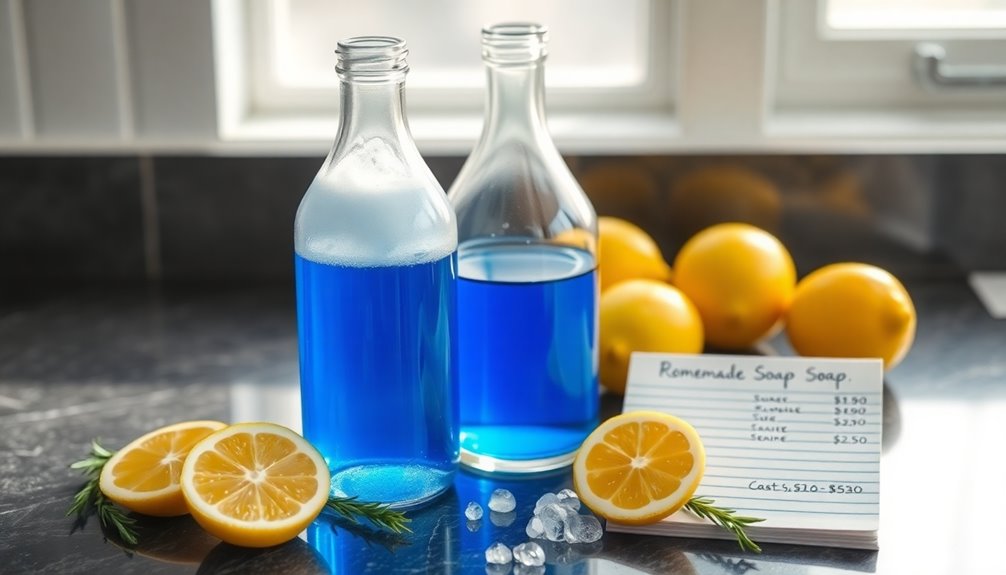
When you compare homemade liquid dishwasher soap to store-bought options, you might be surprised by the cost differences.
Homemade soap can save you money, especially if you buy ingredients in bulk. By sourcing your ingredients wisely, you can greatly cut costs. Store-bought soaps often come with a premium price tag, reflecting the brand’s marketing and packaging. While it may seem convenient, those costs add up over time.
In contrast, creating your soap allows you to control what you spend, and you can adjust your recipes based on sales and availability. Plus, you’ll likely have ingredients left over for future batches, enhancing your savings. Additionally, making your own products can lead to reducing food waste, as you can utilize leftover ingredients in other recipes.
In the long run, homemade options can be a more budget-friendly choice.
Key Ingredients for Effective Homemade Dishwasher Soap
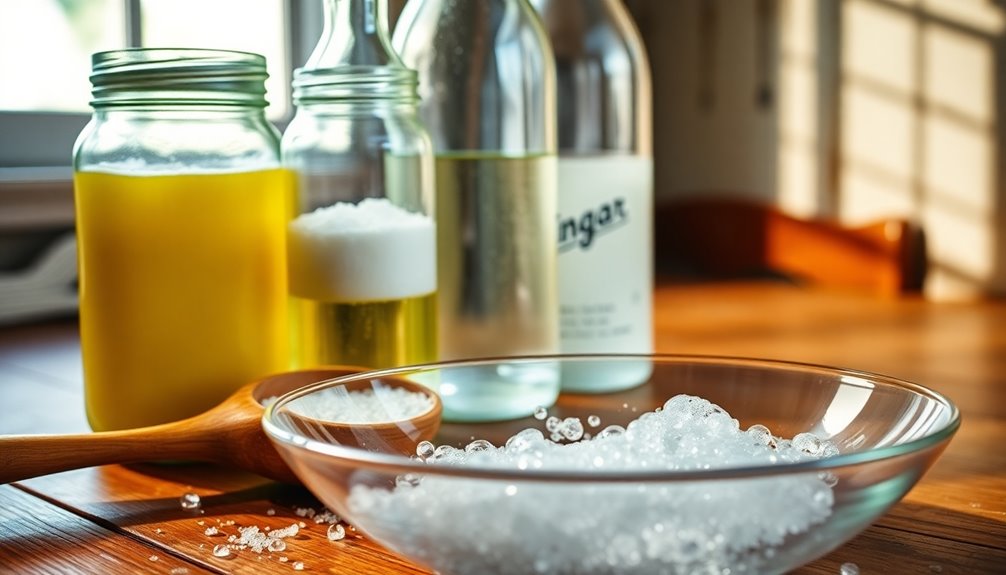
To create effective homemade dishwasher soap, understanding the key ingredients is vital.
Start with baking soda, which acts as a gentle abrasive and deodorizer. Combine it with washing soda to boost cleaning power and tackle grease effectively.
Citric acid is another important ingredient, as it helps break down hard water deposits and enhances shine.
For a natural scent, consider adding essential oils like lemon or lavender, which also have antibacterial properties.
When ingredient sourcing, look for natural alternatives that are eco-friendly and free from harsh chemicals. Additionally, using eco-friendly practices can further enhance the effectiveness of your cleaning solutions.
How to Make Your Own Liquid Dishwasher Soap
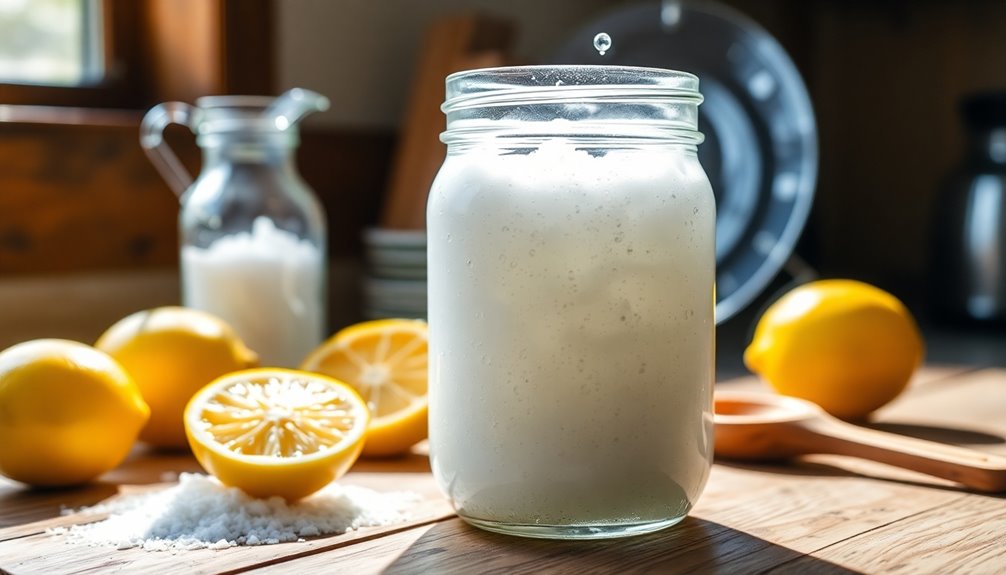
Making your own liquid dishwasher soap is simpler than you might think. Start by mixing 1 cup of liquid castile soap with 1 cup of water in a container.
Making your own liquid dishwasher soap is easy—just mix 1 cup of liquid castile soap with 1 cup of water!
For added cleaning power, consider incorporating 1/4 cup of white vinegar. This combination serves as a fantastic base, but you can explore various dishwasher soap alternatives by adding essential oils for fragrance or even baking soda for extra scrubbing action. Additionally, using liquid castile soap as your base ensures a cleaner and healthier option for your family.
Don’t hesitate to experiment with different ratios to find what works best for you. With these customization options, you can tailor your soap to suit your specific needs, ensuring your dishes come out sparkling clean while saving money in the process.
Happy dishwashing!
Evaluating the Cleaning Power of DIY Dishwasher Solutions
Here are three key factors to reflect on when evaluating DIY solutions:
- Ingredient Sourcing: The quality of the ingredients you use can greatly affect cleaning power. Opt for natural, effective components like baking soda and vinegar.
- Concentration Levels: Balancing the concentration of your ingredients is essential. Too diluted, and it won’t clean effectively; too concentrated, and it may leave residues.
- Testing: Regularly test your homemade soap on various dish types to gauge its effectiveness on tough stains. Additionally, consider how expense tracking apps can help you manage the costs associated with purchasing ingredients for your DIY solutions.
Environmental Benefits of Homemade Dishwasher Soap
While many commercial dishwasher soaps contain harsh chemicals that can harm the environment, homemade alternatives offer a more sustainable option. By choosing DIY recipes, you’re opting for eco-friendly alternatives that reduce your carbon footprint.
Most homemade dishwasher soaps use simple, natural ingredients that are biodegradable, meaning they break down without polluting waterways. This shift promotes sustainable practices, minimizing waste and chemical runoff.
Plus, making your own soap often means less packaging waste, further benefiting the planet. You’re also avoiding synthetic fragrances and dyes, which can contribute to air and water pollution. Ultimately, by switching to homemade dishwasher soap, you’re making a responsible choice that supports a healthier environment for yourself and future generations. Additionally, this eco-friendly approach mirrors the benefits of using budget-friendly furnace filters to enhance indoor air quality without harming the environment.
Common Mistakes When Making Dishwasher Soap at Home
When making your own dishwasher soap, it’s easy to make a few common mistakes that can affect its effectiveness. You might mix up ingredient ratios, overlook water temperature, or skip vital additives. Regular cleaning is essential to ensure your homemade solution works optimally and prevents buildup in your machine. Let’s go over these pitfalls so you can create a truly effective homemade solution.
Incorrect Ingredient Ratios
Getting the ratios wrong can lead to ineffective cleaning or even damage to your dishes. To avoid this, focus on measurement accuracy when mixing your ingredients.
Here are three common mistakes:
- Too much detergent: Overloading your mix can leave residue on dishes and may cause buildup in your dishwasher.
- Insufficient water: Not adding enough liquid can lead to clumping, resulting in poor cleaning performance.
- Incorrect ratios: Forgetting the proper balance between acidic and alkaline ingredients can affect both cleaning power and safety.
Ignoring Water Temperature
Ignoring the temperature of the water can greatly impact the effectiveness of your homemade dishwasher soap. If you use cold water, the soap mightn’t dissolve properly, leaving you with greasy dishes.
On the flip side, excessively hot water can break down the soap too quickly, diminishing its cleaning power. Striking the right balance is key for water efficiency and energy savings.
Warm water—around 120°F—is often ideal, allowing the soap to activate effectively while still being gentle on your dishes.
By paying attention to water temperature, you’ll enhance your cleaning results and get the most out of your homemade soap, ultimately making your DIY efforts worthwhile.
Don’t overlook this vital detail; it can make all the difference!
Skipping Essential Additives
Although you might be tempted to keep your homemade dishwasher soap simple, skipping essential additives can lead to lackluster cleaning results.
To maximize effectiveness, consider these key additive alternatives that serve essential functions:
- Citric Acid: This helps to cut through grease and scale buildup.
- Baking Soda: A natural deodorizer, it boosts cleaning power and fights stains.
- Essential Oils: Not just for fragrance, they can also possess antibacterial properties.
User Reviews: What Do People Think About Homemade Options?
When exploring homemade dishwasher soap, you’ll notice mixed reviews from users. Many appreciate the cost-effectiveness, while others focus on how well it cleans their dishes. Ingredient preferences also play a big role in shaping opinions, so it’s worth considering what works best for you. Many users find homemade dish soap effective for everyday use, but some struggle with tough grease compared to commercial options.
Cost-Effectiveness Perception
Many people find homemade liquid dishwasher soap to be a cost-effective solution, especially when they compare it to store-bought options.
If you’re considering frugal alternatives, here are three reasons to think about making the switch:
- Lower Ingredient Costs: Basic ingredients like vinegar and baking soda are often cheaper than commercial products.
- Bulk Buying: Purchasing ingredients in bulk can lead to significant savings over time.
- Customizable Recipes: You can adjust the recipe to suit your budget adjustments, ensuring you only use what you need.
User reviews often highlight these benefits, noting that homemade options can reduce overall spending while still delivering satisfactory cleaning results.
It’s a win-win for your wallet and your dishes!
Cleaning Performance Insights
Homemade liquid dishwasher soap not only appeals to your budget but also raises questions about its cleaning performance. Many users report mixed feelings about cleaning efficiency.
While some find that homemade options effectively tackle everyday grime, others note that stubborn stains and greasy residues sometimes linger.
Ingredient sourcing plays a vital role in this variability; the effectiveness often hinges on the quality and type of ingredients you choose.
Users recommend experimenting with different recipes to discover what works best for you.
Ultimately, while homemade soap can save money, its ability to clean effectively varies widely. It’s all about finding the right balance of ingredients that meet your specific cleaning needs.
Ingredient Preferences Shared
While some users rave about their homemade dishwasher soap, ingredient preferences can make all the difference in overall satisfaction.
Here’s what many people consider essential when crafting their ideal recipe:
- Ingredient Sourcing: Users often emphasize the importance of high-quality, natural ingredients to avoid harmful chemicals.
- Scent Preferences: Many appreciate fresh, natural scents, while others prefer unscented options for sensitive noses.
- Eco-Friendly Options: A significant number lean toward biodegradable ingredients, aligning their choices with sustainable living.
Texture variations also play a role; some prefer a gel-like consistency, while others enjoy a more liquid form.
Long-Term Savings: Is DIY Worth It?
Have you ever wondered if making your own liquid dishwasher soap can truly save you money in the long run? When you consider long-term budgeting, the answer often leans toward yes.
Homemade soap typically costs less than store-bought options, especially if you buy ingredients in bulk. Plus, you control the quality, which aligns with DIY sustainability.
Homemade dishwasher soap can be more economical than store-bought, especially when you buy ingredients in bulk and prioritize quality.
By cutting out commercial brands, you reduce packaging waste and minimize harmful chemicals. Over time, these savings add up, both financially and environmentally.
While the initial investment in supplies might seem high, think of it as a step towards a more sustainable lifestyle. Ultimately, if you stick with it, DIY dishwasher soap could be a smart choice for your wallet and the planet. Additionally, embracing mindful spending habits supports your overall financial security and enhances the benefits of your DIY efforts.
Tips for Customizing Your Dishwasher Soap Recipe
Customizing your dishwasher soap recipe can elevate both its effectiveness and your personal preferences, ensuring it meets your specific cleaning needs. Here are a few tips to get started:
- Scent Variations: Experiment with essential oils like lemon, lavender, or eucalyptus to give your soap a delightful fragrance. Just a few drops can make a big difference!
- Texture Adjustments: If you prefer a thicker consistency, add more soap base or a bit of cornstarch. For a thinner texture, incorporate additional water gradually.
- Natural Additives: Consider including baking soda for extra scrubbing power or vinegar for added shine, helping to boost your soap’s overall performance. Additionally, using effective filtration techniques can help ensure that any residues are minimized during the cleaning process.
Conclusion
So, you’ve weighed the pros and cons of homemade dishwasher soap and decided to take the plunge? Great choice! Who needs fancy labels and corporate profits, right? Just remember, if your dishes come out dirtier than before, at least you saved a few bucks—sort of. Plus, nothing says “eco-friendly” like scrubbing grime off your plates with a concoction you whipped up in your kitchen lab. Cheers to DIY! Just don’t invite anyone over for dinner… yet.