 0
0
 0
0
Making a homemade non-greasy face cream lets you control ingredients and tailor hydration to your skin’s needs. Focus on natural, lightweight oils like jojoba and grapeseed, and use hydrating elements like aloe vera and glycerin. Avoid heavy oils that can clog pores. Proper storage keeps your cream fresh, and testing for greasiness guarantees effectiveness. Discovering the perfect formula for your skin is just the beginning; there’s so much more to explore as you create your ideal blend.
Why Choose Homemade Non-Greasy Face Creams?
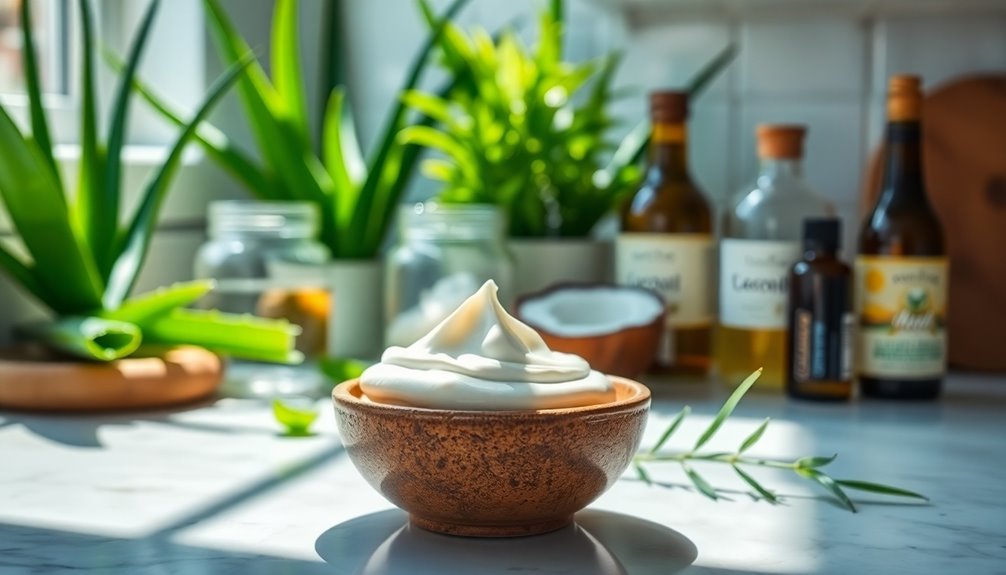
When you consider the ingredients in commercial face creams, it’s easy to see why homemade non-greasy options are appealing. You get complete control over what goes into your product, ensuring you’re not applying any harmful chemicals to your skin.
With homemade creams, you have customization options that let you tailor the formulation to your specific skin type. You can choose oils, butters, and additives that align with your needs, whether you want hydration or soothing properties.
Plus, ingredient sourcing becomes a breeze; you can select high-quality, natural ingredients from trusted sources. This not only boosts the effectiveness of your cream but also gives you peace of mind about what you’re putting on your face. Additionally, adopting a mindful spending approach allows you to create effective skincare solutions without breaking the bank.
The Benefits of Using Natural Ingredients
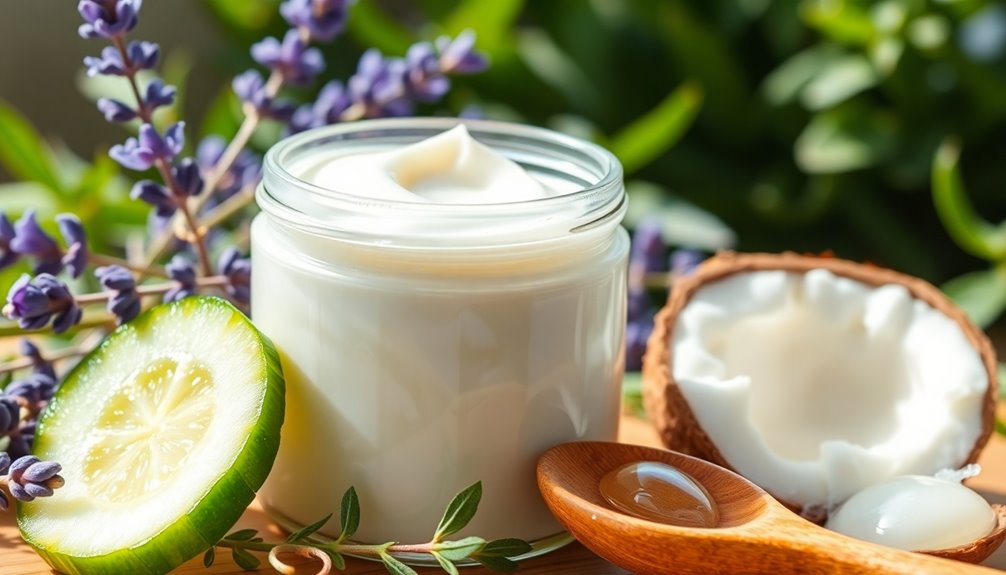
Using natural ingredients in your face cream offers powerful skin nourishment, helping your skin stay healthy and radiant. Plus, these ingredients often come with a lower risk of irritation, making them a safer option for sensitive skin. You’ll notice the difference when you choose formulations packed with nature’s best. Additionally, embracing eco-friendly practices can enhance your overall skincare routine while contributing to a healthier environment.
Skin Nourishment Benefits
Natural ingredients in your homemade face cream offer incredible skin nourishment benefits that can transform your skincare routine. They’re packed with vitamins, minerals, and antioxidants that cater to various skin types.
For instance, ingredients like aloe vera and jojoba oil help maintain hydration balance, ensuring your skin stays plump and radiant without feeling greasy. Natural oils deeply penetrate the skin, delivering essential nutrients while promoting elasticity.
You’ll find that using these ingredients not only enhances your skin’s health but also provides a revitalizing, lightweight feel. By choosing natural components, you’re giving your skin the nourishment it craves, leading to a more vibrant and balanced complexion.
Embrace the power of nature for effective skincare!
Reduced Irritation Risk
Choosing homemade face creams with natural ingredients greatly reduces the risk of irritation for your skin.
Natural ingredients often work in harmony with your skin barrier, helping to maintain a hydrating balance that commercial products might disrupt. Many store-bought creams contain harsh chemicals that act as irritation triggers, especially for sensitive skin.
By opting for homemade formulas, you can select gentle, soothing components like aloe vera or shea butter, which are less likely to cause reactions. These ingredients provide moisture without overwhelming your skin, allowing it to breathe and thrive.
Ultimately, using natural ingredients fosters a healthier complexion while minimizing irritation, making your skincare routine more enjoyable and effective. You’ll notice the difference in how your skin feels and responds.
Key Ingredients for Lightweight Moisturizers
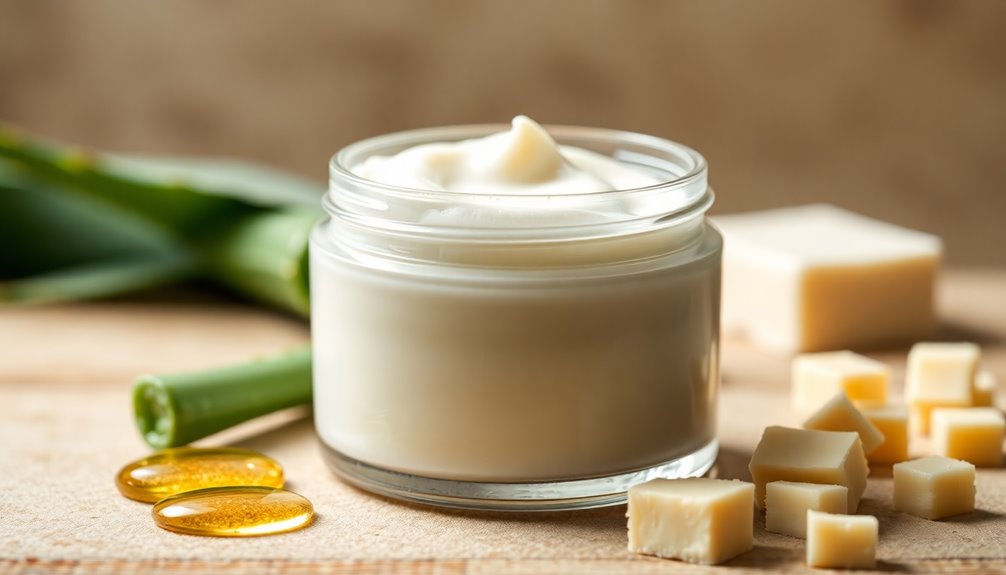
When crafting your lightweight moisturizer, you’ll want to focus on the best lightweight oils and hydrating gel ingredients. These components not only nourish your skin but also keep it feeling fresh and light. Plus, incorporating natural extracts can enhance the benefits and add a boost of hydration. Additionally, choosing products with sulfate-free formulas can help maintain skin’s natural balance and prevent irritation.
Best Lightweight Oils
Finding the right lightweight oils can make all the difference in creating a non-greasy face cream. You’ll want to evaluate oils like jojoba, argan, and grape seed, which are known for their excellent oil absorption properties.
Jojoba oil mimics your skin’s natural sebum, making it perfect for balancing moisture without feeling heavy. Argan oil is rich in antioxidants and absorbs quickly, providing hydration without greasiness.
Grape seed oil is another fantastic choice, as it’s lightweight and packed with vitamins. These oils not only nourish your skin but also help lock in moisture, leaving your face feeling fresh and smooth.
Experiment with these options to find the perfect blend for your homemade face cream.
Hydrating Gel Ingredients
To create a truly effective non-greasy face cream, incorporating hydrating gel ingredients can elevate your formula. Ingredients like aloe vera gel and hyaluronic acid are fantastic choices. They provide a gel consistency that feels invigorating and lightweight on your skin.
Aloe vera not only hydrates but also soothes irritation, while hyaluronic acid excels at moisture retention, drawing water into your skin for lasting hydration. You might also consider glycerin, which helps maintain that hydration throughout the day.
These ingredients work together to guarantee your face cream delivers intense moisture without the heaviness of traditional creams. By focusing on lightweight, gel-based components, you’ll achieve an uplifting feel that keeps your skin plump and radiant.
Natural Extract Benefits
Incorporating natural extracts into your lightweight moisturizer can greatly enhance its effectiveness and overall feel.
These extracts cater to various skin types, providing essential nutrients while delivering a hydration boost. For example, aloe vera offers soothing effects, making it perfect for sensitive skin, while green tea imparts powerful antioxidant effects that combat aging.
Botanical blends can also improve your skin barrier, helping to lock in moisture and keep your skin healthy. Plus, you can choose from a range of fragrance options to personalize your cream.
With the right combination of natural extracts, you not only enjoy anti-aging properties but also a revitalizing, non-greasy texture that feels great all day long.
Understanding Oils: Which Ones to Avoid and Which to Use?
What makes certain oils suitable for your skin while others can lead to greasiness? Understanding oil absorption is key. You want oils that offer lightweight textures without clogging your pores.
Certain oils can enhance your skin while others may cause greasiness; knowing how they absorb is essential for healthy skin.
Here’s a quick guide:
- Use these oils:
- Jojoba oil: Mimics skin’s natural sebum.
- Argan oil: Rich in fatty acids, absorbs quickly.
- Grapeseed oil: Lightweight and non-greasy.
- Rosehip oil: Packed with vitamins, enhances skin clarity.
- Avoid these oils:
- Coconut oil: Can be too heavy for some.
- Olive oil: Often too thick, leading to shine.
- Mineral oil: Tends to clog pores.
- Palm oil: Can be greasy and occlusive.
Incorporating budget-friendly hair care products can also improve your overall skincare routine by promoting a healthier skin environment.
Choose wisely, and your skin will thank you!
How to Create a Balanced Hydration Formula
While crafting a balanced hydration formula, it’s vital to blend moisturizing ingredients that not only hydrate but also support your skin’s barrier.
Start with humectants like glycerin or hyaluronic acid, which draw moisture into your skin. These ingredients enhance hydration balance, ensuring your skin feels plump and refreshed.
Next, incorporate emollients like shea butter or squalane to lock in moisture retention and create a smooth texture. Avoid overly greasy oils that can disrupt the balance.
Finally, don’t forget to add a few drops of essential oils for a soothing scent, but use them sparingly. Including affordable hair care options like those for fine hair can inspire a holistic approach to self-care.
This combination will provide lasting hydration without leaving your face feeling oily. Your skin will thank you for the thoughtful formulation!
Essential Additives for a Non-Greasy Finish
To achieve a non-greasy finish in your homemade face cream, consider adding specific ingredients that enhance texture without weighing down your skin.
Here are four essential additives that can help:
- Jojoba Oil: Mimics skin’s natural oils, offering emollient properties and excellent absorption rates.
- Aloe Vera Gel: Provides hydration while maintaining moisture balance, ideal for all skin types.
- Shea Butter: Adds texture variations and helps lock in moisture without a greasy feel.
- Essential Oils: Not only enhance fragrance but also contribute to the formulation techniques for a lightweight finish.
Additionally, exploring budget-friendly cooking can inspire creativity in your formulations. Experiment with ingredient ratios to find the perfect blend that suits your skin’s needs!
Common Myths About DIY Face Creams
You might think all natural ingredients are safe for your skin, but that’s not always true.
Plus, not every oil leads to greasiness, and sometimes, fewer ingredients can actually be more effective. Using lightweight styling gels can enhance your formulation without adding excess oil.
Let’s clear up these common myths about DIY face creams so you can make informed choices.
Natural Ingredients Are Safe
Many people believe that just because ingredients are natural, they’re automatically safe for everyone. This misconception can lead to skin irritation or allergic reactions. Here are some key points to reflect on:
- Skin Compatibility: Not all natural ingredients suit every skin type. Always patch test before full application.
- Natural Preservatives: While they’re often safer, they may not be as effective as synthetic options, risking contamination.
- Allergies: Natural doesn’t equal hypoallergenic. Common allergens like nuts and essential oils can cause reactions.
- Concentration Matters: High concentrations of natural ingredients can be irritating, so use them wisely.
Always research and choose wisely to guarantee your DIY face cream is safe and effective for your skin!
All Oils Cause Greasiness
While it’s a common belief that all oils lead to a greasy finish, that simply isn’t true. Different oils have varying levels of oil absorption, making them suitable for different skin types.
For instance, lightweight oils like jojoba or argan absorb quickly and leave your skin feeling hydrated without that heavy residue. If you have oily or combination skin, these oils can actually help balance your skin’s natural oils.
On the other hand, heavier oils, like coconut, mightn’t be ideal for everyone, especially those prone to breakouts.
The key is to choose the right oil for your specific skin type, ensuring a non-greasy feel while still delivering the hydration and nourishment your skin craves.
More Ingredients Equals Better
Despite the belief that more ingredients lead to better results in DIY face creams, simplicity often proves to be more effective. Here are some reasons to evaluate:
- Ingredient Diversity: Fewer ingredients can enhance skin compatibility, reducing the risk of irritation.
- Texture Balance: Focusing on a couple of key components helps achieve a smooth, non-greasy finish.
- Efficacy Comparison: Fewer ingredients allow you to assess the cream’s performance more easily.
- Moisture Retention: A streamlined formula can enhance ingredient synergy, improving moisture retention without overwhelming your skin.
Using targeted formulation techniques can create a satisfying sensory experience while ensuring your face cream remains effective.
How to Test Your Homemade Cream for Greasiness?
How can you determine if your homemade cream is too greasy? Start with simple greasiness tests.
First, apply a small amount to your skin and wait a few minutes. If it leaves a shiny, oily residue, your cream may be too greasy.
Next, check the cream consistency. A non-greasy cream should feel lightweight and absorb quickly without leaving a film.
A non-greasy cream feels lightweight and absorbs quickly, leaving no residue behind.
You can also perform the “blotting paper test”—apply your cream, then press a blotting paper against your skin. If the paper picks up excess oil, it’s a sign your cream isn’t quite right.
Finally, trust your instincts; if it feels heavy or uncomfortable, adjust your recipe for a lighter, non-greasy result. Regularly evaluating your cream’s absorption rate can help ensure it remains lightweight and effective.
Tips for Customizing Your Face Cream for Different Skin Types
Here are some key customization techniques to take into account:
- Oily Skin: Use lightweight oils like jojoba or grapeseed, and add ingredients like tea tree oil for balance.
- Dry Skin: Incorporate richer oils like avocado or almond oil, along with hyaluronic acid for hydration.
- Sensitive Skin: Choose soothing ingredients, such as chamomile or aloe vera, to avoid irritation.
- Combination Skin: Mix and match oils; think about using non-comedogenic oils and balancing ingredients like rosehip oil. Additionally, consider using sulfate-free products to maintain skin health and prevent dryness.
Storage Solutions for Your Homemade Face Cream
Proper storage is essential for keeping your homemade face cream fresh and effective. Choose container types like glass jars or BPA-free plastics with airtight seals to prevent contamination.
For ideal storage duration, keep your cream in a cool, dark place; refrigeration benefits include extending shelf life and maintaining consistency. If you use natural preservatives, verify they’re effective by controlling temperature and light exposure. Additionally, using natural oils can enhance the moisturizing properties of your cream.
Labeling tips like including the date of preparation help you track freshness. For travel-friendly options, consider small, leak-proof containers that fit easily in your bag.
How to Identify Allergens and Sensitivities?
Ever wondered if your homemade face cream might be causing irritation? Identifying allergens and sensitivities is essential for healthy skin. Here’s how to pinpoint potential culprits:
- Conduct Allergen Testing: Try testing one ingredient at a time to see how your skin reacts.
- Use Skin Patching: Apply a small amount of cream on your inner wrist or behind your ear. Wait 24 hours to monitor for reactions.
- Keep a Diary: Document your cream’s ingredients and any skin changes. This can help identify patterns.
- Consult a Professional: If irritation persists, consult a dermatologist for specialized advice and testing.
Troubleshooting: What to Do If Your Cream Feels Oily?
Identifying allergens and sensitivities is just the first step to achieving healthy skin; if your homemade cream feels oily, it can be frustrating.
Start with some oily texture troubleshooting. First, check your oil-to-water ratio; too much oil can lead to greasiness. Consider using lighter oils like jojoba or grapeseed, as they absorb better.
Start troubleshooting oily textures by checking the oil-to-water ratio; lighter oils like jojoba or grapeseed can enhance absorption.
For cream absorption tips, apply your cream on damp skin to help lock in moisture without excess oiliness.
If you’ve already made the cream, try blending it with a small amount of a light gel, like aloe vera, to improve its texture.
Finally, verify you’re using an appropriate amount—less is often more when applying any moisturizer.
Final Thoughts on Achieving the Perfect Non-Greasy Glow
Achieving the perfect non-greasy glow hinges on understanding your skin’s unique needs and choosing the right ingredients.
To help you master radiant skincare, consider these glow techniques:
- Hydrate: Drink plenty of water to keep your skin plump and healthy.
- Exfoliate: Regularly remove dead skin cells to reveal a fresh, radiant layer underneath.
- Moisturize Wisely: Use lightweight, oil-free moisturizers that provide hydration without greasiness.
- Sunscreen: Protect your skin from UV damage, which can dull your glow.
Conclusion
In your quest for the perfect non-greasy face cream, remember that a little goes a long way. With the right natural ingredients and a balanced formula, you can achieve that sought-after glow without the greasy feel. Don’t be afraid to experiment and tweak your recipes, as finding what works best for your skin can be a bit of a journey. With patience and persistence, you’ll be well on your way to a radiant complexion that shines like the sun.