 0
0
 0
0
Looking for a simple, cheap, and effective dish soap recipe? Start with 1 cup of liquid Castile soap mixed with 2 cups of distilled water. Add 10-15 drops of your favorite essential oil for a delightful scent. Stir gently to avoid bubbles, then pour into a bottle for easy use. This eco-friendly combo tackles grime while being gentle on your skin. Want to discover more tips and tricks for customizing your homemade soap? Keep going!
Why Choose Castile Soap for Your Dishwashing Needs
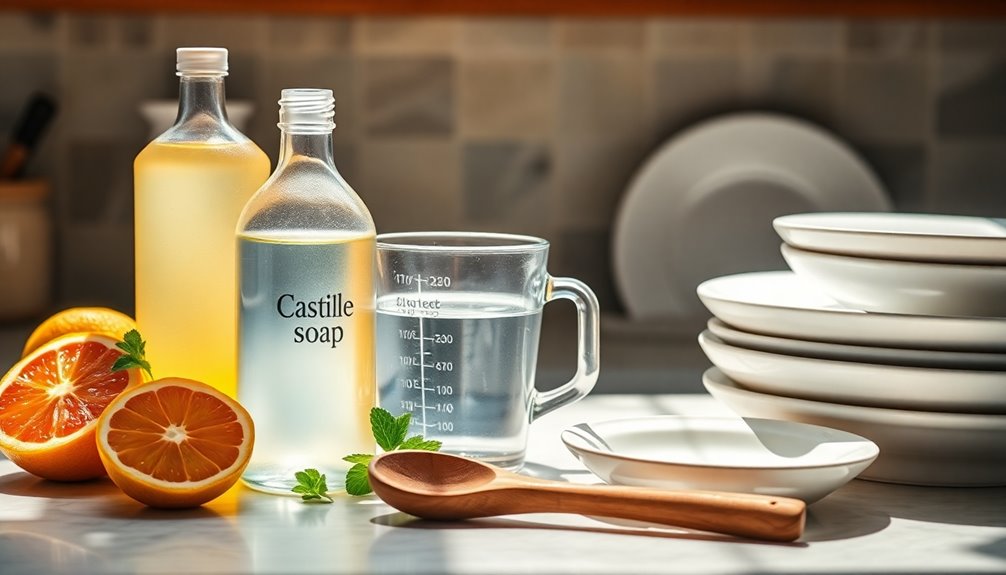
When it comes to dishwashing, choosing the right soap can make all the difference. Castile soap stands out for its versatility and effectiveness. Its plant-based ingredients provide excellent cleaning power without harsh chemicals, making it a favorite for those who prioritize sustainability practices.
You’ll appreciate how safe it’s for both your family and the environment. Plus, the castile soap benefits extend beyond just cleaning; it’s biodegradable, reducing your ecological footprint. It can even replace multiple household cleaners, simplifying your cleaning routine. Additionally, using OxiClean for stain removal can enhance your overall cleaning efforts and help maintain a spotless kitchen environment.
The Benefits of Homemade Dish Soap
Making your own dish soap offers several advantages you won’t want to miss.
You’ll use eco-friendly ingredients that are safer for the planet and your home.
Plus, it’s a cost-effective solution that lets you customize the scent to your liking. Additionally, creating a zero-waste approach reduces plastic waste through container reuse.
Eco-Friendly Ingredients
Using eco-friendly ingredients in your homemade dish soap not only benefits the environment but also assures a safer cleaning experience for your family.
By choosing sustainable sourcing for your ingredients, you support practices that protect natural resources and reduce waste. This means your dish soap isn’t just effective but also kind to the planet.
Incorporating natural preservatives, like vitamin E or rosemary extract, helps extend the shelf life of your soap without harmful chemicals.
These ingredients guarantee that your cleaning routine remains free from synthetic additives, promoting a healthier home. Plus, you’ll feel good knowing that you’re making a conscious choice for both your family’s well-being and the environment’s future.
Embrace eco-friendly dish soap and enjoy a guilt-free clean!
Cost-Effective Solution
Homemade dish soap not only cuts down on costs but also gives you control over what goes into your cleaning routine. By making your own, you’re choosing budget-friendly alternatives that fit your financial needs without sacrificing effectiveness.
Store-bought options often come with hefty price tags, but with simple ingredients like Castile soap, you can whip up a powerful cleaner at a fraction of the cost.
Plus, you’ll be engaging in sustainable cleaning practices, reducing plastic waste and harmful chemicals in your home. This way, you not only save money but also contribute to a healthier planet.
Embracing homemade solutions empowers you to keep your kitchen clean while sticking to your budget and values.
Customizable Scent Options
Why settle for generic scents when you can create your own delightful aromas for dish soap? Customizing your dish soap allows you to experiment with unique scent combinations that reflect your personality.
You can blend essential oils like lemon and lavender for a revitalizing twist or use herbal infusions like rosemary and thyme for a more earthy aroma.
These natural ingredients not only smell great but also add a touch of luxury to your dishwashing routine. Plus, making your own scents means you can avoid synthetic fragrances that might irritate your skin.
Embrace the creativity of homemade dish soap, and transform mundane chores into a fragrant experience, tailored just for you!
Essential Ingredients for Your DIY Dish Soap
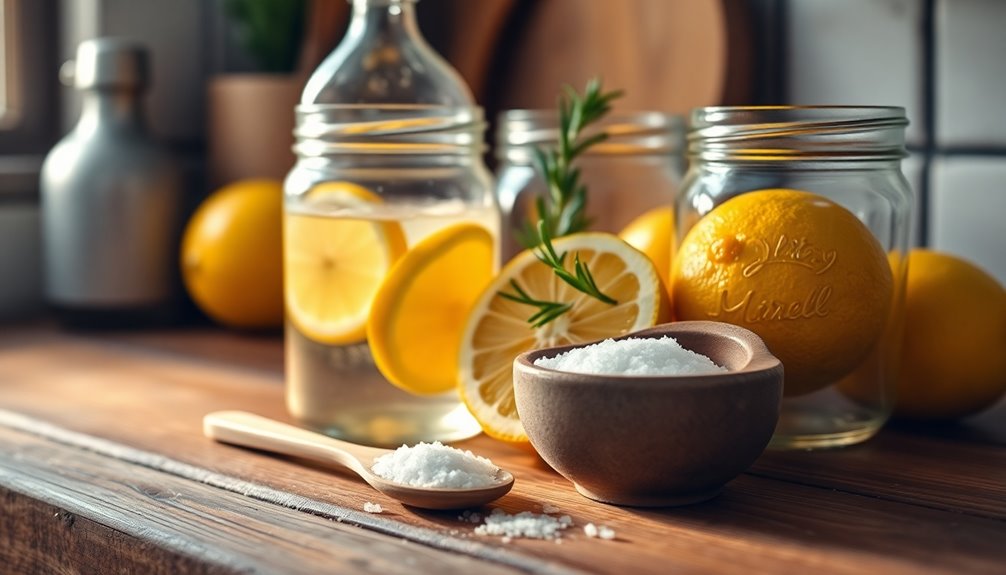
Crafting your own dish soap is both eco-friendly and budget-friendly, and it all starts with essential ingredients.
You’ll need Castile soap, which serves as a powerful base. This plant-based soap is a fantastic natural alternative to harsh chemicals found in commercial products.
Next, consider adding essential oils for a pleasant scent and extra cleaning power. Oils like lemon or tea tree not only smell great but also have antibacterial properties.
You might also include a splash of vinegar to boost grease-cutting ability. Finally, a few drops of glycerin can help keep your soap gentle on your hands. By using eco-friendly practices, you’ll create an effective dish soap that’s safe for your family and the environment.
Step-by-Step Instructions to Make Your Castile Soap Dish Soap
Now that you’ve gathered your essential ingredients, it’s time to mix them into a powerful dish soap.
You’ll follow a straightforward process to guarantee everything blends perfectly. Additionally, this recipe is cost-effective compared to commercial alternatives, making it a great choice for eco-conscious families.
Plus, I’ll share some handy storage tips to keep your soap fresh and effective.
Essential Ingredients Required
To create your own dish soap using Castile soap, you’ll need a few essential ingredients that are easy to find. First, grab liquid Castile soap, which offers excellent cleaning power without harsh chemicals.
Next, consider adding distilled water to dilute the soap, making it gentle on your hands while still effective. For extra grease-cutting ability, include a few drops of essential oils like lemon or tea tree, known for their antibacterial properties. You can source these ingredients at health food stores or online.
Finally, a splash of white vinegar enhances the formula by boosting its cleaning effectiveness. Each ingredient not only serves a specific purpose but also contributes to an eco-friendly cleaning solution.
Mixing Process Explained
Creating your own dish soap with Castile soap is simple and rewarding. First, gather your ingredients: Castile soap, water, and your favorite essential oils.
Start by measuring out 1 cup of Castile soap and mix it with 2 cups of water in a bowl. Use gentle mixing techniques to guarantee the soap blends well without creating too many bubbles.
If you want a scent, add about 10-15 drops of essential oil, adjusting to your preference. Stir the mixture thoroughly to combine all the ingredients without excessive agitation.
Once mixed, pour your dish soap into a bottle for easy use. Remember, the ingredient ratios can be adjusted based on your cleaning needs, making this recipe versatile and effective!
Storage Tips Offered
Once you’ve mixed your dish soap, proper storage is key to maintaining its effectiveness and longevity. Here are some tips to help you maximize its shelf life:
- Use airtight storage containers: This prevents air exposure, keeping your soap fresh longer.
- Label your containers: Knowing the date you made the soap helps you track its age.
- Store in a cool, dark place: Avoid sunlight and heat, which can degrade the soap’s quality.
- Keep out of reach of children: Safety first! Make certain your homemade soap is stored where little hands can’t reach.
Tips for Customizing Your Dish Soap Scent
While making your own dish soap can be rewarding, customizing its scent adds a personal touch that elevates the experience.
Start by exploring scent blending with essential oils and fragrance oils. You can mix different oils to create a unique aroma that suits your preferences. For an invigorating scent, try combining lemon and eucalyptus. If you prefer something cozy, blend vanilla with cinnamon.
Remember to test small amounts first, as some fragrances can be overpowering. Aim for a balanced scent that’s pleasant but not overwhelming while washing dishes. Additionally, consider using natural sweeteners like honey or agave nectar in your soap for added benefits.
Don’t hesitate to experiment; jot down your favorite combinations for future batches. With a little creativity, you’ll have a dish soap that smells just as lovely as it cleans!
How to Store Your Homemade Dish Soap Safely
Follow these essential tips for dish soap storage:
- Use Safe Containers: Opt for glass or high-quality BPA-free plastic bottles to avoid chemical leaching.
- Label Clearly: Mark each container with the date and ingredients to remember what you made.
- Keep Away from Heat: Store your soap in a cool, dark place to maintain its integrity.
- Seal Tightly: Confirm lids are secure to prevent spills or contamination.
- Consider Air Quality: Maintaining a clean HVAC system helps ensure your soap remains free from airborne contaminants that could affect its quality.
Common Mistakes to Avoid When Making Dish Soap
When making your homemade dish soap, it’s easy to make a few common mistakes. Using the wrong ingredients or mixing up dilution ratios can lead to ineffective results. Let’s explore how to avoid these pitfalls and guarantee your soap works like a charm. Additionally, understanding effective expense management can help you budget for high-quality ingredients, ensuring your homemade soap is both economical and efficient.
Using Wrong Ingredients
Choosing the wrong ingredients can lead to a dish soap that doesn’t clean effectively or, worse, irritates your skin. To avoid these pitfalls, steer clear of incorrect ingredient choices and harmful additives.
Here are four common mistakes you might make:
- Using cheap detergents – They often contain harsh chemicals that can damage your skin and dishes.
- Adding essential oils without research – Some can be irritating or even toxic when mixed with other ingredients.
- Incorporating synthetic fragrances – These can trigger allergies or skin reactions.
- Neglecting to test pH levels – An improper pH can lead to skin irritation and ineffective cleaning.
Incorrect Dilution Ratios
Using the wrong ingredients can hinder your dish soap’s performance, but incorrect dilution ratios are another common pitfall. Many people make dilution mistakes by either over-concentrating or under-diluting their Castile soap.
If you use incorrect ratios, your dish soap mightn’t clean effectively or could leave a soapy residue. Aim for a balanced mix—generally, a ratio of one part Castile soap to ten parts water works well.
Remember, too much soap can create excess suds, while too little won’t cut grease effectively. Always measure carefully to avoid these errors.
Comparing Castile Soap to Commercial Dish Soaps
While commercial dish soaps often boast powerful cleaning agents, Castile soap presents a more natural alternative that’s just as effective.
When you consider a Castile comparison, you’ll find several compelling reasons to switch:
- Gentle on Skin: No harsh chemicals mean less irritation for your hands.
- Versatile Uses: Beyond dishes, you can use it for cleaning surfaces or as a body wash.
- Eco-Friendly: Fewer synthetic ingredients reduce your environmental footprint.
- Cost-Effective: A little goes a long way, saving you money in the long run. Additionally, many affordable hair care products can also benefit from the gentle cleansing properties of Castile soap.
In terms of soap performance, Castile soap rivals commercial options without the guilt.
You’ll feel good about cleaning your dishes while making a healthier choice for your family and the planet.
Eco-Friendly Aspects of Using Homemade Dish Soap
Homemade dish soap not only cleans your dishes effectively but also contributes to a healthier planet. By using natural ingredients like Castile soap, you’re embracing sustainable living.
Unlike commercial options, your homemade soap avoids harsh chemicals that can harm aquatic life and ecosystems. You’re making a conscious choice to reduce plastic waste by creating your own cleaning solution, often stored in reusable containers.
This simple switch supports natural cleaning practices, minimizing your environmental footprint. Plus, you know exactly what goes into your soap, ensuring it’s safe for your family.
When you choose homemade, you’re fostering a cleaner home and a cleaner planet, helping to promote eco-friendly habits that benefit everyone. Additionally, embracing mindful spending habits can further enhance your commitment to sustainability while saving money.
How to Effectively Use Your Homemade Dish Soap
Effective dishwashing starts with knowing how to use your homemade dish soap properly. To get the best results, follow these simple tips:
- Choose Your Scent Combinations: Experiment with various essential oils to create scents that uplift your mood while you wash.
- Add Lather Boosters: A pinch of baking soda can enhance lather, making scrubbing easier and more effective.
- Use Warm Water: Warm water helps dissolve grease and activates the soap’s cleaning properties, ensuring a thorough wash.
- Don’t Overdo It: A small amount of your homemade dish soap goes a long way; using too much can lead to residue.
- Monitor your usage: Keeping track of spending habits while using homemade products can help you save money on cleaning supplies.
Troubleshooting: What to Do If Your Dish Soap Doesn’t Lather?
Ever wondered why your dish soap isn’t lathering like you expected? It could be due to a few common misconceptions.
First, make sure you’re using the right lathering techniques. Sometimes, a little more water or friction is all it takes to get those suds going.
If you’re using hard water, that can hinder lathering, too. Try adding a bit of vinegar to soften your water.
Also, check the ratio of Castile soap in your recipe; too much water can dilute its effectiveness.
If you’re still struggling, consider adding a few drops of a different liquid soap to boost lather.
With these adjustments, you’ll have bubbly results in no time!
Creative Ways to Repurpose Empty Dish Soap Bottles
While you might think empty dish soap bottles are just trash, they can actually be transformed into useful household items.
Repurposing these bottles not only promotes recycling ideas but also sparks your creativity. Here are some fun and practical creative crafts you can try:
- Watering Can: Puncture small holes in the cap for a DIY watering can.
- Squeeze Bottles: Fill with homemade sauces or dressings for easy pouring.
- Plant Funnels: Cut the top off to create a funnel for potting plants.
- Craft Supply Storage: Use them to store paint, glitter, or beads.
Conclusion
In the end, whipping up your own dish soap with castile soap isn’t just a clever solution; it’s a gentle embrace for your wallet and the planet. You’re not just cleaning dishes; you’re crafting a sustainable routine that brightens your kitchen. So, let those suds dance and sing as you wash away the day’s mess. With every drop, you’re nurturing a greener home, and that’s a beautiful thing. Embrace the simplicity and enjoy your sparkling clean dishes!