

 0
0
 0
0
If your steering wheel’s making noise, it could signal a few issues. Groaning or whining often means low power steering fluid or a failing pump, while clunking when turning might indicate worn ball joints or tie rods. Don’t ignore these sounds; they can affect handling and safety. A good first step is to check fluid levels and inspect for wear. There are also DIY fixes to explore before seeking professional help, so keep learning about your options.
What Are the Common Causes of Steering Wheel Noise?

When you notice unusual noises coming from your steering wheel, it’s often a sign that something’s not right.
Common causes of steering wheel noise include low power steering fluid levels, which can lead to whining or groaning sounds as you turn the wheel. A bad power steering pump might also be at fault, causing stiffness and those same groaning noises due to internal wear or low pressure.
Unusual steering wheel noises, like whining or groaning, often signal low power steering fluid or a failing pump.
Additionally, worn suspension components like ball joints and tie rod ends can create clunking or popping sounds while turning. Cold weather can exacerbate these issues, making rubber boots contract and rub against the steering shaft. Regular maintenance, including checking fluid levels and inspecting components, is essential for preventing these noises and ensuring your steering system’s longevity. By maintaining regular maintenance practices, you can avoid costly repairs in the long run.
How to Identify the Type of Noise Your Steering Wheel Makes

When your steering wheel makes noise, identifying the type can help you pinpoint the issue.
Different sounds, like whining, clunking, or squeaking, often signal specific problems that could affect your vehicle’s performance.
Let’s explore how to recognize these noises and what they might mean for your car. Regular maintenance and inspections can help catch potential issues in steering early before they become serious problems.
Noise Type Identification
Identifying the type of noise your steering wheel makes is essential for diagnosing potential issues before they escalate.
If you hear a groaning or whining noise while turning, it often indicates low power steering fluid or a failing pump.
Clunking or popping sounds can suggest wear in suspension components, impacting your vehicle’s handling.
A rubbing noise, especially in colder weather, may signal dried lubricant dragging on the steering shaft boot.
If you notice clicking or knocking during sharp turns, it’s likely due to worn CV joints.
Finally, squealing or screeching noises might point to loose or worn-out belts.
Addressing these specific noises promptly can help prevent further damage to your steering system.
Common Causes Explained
Understanding the common causes of steering wheel noise can help you address potential issues before they worsen.
If you hear groaning or whining noises while turning, it often means you have low power steering fluid or a problem with the power steering pump.
Clunking or popping sounds may indicate worn steering components like ball joints or tie rod ends, which could compromise safety.
Squeaking or creaking noises suggest dry strut bearings that need lubrication or replacement.
Rubbing sounds might be a rubber boot dragging on the steering shaft due to dried lubricant, especially in cold weather.
Finally, vibrations in the steering wheel can signal worn components like CV joints, warranting a thorough inspection of the suspension system.
Impact on Vehicle Performance
Recognizing the type of noise your steering wheel makes is essential for maintaining vehicle performance.
Ignoring these sounds can lead to bigger problems down the line, impacting your safety and driving experience.
Here’s what to listen for:
- Groaning or whining could signal power steering pump issues.
- Clunking or popping noises often indicate worn suspension joints.
- Squeaking sounds may suggest lack of lubrication at the steering shaft.
- Whining during low speeds often points to low power steering fluid.
- Noises at full lock could hint at pressure build-up in the steering system.
Understanding Power Steering System Components
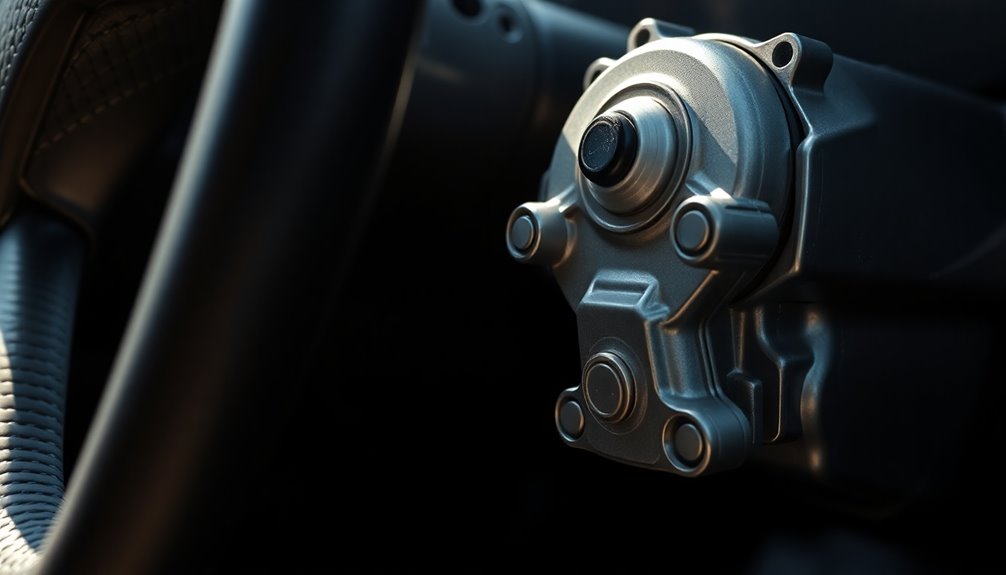
To understand your steering wheel noise, you need to know the key components of the power steering system.
The power steering fluid plays an essential role, and any failures in parts like the pump or steering rack can lead to problems.
Recognizing the signs of malfunctioning components can help you address issues before they worsen. Additionally, familiarizing yourself with investment tracking features can enhance your financial decision-making as you manage your vehicle maintenance costs.
Power Steering Fluid Role
A well-functioning power steering system relies heavily on power steering fluid, which plays an essential role in ensuring smooth and effortless steering.
This fluid provides the hydraulic pressure necessary to reduce the effort needed when you turn the wheel. It also lubricates various components, preventing wear and excessive heat buildup.
To keep your steering system in prime shape, remember:
- Low fluid levels can lead to increased steering effort.
- Noise can signal fluid issues.
- Contaminated fluid hampers system efficiency.
- Regular checks are vital for safety.
- Changing fluid as recommended keeps everything running smoothly.
Common Component Failures
Understanding the common component failures in your power steering system is crucial for maintaining smooth and safe steering. The steering rack is a key part, and if it’s worn or damaged, you might experience noise or difficulty in steering.
Additionally, inspect the tie rod ends; worn tie rods can cause clunking or squeaking sounds, indicating they need lubrication or replacement.
A failing power steering pump may produce groaning or whining noises, worsening steering effort, especially when cold.
Leaking power steering fluid reduces hydraulic pressure and can lead to further noise, so prompt inspection is essential.
Regular maintenance of these components helps guarantee your steering system operates effectively, preventing potential issues down the road.
Signs of Malfunctioning Parts
Recognizing the signs of malfunctioning parts in your power steering system can save you from costly repairs and enhance your driving experience.
Pay attention to these warning signs while turning the steering wheel:
- Groaning or whining noises from the power steering pump
- Difficulty steering due to low power steering fluid
- Clunking or popping sounds from worn ball joints
- Increased friction when steering, indicating potential leaks
- Unusual vibrations while maneuvering turns
These symptoms can indicate issues with the power steering pump, suspension system, or other components.
Regularly inspecting and maintaining your power steering system helps prevent noise and guarantees smooth operation.
Don’t ignore these signs—your safety and comfort depend on it!
Why Is My Steering Wheel Groaning or Whining?
Ever wondered why your steering wheel groans or whines when you turn it? These groaning noises often signal low power steering fluid levels or even a leak, making it harder for you to steer.
Check your fluid levels first—if they’re low, topping them off might resolve the issue. If the fluid is adequate but the noise persists, your power steering pump could be wearing out and may need replacement.
Check your power steering fluid levels; topping off may solve the noise. If it persists, your pump might need replacement.
Cold temperatures can also thicken the power steering fluid, adding strain to the system and amplifying those unwelcome sounds. Additionally, maintaining proper fluid levels can help reduce operational costs and enhance the overall efficiency of your vehicle’s steering system.
Don’t ignore these noises; addressing them early can prevent more severe problems and costly repairs down the line.
Regularly inspect and lubricate steering components to keep everything running smoothly.
What Does a Clunking Noise Indicate When Turning?
If you hear a clunking noise when turning, it could signal worn suspension components like ball joints or tie rod ends. These parts are essential for smooth steering and can lead to bigger issues if ignored. It’s important to address these sounds quickly to maintain safe driving conditions. Regular maintenance, like checking leveling feet, can help prevent similar balance issues in other mechanical systems.
Worn Suspension Components
When you hear a clunking noise while turning, it often signals worn suspension components like ball joints or tie rod ends. Ignoring these sounds can compromise your vehicle’s handling and safety. As the components wear, you may notice more pronounced noises over bumps or during sharp turns.
- You could face costly repairs down the line.
- Your vehicle’s handling might become unpredictable.
- Uneven tire wear can lead to more issues.
- Driving could feel less stable and safe.
- You may experience vibrations in the steering wheel.
Regularly inspecting your suspension is vital. Addressing clunking noises promptly helps maintain the integrity of your vehicle’s steering and suspension systems, ensuring a smoother, safer ride.
Power Steering Issues
Hearing a clunking noise while turning the steering wheel can be alarming, especially since it often signifies underlying power steering issues.
This clunk could indicate worn ball joints or tie rod ends, which compromise your steering and suspension performance. If you notice a whining sound accompanying the clunk, it may point to problems with the power steering pump or components within the power steering rack.
Insufficient lubrication or damaged upper strut bearings might also cause these clunking sounds during turns. You might notice the noise becomes more pronounced during sharp turns or when driving over bumps.
Regular inspection and maintenance of your steering and suspension systems are essential to preventing further damage and ensuring safe handling of your vehicle.
How Does Weather Affect Steering Wheel Noise?
Weather can greatly impact the sounds your steering wheel makes, especially during colder months. As temperatures drop, rubber components like steering boots can contract, causing increased friction and annoying rubbing noises when you turn the wheel.
Low temperatures also thicken power steering fluid, leading to groaning or whining sounds. Additionally, dried or frozen lubricants can make the boot drag against the shaft, creating extra noise.
- You might feel anxious about unexpected issues.
- The sounds could disrupt your peaceful drive.
- You may worry about safety on icy roads.
- Disturbing noises can be frustrating and annoying.
- The stress of potential repairs looms overhead.
Being aware of these weather-related factors can help you diagnose and address steering wheel noises effectively. Moreover, regular inspections of your vehicle can help identify potential issues early, preventing dangerous situations.
Inspecting for Power Steering Fluid Leaks
Cold temperatures can exacerbate steering wheel noise, but underlying issues like power steering fluid leaks may also be to blame.
Start by inspecting the power steering fluid reservoir for low fluid levels; if it’s low, you might experience increased steering effort and noise when you turn.
Next, check around the power steering pump, hoses, and connections for visible leaks, as these are common culprits.
Use a flashlight to look beneath your vehicle for any puddles or stains that could signal a leak.
Also, keep an eye out for fluid contamination, like a dark or murky appearance, indicating potential internal damage.
Regularly monitor your power steering fluid levels and top off as needed to maintain ideal performance and reduce noise issues. Additionally, properly storing cut onions can help minimize waste and save money, ensuring you have fresh ingredients on hand while tackling your DIY projects.
Evaluating the Condition of Struts and Shocks
Since struts and shocks play a crucial role in your vehicle’s suspension system, evaluating their condition is imperative for a smooth and safe ride. Worn struts can lead to annoying clunking noises, especially while turning or driving over bumps. Regularly checking their condition can help you avoid serious issues down the road.
Evaluating your struts and shocks is essential for a safe, smooth ride—don’t overlook their importance!
- Feel the thrill of a stable ride
- Prevent the anxiety of uneven tire wear
- Experience the joy of confident cornering
- Save money on future repairs
- Guarantee your loved ones’ safety
Conduct a visual inspection for fluid leaks or damage, and take your car for a test drive to identify any excessive swaying or instability. Additionally, be aware that proper insulation in your vehicle can contribute to a quieter ride by reducing noise from the road and suspension system.
Don’t ignore those clunking noises—your safety depends on it!
Signs of Worn Ball Joints and Tie Rods
When you’re driving, the last thing you want to hear is a clunking or squeaking noise coming from your vehicle’s front end. These sounds often signal worn ball joints or tie rods.
If you notice clunking noises while turning or creaking when going over bumps, it’s time for an inspection. Worn tie rods may produce knocking noises, especially at low speeds or during turns.
Additionally, a lack of lubrication in your ball joints can increase friction, leading to abnormal sounds and possible steering instability.
Keep an eye out for vibrations in your steering wheel, as these can indicate alignment or suspension issues. Regularly inspecting these components can help prevent uneven tire wear and compromised handling. Furthermore, just like monitoring water usage can lead to significant savings, keeping an eye on your vehicle’s suspension can enhance safety and extend the lifespan of your tires.
How to Diagnose a Bad Power Steering Pump?
Hearing unusual sounds from your vehicle can be alarming, especially when it involves the steering system. To diagnose a bad power steering pump, pay attention to these signs:
- Groaning noise when turning the wheel, especially at low speeds
- Stiff or difficult steering, improving when the engine warms up
- Low or contaminated power steering fluid
- Slow response when turning the wheel
- Persistent noise despite checking fluid levels
If you notice these symptoms, it’s essential to act quickly. A failing power steering pump can compromise your steering system and create further damage. Regular billing process reviews can help you stay informed about maintenance schedules and avoid potential issues.
Inspect the fluid and consider consulting a mechanic if the problem persists. Your safety on the road depends on a fully functioning steering system!
DIY Lubrication Techniques for Steering Components
To keep your steering components functioning smoothly, regular lubrication is key.
Start by cleaning the area around the steering shaft and boot with glass cleaner or rubbing alcohol to remove any grime.
Begin by thoroughly cleaning the steering shaft and boot area using glass cleaner or rubbing alcohol to eliminate grime.
Next, apply silicone grease or a suitable spray lubricant like WD-40 to the contact points between the steering shaft and boot. This reduces friction and helps eliminate those annoying noises whenever you turn.
It’s best to apply the lubricant while turning the steering wheel to guarantee even distribution.
Regular lubrication not only prevents wear and tear on components but also maintains smoother operation.
Don’t forget to inspect and lubricate periodically, especially in colder weather, as temperature changes can affect lubricant viscosity.
When to Seek Professional Help for Steering Issues?
Even with regular lubrication, certain steering issues might still arise, signaling it’s time to consult a professional.
If you hear persistent groaning or whining noises while turning, or if you struggle to steer, it’s essential to get your vehicle inspected. These signs could indicate serious problems with your steering systems that need immediate attention.
- Unusual noises that won’t go away
- Difficulty steering, especially in cold conditions
- Increased effort needed to turn the wheel
- Clunking sounds during turns
- Sudden changes in vehicle response
Ignoring these symptoms can lead to more damage and safety risks.
Don’t hesitate—ensure your vehicle is safe and functioning properly by seeking help from a qualified mechanic.
Conclusion
To sum up, addressing steering wheel noise early can save you time and money down the road. Did you know that nearly 70% of steering issues stem from neglected maintenance? By staying proactive and familiarizing yourself with common noises and their causes, you can keep your vehicle safe and enjoyable to drive. Remember, if the problem persists despite your DIY efforts, don’t hesitate to reach out to a professional for a thorough inspection. Your safety’s worth it!