 0
0
 0
0
Making your own dish soap with liquid Castile soap is a breeze and a great way to embrace sustainability. Just mix one cup of Castile soap with one cup of distilled water, add some essential oils for fragrance, and you’ve got a powerful, eco-friendly cleaner. This natural formula not only cuts through grease but also keeps harmful chemicals at bay. You’ll also discover tips on customizing your soap and other green cleaning solutions along the way.
Why Choose Liquid Castile Soap for DIY Dish Soap?
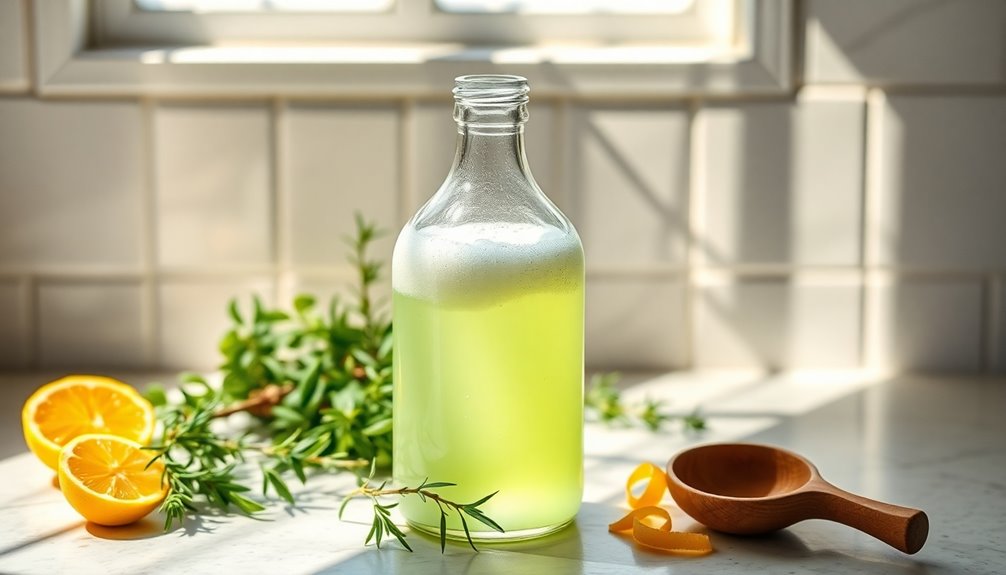
When you’re looking to make your own dish soap, liquid Castile soap stands out as a top choice because it’s versatile and eco-friendly.
One of the key castile soap benefits is its ability to cut through grease while being gentle on your hands. Unlike harsh commercial soaps, Castile offers a natural cleaning power that leaves your dishes spotless without harmful chemicals.
Plus, it’s biodegradable, making it one of the best eco-friendly alternatives on the market. You can customize your dish soap by adding essential oils for fragrance or extra cleaning benefits, which enhances your DIY experience. Additionally, using eco-friendly practices can significantly reduce indoor air pollutants and contribute to a healthier home environment.
Essential Ingredients for Your Homemade Dish Soap

To create a powerful yet gentle homemade dish soap, you’ll need a few essential ingredients that work harmoniously together.
Start with liquid Castile soap as your base; it’s biodegradable and a fantastic eco-friendly alternative. Next, add distilled water to dilute the soap for peak use.
Begin with liquid Castile soap as your eco-friendly base, then dilute it with distilled water for optimal effectiveness.
For a touch of freshness, consider incorporating essential oils like lemon or lavender, which also provide natural antibacterial properties. To guarantee your soap lasts, include natural preservatives like vitamin E oil—this helps maintain freshness without harsh chemicals.
Finally, a small amount of vinegar can enhance grease-cutting power while remaining eco-friendly. Additionally, using budget-friendly cooking techniques can help you save money while creating effective household products.
Combining these ingredients will give you an effective, sustainable dish soap that’s safe for your home and the planet.
Step-by-Step Instructions for Making Dish Soap
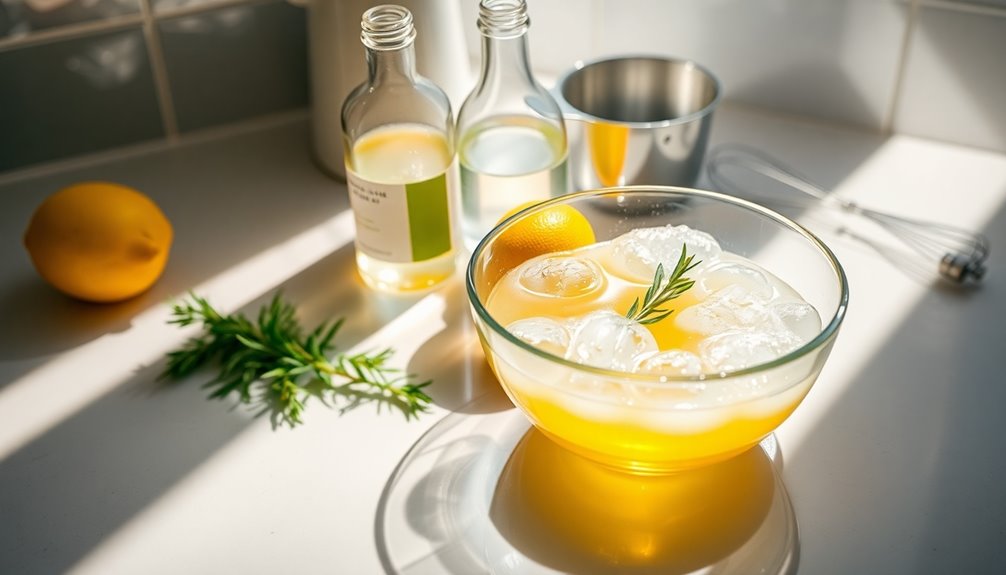
Now that you know the essential ingredients for your homemade dish soap, let’s get into the step-by-step instructions.
You’ll learn how to mix everything together effectively and discover storage tips to keep your soap fresh. Making your own dish soap is not only easy but also a cost-effective alternative to commercial options.
Ready to make your own dish soap?
Essential Ingredients Needed
Creating your own dish soap is simpler than you might think, and with just a few essential ingredients, you can whip up an effective cleaner right at home.
Start with liquid Castile soap, which serves as a powerful base. You’ll also need water to dilute it and essential oils for a pleasant scent and added antibacterial properties.
Consider adding vinegar as an eco-friendly alternative, enhancing grease-cutting efficiency.
For ingredient sourcing, look for natural, organic products at local stores or online, ensuring you choose sustainable options.
With these components, you not only save money but also contribute to a healthier environment.
Your homemade dish soap will be effective, eco-conscious, and tailored to your preferences!
Mixing Process Explained
Once you’ve gathered your ingredients, it’s time to mix them together for your homemade dish soap. Follow these steps for effective mixing:
- Choose Your Mixing Ratios: Combine 1 cup of liquid Castile soap with 1 cup of water. Adjust the ratios based on desired thickness.
- Incorporate Essential Oils: Add 10-15 drops of your favorite essential oil for fragrance. This enhances the soap’s cleaning power and leaves a pleasant scent.
- Blend Thoroughly: Use a whisk or a hand blender for even consistency. Be gentle to avoid excessive foam, ensuring a smooth mixture.
Storage Tips Provided
To keep your DIY dish soap fresh and effective, proper storage is essential. Use airtight storage containers to prevent moisture control issues and extend shelf life. Glass or BPA-free plastic bottles work great.
Make sure your soap’s stored in a cool, dry place, as temperature considerations can affect its consistency and effectiveness.
For usage tips, consider pouring the soap into a smaller dispenser for daily use, making it easier to manage.
Labeling ideas can include the date you made the soap and any specific scents or ingredients used, helping you track freshness.
Regularly check for any changes in texture or smell, which can indicate spoilage.
How to Customize Your Dish Soap With Essential Oils
While you might enjoy the scent of your current dish soap, customizing it with essential oils can elevate your dishwashing experience.
Elevate your dishwashing experience by customizing your soap with delightful essential oils for a more enjoyable scent.
By blending different essential oils, you can create unique scent combinations that not only smell great but also add antibacterial properties. Here are three ideas to get you started:
- Citrus Burst: Combine lemon and orange oils for a fresh, uplifting scent.
- Herbal Delight: Blend rosemary and mint for a rejuvenating, clean aroma.
- Warm Spice: Mix cinnamon and clove oils for a cozy, inviting fragrance.
Experiment with these essential oil blends to find the perfect combination that suits your preferences. Additionally, using natural cleaning solutions can enhance the effectiveness of your homemade dish soap.
Enjoy the process, and make dishwashing a more enjoyable task!
The Benefits of Using Natural Ingredients in Cleaning Products
Using natural ingredients in cleaning products not only benefits your health but also the environment. By opting for eco-friendly alternatives like liquid Castile soap, you reduce exposure to harmful chemicals often found in conventional cleaners.
These natural ingredients are less likely to irritate your skin or cause respiratory issues, offering significant health benefits. Plus, they break down more easily in nature, minimizing pollution and harm to aquatic life.
When you choose DIY solutions, you empower yourself to make safer choices for your home and the planet. You’ll find that natural cleaning products can be just as effective, helping you maintain a clean space without compromising your well-being or that of the environment. Additionally, using washable electrostatic filters in your home can further enhance indoor air quality and create a healthier living environment.
Embrace the shift to a healthier lifestyle today!
Common Mistakes to Avoid When Making DIY Dish Soap
When making your own dish soap, it’s easy to make a few common mistakes. You mightn’t get the ingredient ratios right, skip important additives, or overlook safety precautions. Avoiding these pitfalls will help guarantee your DIY soap is both effective and safe to use. Additionally, ensuring you have a user-friendly interface can simplify the process of tracking your DIY supplies and expenses.
Incorrect Ingredient Ratios
Getting the ingredient ratios right is essential for creating effective DIY dish soap, as incorrect measurements can lead to a product that’s either too harsh or ineffective.
Achieving the perfect ingredient balance guarantees your soap has the right consistency for effective cleaning.
Here are three common mistakes to avoid:
- Too Much Castile Soap: Overdoing it can make your dish soap overly concentrated, leading to a harsh formula.
- Insufficient Water: Not adding enough water can result in a thick, unworkable soap that doesn’t lather well.
- Ignoring Oils: Skipping essential oils can leave your dish soap lacking in pleasant scents and additional benefits.
Skipping Essential Additives
While it’s tempting to keep your DIY dish soap simple, skipping essential additives can leave your final product lacking in both effectiveness and appeal. Ingredients like essential oils not only provide pleasant scents but also boost cleaning power.
When sourcing ingredients, consider natural additives like vinegar or baking soda to enhance grease-fighting properties. Additionally, don’t overlook the importance of eco-friendly packaging. Using recycled or biodegradable containers not only aligns with your sustainable goals but also adds to the overall appeal of your homemade soap.
Ignoring Safety Precautions
Although making DIY dish soap can be a fun and rewarding project, ignoring safety precautions can lead to unexpected hazards. To guarantee your safety and the effectiveness of your soap, always conduct a risk assessment before you start.
Here are three essential safety measures to keep in mind:
- Wear Safety Gear: Always use gloves and goggles to protect your skin and eyes from potential irritants.
- Work in a Ventilated Area: Make sure your workspace is well-ventilated to avoid inhaling fumes from any ingredients you’re using.
- Store Ingredients Safely: Keep all materials out of reach of children and pets to prevent accidents.
Taking these precautions can make your DIY experience enjoyable and safe!
How to Properly Store Your Homemade Dish Soap
Properly storing your homemade dish soap guarantees it remains effective and safe to use.
First, choose a suitable container. Glass or BPA-free plastic bottles work well, as they help maintain the soap’s integrity. Make certain the container has a secure lid to prevent contamination.
To extend its shelf life, keep your dish soap in a cool, dark place away from direct sunlight. If you notice any changes in color, consistency, or smell, it’s best to discard it.
To ensure longevity, store dish soap in a cool, dark place and discard if you notice any changes in its appearance or scent.
Label your containers with the date you made the soap to track its freshness. Regularly check your supplies and refill as needed. Additionally, ensure your storage practices align with indoor air quality to maintain a healthy home environment.
With these simple steps, you’ll guarantee your DIY dish soap stays effective and ready for use whenever you need it.
Tips for Testing the Effectiveness of Your Dish Soap
Even with proper storage, you’ll want to guarantee your homemade dish soap is effective. To verify you’re getting the best performance from your creation, consider these tips for soap performance testing:
- Suds Longevity Evaluation: Wash a few dishes and observe how long the suds last. Effective soap should produce a stable lather that withstands multiple rinses.
- Grease Cutting Test: Try washing greasy pots or pans. If your soap easily removes stubborn residues, it’s performing well.
- Sensitivity Check: Use your soap on different materials, like glass and ceramics. Confirm it cleans without leaving streaks or residues. Additionally, consider incorporating OxiClean techniques for enhancing cleaning effectiveness in various applications.
Comparing DIY Dish Soap to Store-Bought Options
When you weigh DIY dish soap against store-bought options, consider the environmental impact, cost-effectiveness, and ingredient transparency.
You might find that homemade solutions often reduce waste and save money, while also letting you know exactly what’s in your soap. Additionally, embracing frugal living can lead to smart financial choices that benefit both your wallet and the planet.
Let’s explore how these factors stack up for your kitchen needs.
Environmental Impact Comparison
While many people choose store-bought dish soaps for convenience, a closer look reveals that DIY options can markedly reduce your environmental footprint. By making your own dish soap, you’re embracing sustainable alternatives that often outperform eco-friendly brands.
Here are three key benefits of DIY dish soap:
- Minimal Packaging: You can greatly cut down on plastic waste since you control the ingredients and storage.
- Natural Ingredients: DIY recipes often use plant-based components, reducing harmful chemicals that affect aquatic life.
- Customizable Scents: You can choose essential oils that aren’t only pleasant but also eco-conscious.
Ultimately, opting for DIY dish soap helps you contribute to a healthier planet while enjoying the satisfaction of creating your own products.
Cost-Effectiveness Analysis
Making your own dish soap not only benefits the environment but can also save you money. When you conduct a cost analysis, you’ll find that liquid Castile soap is often cheaper in bulk than many store-bought options.
By creating your own soap, you can use less expensive ingredients and customize the quantity to fit your needs, which can greatly reduce your monthly expenses. Plus, you won’t need to buy new bottles frequently, as you can reuse your existing containers.
For effective budgeting tips, factor in the initial investment of ingredients against the number of batches you can create. Over time, you’ll see substantial savings, making DIY dish soap a smart choice for both your wallet and the planet.
Ingredient Transparency Differences
How can you be confident about what’s in your dish soap? When you make DIY dish soap, you control the ingredient sourcing and guarantee ethical production.
Unlike many store-bought options, where ingredients can be a mystery, your homemade solution is transparent and simple. Here are three key differences:
- Ingredient Clarity: You know exactly what’s in your soap—just liquid Castile soap and essential oils if you choose.
- No Hidden Chemicals: Many commercial products contain synthetic additives that can be harmful; your DIY soap avoids these.
- Sustainable Practices: By selecting natural ingredients, you contribute to a more sustainable environment, contrasting with mass-produced soaps that may not prioritize eco-friendly sourcing.
Making your own dish soap means you can wash with peace of mind!
Ways to Reduce Plastic Waste in Your Kitchen
As you seek to create a more sustainable kitchen, reducing plastic waste is an essential step.
Start by switching to reusable containers for food storage. Glass or stainless steel options aren’t only eco-friendly but also durable.
Next, consider kitchen composting to minimize waste from food scraps. This practice enriches your soil while cutting down on plastic trash from packaging.
You can also buy in bulk to reduce the need for plastic-wrapped items. Keep a cloth bag handy for groceries, and opt for products with minimal or no packaging.
Finally, swap out single-use kitchen items for reusable alternatives, like beeswax wraps instead of plastic wrap. Additionally, incorporating sustainable materials into your kitchen can further enhance your eco-friendly efforts.
Every small change makes a big difference in reducing plastic waste!
Exploring Other DIY Cleaning Products for a Greener Home
If you’re committed to a greener home, why not try making your own natural surface cleaners and eco-friendly laundry solutions?
These DIY products aren’t only simple to whip up but also help reduce your environmental impact.
Let’s explore how you can create effective, sustainable alternatives that keep your space clean and fresh.
Natural Surface Cleaners
While many people rely on commercial products for cleaning, natural surface cleaners can be just as effective and far more environmentally friendly.
By using eco-friendly alternatives, you can create a clean home without harmful chemicals. Here are three simple recipes to try:
- All-Purpose Vinegar Spray: Mix equal parts water and white vinegar. This natural ingredient cuts through grime and deodorizes surfaces.
- Baking Soda Paste: Combine baking soda and water to form a paste. Use it for scrubbing tough spots on countertops and sinks.
- Citrus Infused Cleaner: Steep citrus peels in vinegar for a week. Strain and dilute with water for a fresh-scented cleaner that fights stains.
These DIY options make cleaning easier and promote a healthier environment.
Eco-Friendly Laundry Solutions
Building on the idea of natural cleaning solutions, eco-friendly laundry practices can significantly reduce your environmental impact.
You can start by choosing eco-friendly detergents made from plant-based ingredients, which are gentler on both your clothes and the planet.
Consider using vinegar as a natural fabric softener; it’s effective and eliminates odors without harmful chemicals.
When shopping for clothes, opt for sustainable fabrics like organic cotton or hemp, which require less water and fewer pesticides.
You can also reduce energy use by air-drying your laundry whenever possible.
How to Get Kids Involved in DIY Projects
Getting kids involved in DIY projects can spark their creativity and teach valuable skills, so why not make it a fun family activity? Here are three ways to get started with these creative projects:
- Assign Roles: Let each child pick a specific task, like measuring ingredients or mixing. This boosts their confidence and makes them feel important.
- Make It Educational: Explain the science behind the ingredients you’re using. Connecting concepts with hands-on activities fosters learning while you bond.
- Celebrate Their Efforts: After completing the project, take a moment to admire the results together. Acknowledge their hard work to strengthen family bonding and encourage future DIY adventures.
With these tips, you’ll create lasting memories while teaching essential skills!
Understanding the Environmental Impact of Conventional Dish Soaps
Conventional dish soaps, although effective at cutting grease, often contain harmful chemicals that can negatively impact the environment. These substances can pollute water sources, harm aquatic life, and contribute to broader ecological issues.
When you wash dishes, these chemicals can end up in your waterways, creating a ripple effect that affects ecosystems. Fortunately, there are eco-friendly alternatives available that utilize sustainable ingredients.
By choosing products made from plant-based materials, you not only reduce your carbon footprint but also promote a healthier environment. Making a switch to these alternatives helps minimize chemical waste and supports a cleaner planet.
You can make a difference by opting for DIY recipes or purchasing brands committed to sustainable practices. Every small step counts!
How to Transition to a More Sustainable Cleaning Routine?
While shifting to a more sustainable cleaning routine might seem intimidating, it doesn’t have to be overwhelming. You can easily adopt sustainable habits by making a few eco-friendly choices.
Shifting to a sustainable cleaning routine can be simple and stress-free with just a few eco-friendly changes.
Start small and gradually integrate these changes into your cleaning regimen:
- Choose Natural Cleaners: Swap out harsh chemicals for plant-based options, like DIY dish soap with liquid Castile soap.
- Use Reusable Tools: Replace disposable sponges and paper towels with washable cloths and scrub brushes.
- Buy in Bulk: Purchase cleaning supplies in bulk to reduce packaging waste and save money.
Conclusion
By choosing to make your own dish soap, you’re planting seeds of sustainability in your home. Just like nurturing a garden, each drop of liquid Castile soap becomes a symbol of your commitment to a greener lifestyle. As you scrub those dishes, remember, you’re not just cleaning; you’re cultivating a healthier planet. So, embrace this simple change, and let your DIY journey bloom into a beautiful, eco-friendly routine that benefits both your home and the Earth.