
 0
0
 0
0
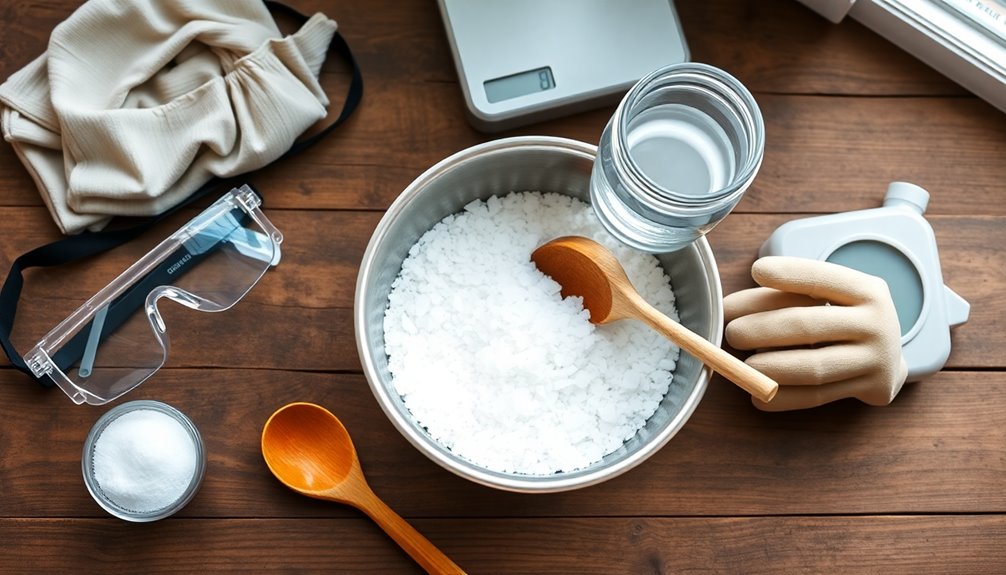
To make lye for soap, you’ll need safety gear like goggles, gloves, and a mask. Lye, or sodium hydroxide, should be handled with care, stored securely, and mixed by adding it to oils—never the other way around. Use a digital scale for accurate measurements and guarantee your oils are at ideal temperatures. If you’re unsure about your lye strength or mixing techniques, there’s plenty more to learn to make your soap-making journey safe and successful.
Understanding Lye: What It Is and Why It Matters
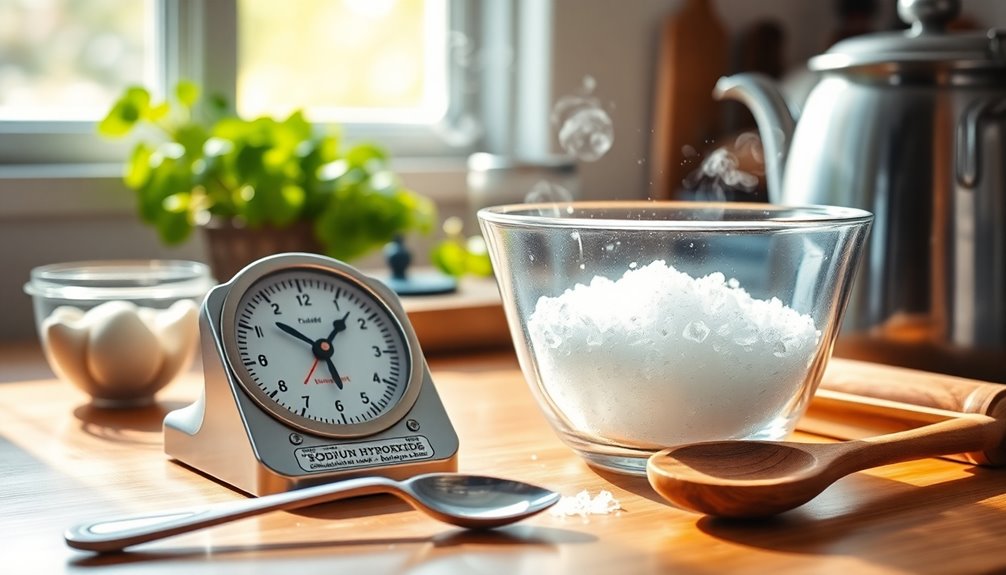
When you immerse yourself in soap-making, understanding lye is crucial because it’s the key ingredient that transforms oils into soap.
Lye, a powerful alkali, has a rich history dating back to ancient times when it was sourced from ashes. Despite common lye myths, it’s safe to use when handled properly.
You’ll find lye in various forms, such as sodium hydroxide, or you might explore lye alternatives like potassium hydroxide.
When mixed with oils, lye undergoes a chemical reaction that creates soap, showcasing its unique properties.
Knowing lye’s uses extends beyond soap-making; it’s important in various industries. Affordable entertainment options like crafting can enhance your soap-making experience, making it more enjoyable.
Lye plays a vital role beyond soap-making, impacting various industries with its versatile applications.
Familiarizing yourself with lye safety guarantees you enjoy the crafting process without worry.
Embrace lye as your soap-making ally!
The Importance of Safety Gear When Handling Lye
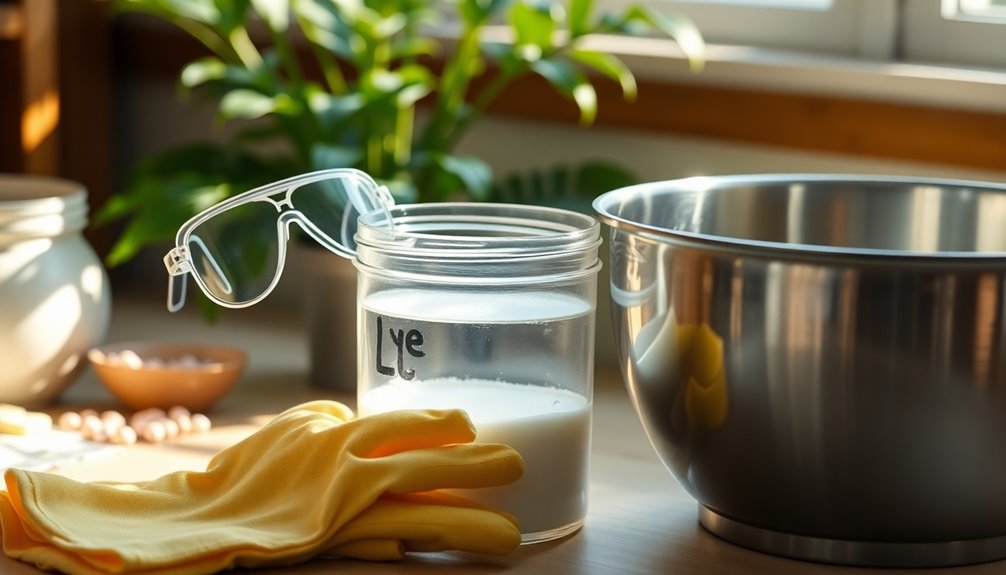
When handling lye, wearing the right safety gear is vital to protect yourself from its caustic properties. You need to know the essential equipment, adopt proper handling techniques, and be prepared for emergencies. Taking these precautions guarantees a safer soap-making experience. Additionally, using expense tracking apps can help you manage the costs associated with soap-making supplies effectively.
Essential Safety Equipment
Handling lye can be dangerous, so wearing the right safety gear is essential. Prioritizing lye safety protects you from potential hazards while making soap. Here’s what you need:
- Safety goggles: Shield your eyes from splashes and fumes.
- Gloves: Use heavy-duty, chemical-resistant gloves to protect your skin.
- Face mask: Prevent inhalation of harmful dust or fumes.
- Apron: A durable, chemical-resistant apron keeps your clothes safe from spills.
- Closed-toe shoes: Protect your feet from accidental spills or drops.
Always store lye in a secure, labeled container to avoid accidents.
Proper Handling Techniques
Although lye is essential for soap making, using it safely requires proper handling techniques.
First, always wear appropriate safety gear, including gloves, goggles, and a mask, to protect yourself from lye’s harmful effects. When you’re working with lye, make sure your workspace is well-ventilated.
Store lye in a secure, labeled container to prevent accidental spills or misuse. Avoid using metal containers, as they can react with lye.
When measuring lye, use a digital scale for accuracy, and never mix lye with water in an enclosed space—always add lye to water, not the other way around.
Emergency Preparedness Steps
While working with lye can be rewarding, preparing for emergencies is essential to ensuring your safety. Having the right safety gear and an emergency kit can make all the difference.
Here’s what you should include:
- Safety goggles to protect your eyes from splashes
- Rubber gloves to shield your hands from burns
- Respirator mask to avoid inhaling harmful fumes
- First aid kit stocked with burn ointment and sterile dressings
- Fire extinguisher rated for chemical fires
Additionally, make sure your lye storage is secure and out of reach of children or pets.
Essential Materials for Making Lye at Home
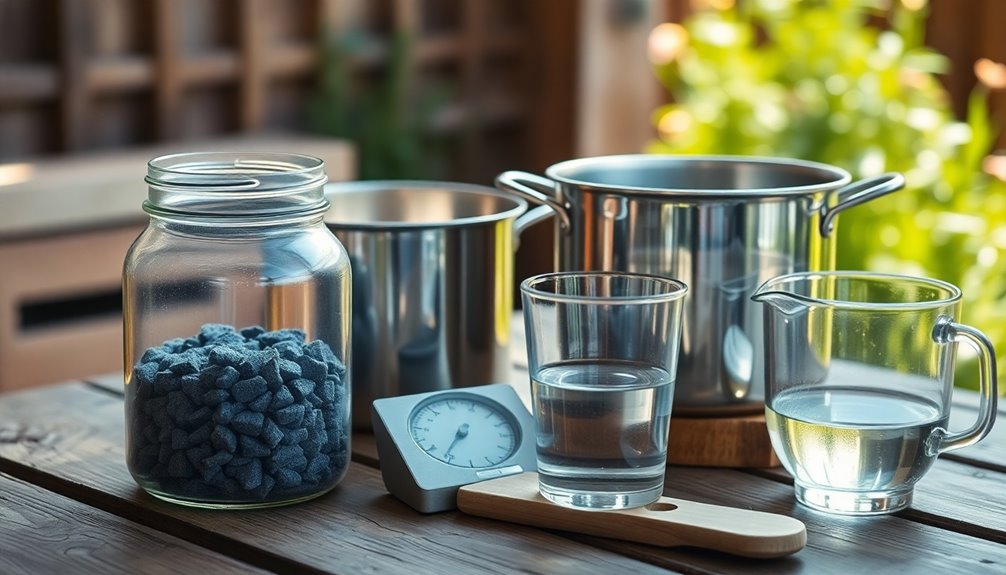
To make lye at home, you’ll need a few essential materials that guarantee safety and effectiveness. First, identify your lye sources; you can use wood ash or sodium hydroxide. If you opt for wood ash, make certain it’s from untreated hardwoods to ensure purity.
You’ll also need distilled water, as tap water can contain impurities that affect your lye. For safety, gather protective gear like gloves and goggles, since lye can cause burns. Additionally, use a glass or plastic container for mixing; metal can react negatively with lye. Understanding lye applications is vital, too, as it’s key in soap making and other cleaning products. Using eco-friendly cleaning products can enhance your overall soap-making experience. With these materials, you’re set to start your lye-making journey safely.
Step-by-Step Guide to Creating Lye
Now that you’ve gathered your materials, it’s time to create lye. Follow these steps to guarantee you get it right:
- Choose your lye source: wood ash or sodium hydroxide.
- Measure your water carefully; use distilled if possible.
- Slowly add the lye source to the water, stirring gently.
- Watch for heat; this process generates a lot of it!
- Store your lye in a safe container, away from light and moisture.
Experiment with different lye recipes to find what works best for your soap-making needs. Always remember to wear protective gear, as lye can be hazardous. Additionally, understanding the financial benefits of repairs can help you appreciate the value of making your own supplies like lye.
With these steps, you’ll be well on your way to creating high-quality lye for your soap projects.
Common Mistakes to Avoid During Lye Preparation
When preparing lye, avoiding common pitfalls guarantees your soap-making process goes smoothly.
One major mistake is neglecting lye measurement; always use a precise scale for accuracy.
Neglecting lye measurement can lead to uneven soap; always use a precise scale for the best results.
Be mindful of lye temperature, as adding water to hot lye can cause dangerous reactions.
Confirm your lye purity by using food-grade sodium hydroxide, avoiding impurities that can affect your soap.
When lye mixing, always add lye to water, not the other way around, to prevent splattering.
Finally, store lye in a cool, dry place, away from moisture and children, to maintain its effectiveness and safety. Additionally, incorporating expense tracking tools can help you manage costs associated with your soap-making supplies effectively.
How to Properly Store and Dispose of Lye
Properly storing and disposing of lye is essential for safety and effectiveness. Follow these guidelines to guarantee you handle lye safely:
- Use a tightly sealed, labeled container made of glass or plastic.
- Keep lye out of reach of children and pets, preferably in a locked cabinet.
- Store it in a cool, dry place away from moisture and direct sunlight.
For lye disposal, neutralize it with vinegar before discarding, as this reduces its caustic properties. Additionally, avoid using glass lids when working with lye to prevent any accidental breakage.
Never pour lye down the drain; always check local regulations for safe disposal methods.
Recognizing Hazards: What to Watch Out For
When making lye for soap, you need to be aware of potential hazards.
Make certain your workspace has proper ventilation to avoid harmful fumes, and don’t forget to wear protective gear like gloves and goggles. These precautions are essential for your safety. Additionally, keep in mind that using the wrong type of PRV can lead to malfunctions, which may pose further risks.
Proper Ventilation Required
Although making lye for soap can be a rewarding process, ensuring proper ventilation is essential to your safety. Inadequate air circulation can lead to harmful fumes, so use effective ventilation techniques.
Here are some tips to create a safe workspace:
- Open windows to let fresh air flow in.
- Use exhaust fans to expel fumes quickly.
- Position a box fan to enhance air circulation.
- Set up your workspace outdoors, if possible.
- Avoid working in cramped or enclosed areas.
Protective Gear Essential
Making lye involves handling caustic substances, so wearing the right protective gear is essential.
Start with high-quality protective gloves to shield your hands from burns. Safety goggles and a face shield will protect your eyes and face from splashes. A chemical apron is critical for safeguarding your clothing and skin from spills.
Don’t forget a respiratory mask if you’re working in a less-ventilated area; this helps filter out harmful fumes.
Keep a first aid kit nearby for emergencies, and make sure you have a spill kit on hand to manage any accidental leaks.
Proper lye storage is imperative to prevent exposure when not in use. By taking these precautions, you’ll greatly reduce the risks associated with making lye for soap.
The Role of Lye in Saponification Explained
Lye plays an essential role in the saponification process, transforming fats and oils into soap. Understanding saponification chemistry helps you appreciate how lye reactions create your desired product.
Here’s what happens during these reactions:
- Fats and oils break down, releasing fatty acids.
- Lye combines with these fatty acids, initiating a chemical transformation.
- Glycerin forms as a byproduct, adding moisturizing properties.
- The mixture thickens, eventually reaching a trace.
- Soap hardens over time, revealing the fruits of your labor.
- By following clear payment terms, you can ensure smooth transactions when purchasing lye and other materials.
Alternatives to Traditional Lye for Soap Making
While traditional lye is commonly used in soap making, there are alternatives that can simplify the process or align with specific preferences. You might explore natural soap alternatives like glycerin soap options, which are gentle and easy to use.
Melt pour techniques offer a user-friendly way to create beautiful soaps without the need for lye. If you prefer cold process alternatives, consider using synthetic lye substitutes designed for safety. Hot process options can also yield great results with less waiting time.
For those interested in herbal soap ideas, you can incorporate natural ingredients for a unique touch. Finally, lye-free recipes and organic soap choices are available, especially in commercial soap considerations, making it easier to find the right fit for your needs. Additionally, using bulk purchasing strategies can help you save on soap-making supplies while minimizing waste.
How to Test Lye Strength for Soap Making?
How can you verify your lye is at the right strength for soap making? Testing your lye’s concentration is vital for achieving the perfect soap. Here are some effective lye testing methods you can use:
- pH Strips: Quick and easy, these strips give you an instant reading.
- Lye Concentration Calculator: Input your measurements for precise results.
- Hydrometer: Measure the specific gravity of your lye solution.
- Soap Test: Create a small batch and observe the saponification process.
- Visual Inspection: Check for clarity; cloudy lye indicates impurities.
Each method shows how lye concentration impacts your soap’s quality. Understanding mindful spending habits can help you allocate funds for quality ingredients.
Choose the one that works best for you to make sure your soap-making journey is successful.
Best Practices for Mixing Lye With Oils
Mixing lye with oils is an essential step in soap making, and following best practices can guarantee safety and quality.
First, always wear gloves and goggles to protect yourself from the caustic lye. Use accurate scales to measure your lye and oils precisely.
When it comes to oil temperatures, make sure they’re between 95°F and 110°F for ideal mixing. This range helps the lye dissolve efficiently while preventing overheating.
When you start mixing, use a stick blender for even consistency, but be cautious not to overmix. If you notice any separation, gently stir until combined.
Finally, always add lye to oils, never the other way around, to prevent dangerous reactions.
Following these techniques will help you create beautiful, safe soap.
Troubleshooting Common Lye-Related Issues in Soap Making
Even with proper mixing techniques, issues with lye can arise during soap making. You might face problems like inconsistent lye consistency or improper lye temperature. Here’s a quick guide to troubleshoot:
- Grainy texture: This could indicate lye hasn’t fully dissolved.
- Separation: If your soap layers are separating, check your mixing technique.
- Unpleasant odor: A strong smell might signal overheating; adjust your lye temperature.
- Bubbling: Excessive bubbles can mean too much water in your lye solution.
- Dull color: If your soap looks lackluster, it may need more mixing or a different oil ratio.
Address these issues promptly to guarantee beautiful, smooth soap that’s safe and enjoyable to use.
Conclusion
So, now you’re ready to plunge into the world of lye, armed with safety gear and a whole lot of enthusiasm. Just remember, it’s not a game of “let’s see what happens!”—this isn’t a science fair project, folks. Your soap-making journey could end in a bubbly masterpiece or a fiery disaster! So, keep your goggles on, double-check your measurements, and embrace your inner mad scientist. After all, who wouldn’t want a little chaos with their cleanliness?