

 0
0
 0
0
After transporting your dehumidifier, it’s essential to let it stand upright for 24 hours. This waiting period allows oil in the compressor to settle, protecting its integrity and performance. If you skip this step, you risk oil displacement, which can lead to overheating, noise issues, and even compressor failure. Plus, improper setup can affect humidity control, leading to possible mold growth. Learn about proper positioning and care strategies to guarantee your appliance runs smoothly.
Why Waiting 24 Hours Matters for Your Dehumidifier
When you get a new dehumidifier, waiting 24 hours before using it can greatly impact its performance. This waiting period allows any oil within the compressor to settle back into its designated area, which is essential for maintaining compressor integrity.
If you skip this step, you might face operational issues that could lead to malfunctions. While some manufacturers suggest continuous operation during the first 24 hours, others don’t specify a need for a waiting period.
This lack of guidelines can create uncertainty, so it’s wise to contact manufacturer technical support for clarification. By taking this simple precaution, you’ll help guarantee your dehumidifier operates effectively and lasts longer, saving you potential headaches down the road. Additionally, thorough property inspections can prevent unexpected repair costs in your home, just as proper maintenance ensures your appliances function optimally.
What Happens When You Don’t Wait?
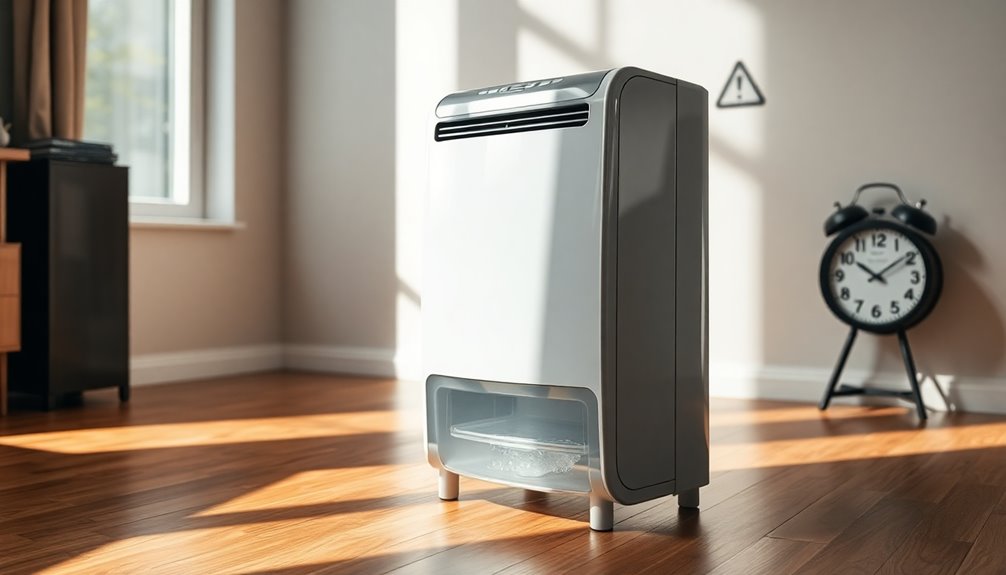
If you don’t wait the recommended 24 hours before using your dehumidifier, you risk damaging the compressor due to improper oil distribution. This can lead to ineffective moisture removal and even overheating, compromising the appliance’s efficiency. Additionally, ensuring proper oil distribution is crucial for maintaining the longevity of your appliances and preventing costly repairs.
Potential Compressor Damage
Neglecting to let your dehumidifier stand upright for at least 24 hours can lead to serious compressor damage.
To fully understand the risks, consider these points:
- Oil Displacement: Without proper settling time, the oil mightn’t lubricate the compressor effectively, causing overheating.
- Increased Noise: Users often report unusual sounds when the compressor isn’t adequately lubricated.
- Complete Failure: Ignoring this guideline can lead to total compressor failure, potentially voiding your warranty.
Skipping this essential step can compromise your indoor air quality and lead to costly repairs.
Protect your investment by giving your dehumidifier the time it needs to guarantee peak performance and longevity.
Don’t risk compressor damage; wait the recommended period before powering it on.
Ineffective Moisture Removal
Allowing your dehumidifier to stand upright for 24 hours before using it is essential, as skipping this step can lead to ineffective moisture removal.
If you start it too soon, the oil in the compressor won’t settle properly, which can cause it to underperform. You might find that it can’t extract as much water as needed, leaving humidity levels high and uncomfortable.
This persistent moisture can cause structural issues in your home over time, such as mold growth or damage to walls.
Additionally, running the unit without proper setup risks overheating and could shorten its lifespan.
Don’t compromise your dehumidifier’s efficiency—be patient and let it stabilize for the best results.
How Refrigeration Systems Influence Oil Behavior
Understanding how refrigeration systems influence oil behavior is essential for the effective operation of your dehumidifier. The type of compressor you have can greatly impact how oil moves within the system, affecting its performance.
Here are three key points to reflect on:
- Compressor Types: Different compressors can lead to varying oil behaviors, which may necessitate a waiting period before use.
- Oil Pooling: Improper oil displacement can cause oil pooling in areas, potentially impairing functionality if not allowed to settle.
- Refrigerant Behavior: The interactions between refrigerants and oil can affect how quickly oil redistributes, impacting efficiency. Additionally, understanding heat pump efficiency can provide insights into how oil behaves within refrigeration systems.
Comparing Dehumidifiers to Other Appliances
How do dehumidifiers stack up against other household appliances like refrigerators and air conditioners?
In dehumidifier comparisons, the differences in appliance functionalities and compressor designs become apparent. Refrigerators often require you to wait before use to let oil settle, a concern less pronounced in dehumidifiers due to their simpler compressor designs. While both appliances operate on similar refrigeration cycles, the waiting times and upright positioning recommendations vary based on their distinct purposes. Many users have operated compressor appliances, including dehumidifiers, without following the upright suggestion, indicating experiences can differ. Understanding the importance of proper appliance positioning can help ensure that your dehumidifier operates efficiently and effectively.
Ultimately, understanding these nuances helps you make informed choices about using your dehumidifier alongside other household appliances.
User Experiences: Do Most People Wait?
Do most people actually wait before using their dehumidifiers? User experiences vary greatly, reflecting diverse waiting preferences. Here’s what user testimonials reveal:
- Immediate Use: Many users report successfully using their dehumidifiers right away, not experiencing any issues.
- 12-Hour Rule: Some advocate for a waiting period of at least 12 hours to let oil settle, believing it prevents potential compressor damage.
- Consulting Support: A common suggestion is to reach out to the manufacturer’s technical support for clarity on waiting times.
- Expense Management: Expense tracking apps can also provide insights into the costs associated with running household appliances like dehumidifiers, helping users monitor their overall spending.
Manufacturer Recommendations: What You Should Know?
What should you know about manufacturer recommendations for using dehumidifiers? Many manufacturers don’t explicitly require a 24-hour upright positioning, leaving it largely to your discretion.
Many manufacturers don’t specify a 24-hour upright positioning, giving you some flexibility in setup.
For instance, Midea dehumidifiers lack specific documentation regarding waiting times, which raises concerns about oil displacement. Some users suggest waiting 12 hours to guarantee oil settles, but experiences vary.
Certain brands recommend continuous operation for the first 24 hours to maximize operational performance, even without universal guidelines. To ensure proper performance, it’s essential to understand the transfer process for your appliance, as this can impact its longevity and effectiveness.
To avoid potential damage and make sure you’re following the correct manufacturer guidelines, it’s wise to contact technical support for clarification and written confirmation about your specific model’s requirements. This will help you maintain your dehumidifier in peak condition.
Tips for Properly Positioning Your Dehumidifier
When it comes to positioning your dehumidifier, choosing the right location is key to its effectiveness. Make sure it’s on a level surface and free from any obstructions to maximize airflow and moisture removal. Additionally, ensuring that the dehumidifier is placed near non-venting windows can help improve overall air quality by allowing for better moisture control in the space.
Ideal Placement Locations
To get the most out of your dehumidifier, it’s essential to place it in the areas of your home with the highest humidity, like basements or crawl spaces. Proper placement can notably improve its performance and efficiency.
Here are a few tips for ideal placement:
- Position at least 6 inches from walls: This guarantees sufficient airflow management, vital for all dehumidifier types.
- Set it on a flat, stable surface: This prevents tipping and keeps internal components functioning correctly.
- Avoid direct sunlight and heat sources: These can negatively impact humidity levels and energy efficiency.
Avoiding Obstructions Around Unit
Proper placement isn’t just about choosing the right location; it also involves ensuring your dehumidifier has plenty of room to breathe. To maintain ideal airflow, provide at least 12 inches of clearance on all sides.
This airflow importance can’t be overstated, as obstructions can greatly reduce your unit’s effectiveness. Avoid placing your dehumidifier near walls, furniture, or other items that could block air circulation.
Additionally, steer clear of direct sunlight or heat sources, since excessive warmth can impact performance. Regularly inspect the intake and exhaust vents for dust and debris, as obstruction effects can lead to overheating or reduced efficiency.
Consider the room’s humidity levels and airflow patterns; positioning the unit centrally can enhance moisture extraction.
Maintaining Level Surface
Place your dehumidifier on a level surface for the best performance and to protect its internal components. Proper level surface maintenance is essential to avoid uneven ground issues that can lead to improper drainage and potential damage.
Here are three tips to guarantee stability:
- Choose a flat area: Look for a hard, even surface, like tile or concrete, to prevent tilting.
- Avoid soft surfaces: Don’t place it on carpets or rugs, as they can shift and create an unstable base.
- Keep it clear of clutter: Position the unit away from walls and furniture to guarantee unobstructed airflow.
Ensuring Longevity: Best Practices for Dehumidifier Care
While you might be enthusiastic to start using your dehumidifier right away, taking the time for proper care can greatly enhance its longevity.
Begin with filter maintenance tips: regularly clean and replace the filter to prevent clogs that hinder performance. Regular maintenance of air filters can save money on ongoing costs and improve air quality.
Implement humidity control strategies by monitoring levels and adjusting settings to avoid overworking the unit, which can cause premature wear.
Also, consider energy efficiency practices, like using the dehumidifier in conjunction with your HVAC system, to minimize energy consumption while maximizing performance.
Always consult the manufacturer’s guidelines for specific care recommendations, as different models may have unique requirements.
Following these best practices will keep your dehumidifier running smoothly and efficiently for years to come.
Conclusion
In conclusion, taking the time to let your dehumidifier stand upright for 24 hours can save you from costly repairs and headaches. Did you know that nearly 30% of dehumidifier failures are linked to improper setup? By following manufacturer recommendations and positioning your appliance correctly, you can guarantee it operates efficiently and lasts longer. So, don’t rush it—your dehumidifier will thank you, and you’ll enjoy a more comfortable home environment!