
 0
0
 0
0
Locating your water meter is essential for monitoring leaks and managing water use effectively. Start by looking for the ground box near the curb or check indoors in colder regions. Open the lid carefully to see the dial or digital display. It’s usually between the main water line and your house, often near hose bibs. Understanding your meter can help you track usage and spot issues early. There’s more to know about reading your meter and detecting leaks effectively.
Why Locating Your Water Meter Is Essential for Leak Monitoring

Knowing where your water meter is located is essential if you want to keep an eye on your water usage and catch leaks early. By regularly checking your water meter, you can effectively monitor water consumption and detect leaks before they lead to costly repairs.
Familiarity with your meter’s readings helps you identify unusual spikes in your bills, often signaling hidden leaks in your plumbing systems. Quick access to your meter allows for timely tests, like observing for movement after turning off all water sources. Regular checks of your meter can also identify unauthorized usage that inflates your bills.
Proactively engaging in leak detection not only protects your home but also promotes responsible water usage. So, take the time to locate your water meter and safeguard your property against unnecessary water waste.
How to Find Your Water Meter: Step-by-Step Guide
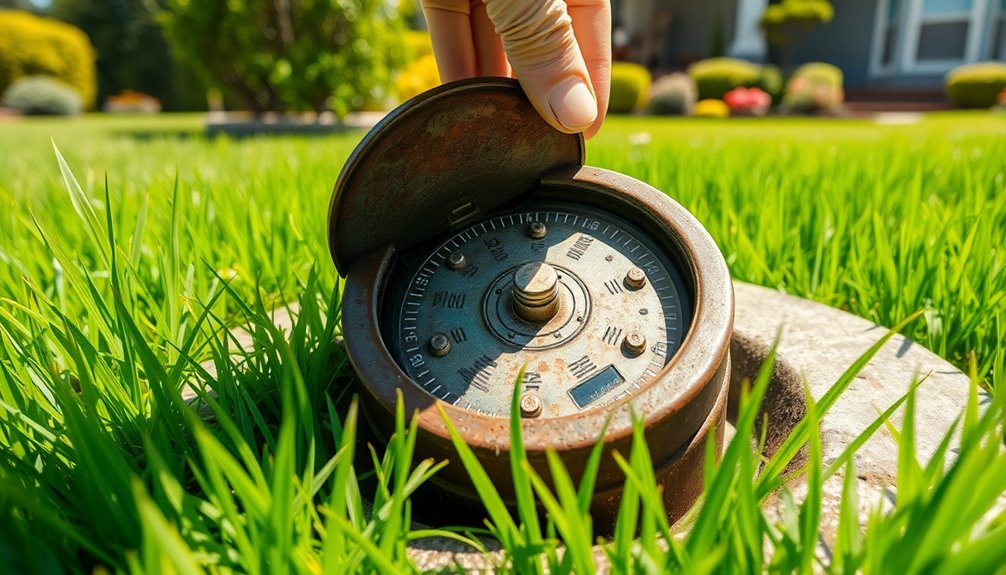
If you need to locate your water meter quickly, start by checking the area around your property. Here’s how to find it:
- Look for the ground box: Your water meter is typically underground near the curb, marked by a round or oval lid.
- Check indoors: In colder regions, it might be inside your basement or crawlspace.
- Access the meter: Carefully lift the lid with a flathead screwdriver, avoiding any damage.
Once you’ve opened it, look for the dial or digital screen to check the meter. Understanding the importance of your meter can help you track your consumption effectively.
Regularly monitoring usage can help you identify potential leaks, preventing significant damage.
Make it a habit to check your water meter to stay on top of your water usage!
Common Locations for Water Meters in Residential Properties

Most commonly, water meters are located in a ground box near the curb or sidewalk, often concealed under a round or oval lid for easy access.
In colder regions, you might find indoor placement, usually in basements or utility rooms, to prevent freezing.
The exact location can vary based on your property layout; for instance, corner lots or those with alleys may have different configurations.
Generally, meters are situated between the main water line leading from the street and your house, often near hose bibs or along the foundation, ensuring efficient monitoring of your water usage. Regular monitoring of water meters can lead to more efficient water management.
Understanding Your Water Meter: Key Components and Readings
Here is the revised content following your directions:
—
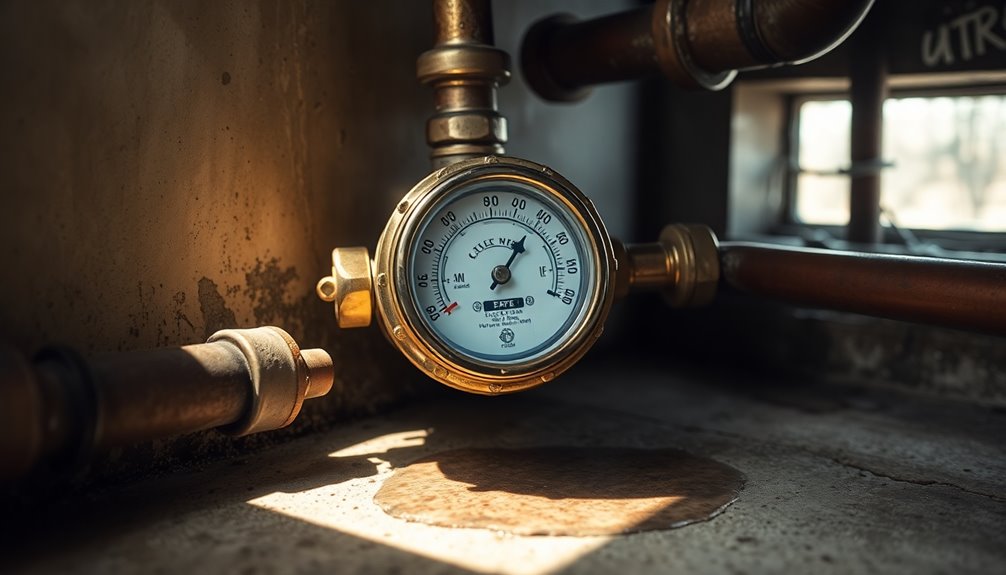
A water meter is an essential tool for tracking your household’s water usage. By understanding its key components, you can effectively monitor your water consumption and detect leaks.
A water meter is vital for monitoring household water usage and helps in detecting potential leaks effectively.
Here are three crucial elements of your water meter:
- Gauge: This measures the flow of water, registering usage in cubic feet or gallons.
- Leak Indicator: A small rotating dial that moves when water flows, signaling potential leaks even when no fixtures are in use.
- Digital Display: Found in electronic meters, it shows real-time data like current flow rate and total volume used.
Regularly checking the readings can help you identify unusual spikes in water consumption, allowing for timely leak detection and prevention. Additionally, being familiar with meter types ensures accurate measurements and better tracking of your usage.
—
How to Read Your Water Meter: A Simple Process
Reading your water meter is a straightforward process that can help you keep track of your water usage and spot potential leaks.
First, locate your water meter, usually found in a ground box near the curb or indoors in colder climates. To get an accurate reading, shut off all water sources in your home.
Record the gauge numbers on the meter, and for analog models, check the leak indicator for any movement. After waiting 30 to 60 minutes without using any water, recheck the meter.
If the reading has changed, it might indicate a hidden leak. Regularly monitoring your water meter can help you detect unusual spikes in water usage, allowing you to address leaks promptly. Additionally, tracking your meter readings can support informed decision-making for repairs and conservation initiatives.
Signs of a Potential Leak Indicated by Water Meter Readings
If you notice unexplained increases in your water bill, it might be time to investigate further.
Keep an eye on your water meter; if the flow rate screen shows movement when all fixtures are off, you could have a leak.
Regularly checking for changes in your meter readings can help you catch these issues early.
Additionally, monitoring water meter behavior after hours of no usage can reveal hidden leaks.
Unexplained Bill Increases
Unexplained spikes in your water bill can be alarming, often signaling hidden leaks in your plumbing.
To help you monitor your water usage effectively, look out for these signs:
- Significant deviations: If your water bill suddenly rises compared to your average usage, it’s time to investigate.
- Meter movement on standby: If your water meter shows movement when all fixtures are off, you likely have a leak.
- Tracking patterns: Regularly monitoring the water meter can help you detect leaks early, saving you money on repairs and utility bills.
Flow Rate Anomalies
While monitoring your water meter, keep an eye out for sudden increases in flow rate, especially when all your fixtures are off.
These flow rate anomalies can signal a potential leak within your plumbing system. If you notice the flow rate remains above zero for a while after shutting off all water sources, it’s a strong indication of an undetected leak.
Regularly monitoring your flow rate helps you detect a leak by identifying unusual patterns or spikes that deviate from your typical water use. By comparing current readings to historical data, you can spot trends and take action.
Early detection of leaks can prevent costly water damage and reduce excessive water bills, ensuring your home stays safe and efficient.
Meter Reading Changes
Noticing changes in your water meter readings can be essential for identifying potential leaks in your plumbing system. Here are three key indicators to watch for:
- A consistent increase in your water meter reading after a period of no water use suggests a potential leak.
- If your electronic water meter shows movement while all fixtures are turned off, it signals an active leak.
- Regularly monitoring your water usage can help you catch unusual spikes, which are often early signs of hidden leaks.
To effectively locate leaks, compare current readings with previous months, and check your meter after turning off all water sources for an hour.
Any change in reading indicates water loss, highlighting the importance of leak detection technology in your home.
What to Do If You Suspect a Leak After Checking Your Meter?
If you suspect a leak after checking your water meter, start by thoroughly inspecting all visible plumbing fixtures for signs of moisture or damage. If you still can’t find the source, it might be time to contact leak detection professionals who can help pinpoint the problem. Addressing leaks quickly can save you from costly repairs down the line. Additionally, tracking your water usage with budgeting apps like YNAB can help you identify unusual spikes that may indicate a leak.
Inspect Plumbing Fixtures Thoroughly
When you suspect a leak after checking your water meter, start by inspecting all visible plumbing fixtures thoroughly.
Look for signs of dripping or pooling water, as these can indicate water leaks. Here’s what to focus on:
- Check under sinks for moisture or dampness; this area is prone to hidden leaks.
- Inspect the area around toilets and bathtubs for water stains, discoloration, or mold growth.
- Utilize a moisture meter to detect hidden dampness behind surfaces that may not be visible.
If you can’t locate the leak, consider advanced leak detection tools or a professional inspection to verify everything’s in order.
Staying vigilant can save you from costly repairs down the line.
Contact Leak Detection Professionals
Suspecting a leak after checking your water meter can be stressful, but taking swift action is essential.
First, turn off all water sources and monitor the meter for movement to confirm a leak. Document any signs of water damage, like stains or mold, as this information will be helpful when you contact leak detection professionals.
These experts use advanced leak detection tools, such as infrared cameras and acoustic sensors, to accurately find and fix hidden leaks. Be ready to explain your observations and note any changes in your water bill; this can assist professionals in diagnosing the issue effectively.
Schedule an appointment promptly, as early intervention can prevent further damage and save you from costly repairs.
Tools and Techniques for Monitoring Your Water Meter
While monitoring your water meter might seem challenging, employing the right tools and techniques can simplify the process and help you catch leaks early.
Here are three effective methods for leak detection:
- Regular Checks: Turn off all water sources and observe your water meter for 30 to 60 minutes. Any movement indicates a leak.
- Moisture Meter: Use a moisture meter to detect dampness behind surfaces near the water meter, signaling potential plumbing issues.
- Advanced Tools: Consider utilizing infrared cameras or acoustic leak detectors. These advanced tools can help you identify hidden leaks without invasive methods. Additionally, understanding water meter functionality can enhance your ability to detect anomalies in your water usage patterns.
When to Call a Professional for Leak Detection?
If you notice severe leaks or can’t locate the source of water damage, it’s time to call in a professional.
Complex plumbing systems can make leak detection tricky, and experts have the tools to find issues in hard-to-reach areas.
Don’t risk further damage; getting help early can save you time and money. Additionally, regularly reviewing bank statements can help you identify signs of water waste and potential leaks before they escalate.
Signs of Severe Leaks
How can you tell when a leak has become severe enough to warrant professional help? Look out for these critical signs:
- Sudden spikes in your water bill: An unexplained increase in water usage often points to a hidden leak.
- Visible signs of water damage: Large water stains, mold growth, or warped materials on walls or ceilings require immediate attention.
- Persistent puddles or damp spots: Areas around fixtures that won’t dry could indicate significant plumbing issues.
If you notice unexplained dripping or hear running water noises when no fixtures are in use, it’s time to call a professional for leak detection.
Don’t ignore these signs; they could save you from costly repairs down the line.
Complex Leak Detection Needs
When you spot signs of severe leaks, such as water damage or unexplained spikes in your bill, it’s time to contemplate whether you need professional help.
Complex plumbing systems, with hidden pipes and multiple fixtures, can make locating the source of the leak challenging. If DIY methods fail or you suspect an acoustic leak without visible signs, calling for professional leak detection is essential.
Experts are equipped with advanced tools like thermal imaging to precisely identify leaks. They can evaluate all potential sources thoroughly, addressing common causes that might go unnoticed.
This proactive step can save you time and prevent further damage, ensuring your water meter readings reflect an accurate and leak-free home.
Tips for Regular Maintenance and Monitoring of Your Water Meter
Regular maintenance and monitoring of your water meter is essential for managing your water usage effectively.
By keeping an eye on your meter, you can quickly identify leaks and save money on your water bill. Here are three tips to help you:
- Monthly Checks: Schedule a monthly check to monitor your water meter readings. Look for any unexplained increases that may indicate plumbing leaks.
- Initial Reading: Turn off all water fixtures and take an initial reading. Wait 30 to 60 minutes, then check for changes that could signal a hidden leak.
- Utilize Technology: If you have a modern electronic water meter, use the Flow Rate screen to guarantee it displays zeros when no water is being used—any movement could indicate a leak. Additionally, controlling moisture levels in your home can prevent conditions that lead to leaks and water damage.
Conclusion
By locating your water meter, understanding its readings, and monitoring it regularly, you can catch leaks early and save on costly repairs. Stay vigilant, stay informed, and stay proactive—these steps will protect your home and your wallet. If you suspect a leak, act swiftly, seek help when needed, and maintain your meter for peak performance. With these strategies, you’ll be equipped to safeguard your water supply and guarantee peace of mind in your home.