
 0
0
 0
0
If your home was built before 1985, there’s a good chance your popcorn ceiling contains asbestos. This material was popular for its durability and soundproofing qualities, but it poses serious health risks if disturbed. You should consider professional testing to confirm asbestos presence before attempting any DIY projects. If you’re looking for budget-friendly alternatives to removal, there are options like covering the ceiling or painting. To learn more about safe handling and further alternatives, keep exploring!
Understanding Popcorn Ceilings and Their Popularity
While you might appreciate the unique charm of popcorn ceilings, understanding their history and popularity can help contextualize your feelings about them.
These textured ceilings gained traction from the 1950s to the 1980s, mainly because they cleverly hid imperfections and offered acoustic insulation in homes built during that era. Often likened to cottage cheese or popcorn, you’d find them in hallways, bedrooms, and living rooms of older homes.
Textured ceilings, popular from the 1950s to the 1980s, cleverly concealed imperfections while providing acoustic insulation in older homes.
However, as cleaning and maintenance challenges surfaced, tastes shifted. Today, many homeowners prefer to remove or cover popcorn ceilings to modernize their spaces and boost resale value.
It’s essential to note that some popcorn ceilings contain asbestos in popcorn, particularly in homes built before 1985, which raises health concerns that require careful handling. Additionally, opting for sustainable practices when renovating can contribute positively to both your home and the environment.
The Asbestos Connection: Why It Was Used
Popcorn ceilings became popular for their aesthetic and practical benefits, but their composition often included asbestos, a material that builders favored for its durability and fire-resistant properties.
From the 1950s to the 1980s, asbestos was commonly mixed into textured ceilings, enhancing their strength and providing excellent acoustic dampening. This made popcorn ceiling asbestos an appealing choice for reducing noise in homes.
However, the health risks associated with asbestos exposure, which weren’t widely recognized until later, raise concerns for homeowners today. The material was banned in ceiling products in 1973, yet many homes built before 1985 still contain it.
If you live in an older home, it’s vital to test for asbestos before starting any renovations. Monitoring savings and investments effectively can also help ensure you have the funds available for any necessary remediation.
Identifying Potential Asbestos in Your Ceiling
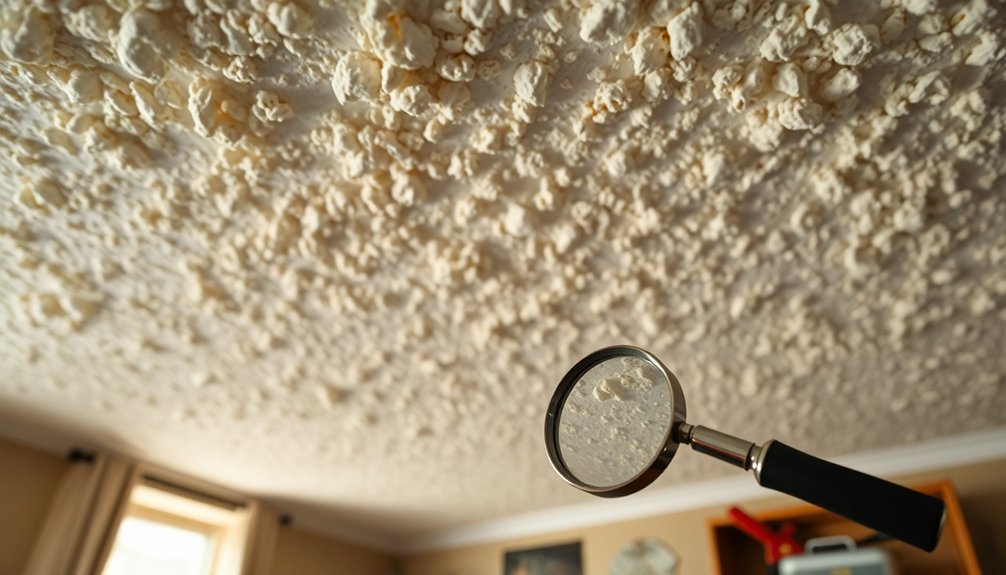
When inspecting your popcorn ceiling, keep an eye out for signs of water damage or deterioration, as these can increase the risk of airborne asbestos fibers. Remember, a visual check isn’t enough; professional testing is essential for accurate identification. If you suspect asbestos, consider hiring a certified inspector to guarantee safety and compliance. Utilizing tools like expense tracking tools can help you manage inspection costs effectively.
Visual Inspection Techniques
Identifying potential asbestos in your ceiling requires careful attention to detail.
Start by determining the age of your ceiling material; if it was installed before 1985, it’s at higher risk for asbestos.
Conduct a visual inspection for signs of damage, such as cracking, peeling, or water stains, as these can increase the chances of asbestos fibers becoming airborne if disturbed.
Keep in mind that a painted popcorn ceiling may complicate your assessment, making it harder to spot issues.
While visual inspection is essential, it’s important to remember that it can’t confirm asbestos presence.
For definitive results, you’ll need to evaluate asbestos testing by a certified professional before undertaking any renovations.
Professional Testing Importance
Since visual inspections can’t definitively confirm the presence of asbestos, professional testing is essential for guaranteeing your safety.
Homes built before 1985 are at increased risk for containing asbestos, making testing critical before any renovations. Certified inspectors should handle sample collection to avoid releasing harmful fibers during the process.
Professional testing guarantees compliance with local and federal regulations, protecting you from legal repercussions and health risks.
Once samples are collected, lab testing provides definitive results regarding asbestos presence, helping you decide whether to encapsulate or proceed with asbestos removal.
Engaging a professional not only safeguards your health but also gives you peace of mind, knowing that you’re making informed decisions about your popcorn ceiling.
Signs of Damage
If you notice any signs of damage on your popcorn ceiling, it’s important to act quickly. Look for water damage, such as stains or peeling, which can indicate that your ceiling is compromised.
If your popcorn ceiling was installed before 1980, it’s more likely to contain asbestos, especially if it shows visible deterioration. Disturbing damaged areas—like scraping or drilling—can release harmful asbestos fibers into the air, posing serious health risks.
Regularly inspect your ceiling to maintain its integrity, as aging can increase the likelihood of exposure. For peace of mind, consider hiring a professional for inspection and lab testing to confirm the presence of asbestos, as visual assessments aren’t enough to guarantee safety.
Risks Associated With Asbestos Exposure

As you consider the risks associated with asbestos exposure, it’s crucial to understand just how hazardous airborne asbestos fibers can be.
Popcorn ceilings, especially those installed before the 1980s, often contained asbestos and can pose serious health risks if disturbed. Long-term exposure may lead to severe respiratory diseases, and symptoms can take decades to appear.
Remember, there’s no safe level of asbestos exposure; even short-term contact can have lasting effects.
- Mesothelioma development
- Respiratory diseases
- Long latency period for symptoms
- Increased risk during renovations
- Potential for chronic health issues
Additionally, timely payments for home renovations can prevent financial instability that may arise from unexpected costs.
Being aware of these risks will help you make informed decisions regarding your home and safety.
Safe Methods for Testing and Removal
When it comes to testing and removing popcorn ceilings, you need to prioritize safety.
Professional testing options can accurately identify asbestos, while certified experts can help with safe removal techniques. If you’re considering a DIY approach, make sure you follow precautions to protect yourself and your home. Many homeowners benefit from using expense management apps to keep track of costs associated with testing and removal.
Professional Testing Options
While addressing concerns about asbestos in popcorn ceilings, it’s vital to rely on professional testing options. Hiring a certified inspector guarantees safe sample collection without disturbing the material, leading to accurate results.
Here are some key considerations:
- Local health departments often provide guidelines for safe sample collection.
- Non-invasive testing options can deliver same-day results.
- Licensed contractors are important for proper asbestos abatement, following federal and state regulations.
- Professional encapsulation can serve as a safe alternative if the ceiling is in good condition.
- Avoid DIY testing to prevent contamination and inaccurate results.
Safe Removal Techniques
Removing popcorn ceilings safely requires careful planning and adherence to specific techniques.
Before you begin, make certain to conduct professional asbestos testing, especially if your ceiling was installed before 1980. If asbestos is present, hire licensed abatement contractors who comply with federal and Illinois guidelines to minimize exposure risks.
When you’re ready to remove the popcorn ceiling, use wet removal methods by spraying water to dampen the surface, which helps reduce dust and airborne particles.
Seal off the work area with negative air pressure and guarantee proper ventilation to avoid inhaling harmful fibers.
Don’t forget to wear appropriate personal protective equipment (PPE), like respirators and disposable coveralls, to protect yourself during the removal and cleanup process.
DIY Precautions and Tips
Before you immerse yourself in any DIY testing or removal of popcorn ceilings, it’s crucial to prioritize safety.
Asbestos in spray-on ceiling materials can pose serious health risks, so take these precautions:
- Always conduct a professional asbestos test before starting.
- Lightly dampen the ceiling with a spray bottle to minimize dust.
- Wear appropriate personal protective equipment (PPE), including a mask, gloves, and goggles.
- Seal off the work area with plastic sheeting to contain fibers.
- Use a HEPA vacuum to clean thoroughly after scraping and guarantee safe disposal of materials.
Budget-Friendly Alternatives to Removal
If you’re looking for budget-friendly alternatives to removing a popcorn ceiling, there are several effective options that can transform your space without breaking the bank.
Covering the popcorn ceiling with new drywall gives you a smooth finish and enhances your room’s aesthetic while avoiding asbestos disturbance.
Applying a textured spray can modernize the look without the hassle of removal, making it an economical choice.
Ceiling tiles are another great option; they cover the popcorn while improving insulation and reducing sound.
For a quicker refresh, simply paint the ceiling, just remember to dampen it first to minimize dust and potential asbestos fibers.
Lightly misting the ceiling before any work helps keep airborne particles down, making your DIY upgrades safer and cost-effective. Additionally, consider using budgeting tools to manage your expenses effectively during your home improvement projects.
Legal Considerations for Homeowners in Illinois
Here are some key legal considerations for homeowners:
- The Illinois Department of Public Health regulates asbestos removal; licensed contractors are mandatory for multi-family, rental, or commercial properties.
- You can remove asbestos from popcorn ceilings in single-family homes, but must follow EPA and local guidelines.
- Failing to comply with regulations can lead to fines and contamination.
- Conduct proper asbestos testing before any renovation to prevent unsafe exposure.
- Hiring licensed abatement contractors guarantees safe removal and legal compliance, reducing the risk of asbestos fiber release.
- Additionally, streamlined processes in managing renovations can help ensure that all legal and safety measures are followed efficiently.
Stay informed to protect your health and your property.
Conclusion
In your quest to ditch that dated popcorn ceiling, you might just uncover a hidden stash of asbestos. How ironic that trying to save a few bucks could lead you down a costly path of health risks! But don’t fret; with safe testing and removal options, you can keep your home both stylish and secure. So, roll up your sleeves and tackle that ceiling—after all, who wouldn’t want a trendy, asbestos-free space to enjoy?