 0
0
 0
0
When choosing between R5 and R10 insulation for a frugal home, it’s essential to weigh cost against effectiveness. R5 is cheaper and works well in milder climates, but it might lead to higher energy bills over time. On the other hand, R10 offers superior thermal performance, making it a better long-term investment, especially in colder areas. Consider your local climate and energy needs before deciding; there’s more to explore about their benefits and installation.
Understanding R-Value
R-Value is a key metric in insulation that measures thermal resistance, meaning the higher the R-Value, the better the insulation performs.
R-Value measures thermal resistance; higher values indicate superior insulation performance.
When you’re considering insulation for your home, understanding R-Value is essential for energy efficiency. Different materials offer varying R-Values per inch, with foam board and spray foam usually outperforming blown-in or blanket insulation.
Depending on your geographic location, recommended R-Values differ, especially in cooler areas that might need R5.0 to R6.0 for ceilings.
It’s important to remember that while thicker insulation typically increases R-Value, you’ll see diminishing returns with extra layers. Consequently, the initial layers are most impactful.
Always check local building codes and climate conditions to verify you select the right R-Value for peak performance. Additionally, monitoring savings can help you budget effectively for insulation upgrades.
Importance of Insulation Effectiveness
When you invest in insulation, its effectiveness directly impacts your home’s comfort and energy efficiency. Higher insulation ratings, like R10, offer superior thermal performance compared to R5, especially in colder climates. This means less heat loss and more consistent indoor temperatures, which can lead to lower energy bills.
If you live in a region with harsh winters, opting for a higher R-value can prevent discomfort and issues like cold basements or condensation. Your insulation needs depend on local conditions and how you plan to use your space. Additionally, streamlined bookkeeping processes can help you better manage the costs associated with home improvements, including insulation upgrades.
Cost Comparison Between R5 and R10
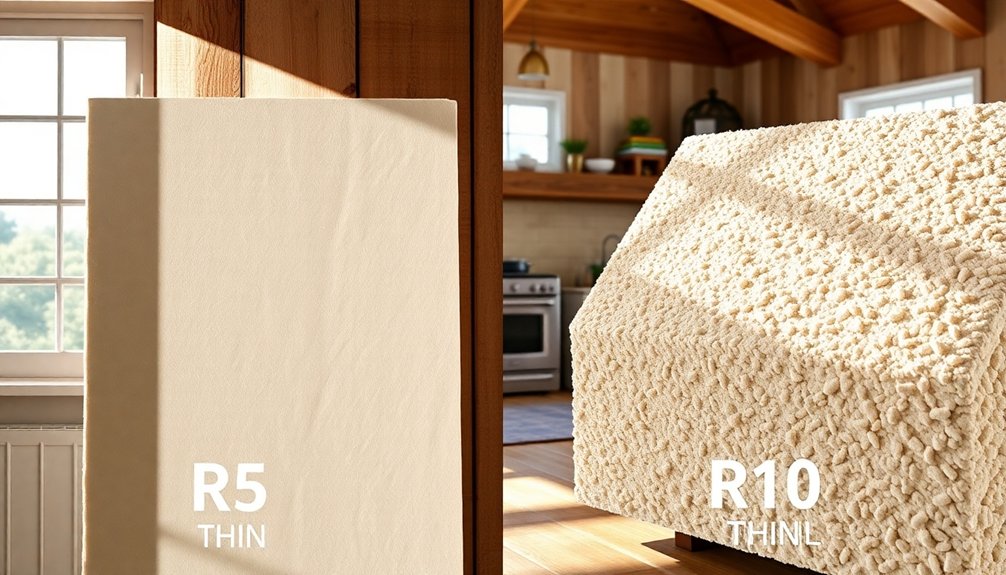
Choosing between R5 and R10 insulation often boils down to budget and performance needs.
If you’re on a tight budget, R5 foam insulation is your best bet, as it’s half the cost of R10, offering significant savings.
While R10 provides superior insulation performance, it may be excessive for your insulation needs, especially in milder climates.
You should weigh the cost comparison carefully; R5 meets basic insulation requirements without breaking the bank.
However, if you anticipate extreme temperatures, investing in R10 might be worth considering, despite the higher upfront cost.
Evaluating your specific insulation needs alongside your budget constraints will help you make the best choice for your home while keeping expenses in check. Additionally, using a budgeting app like YNAB (You Need a Budget) can empower you to effectively manage your finances while making this investment.
Climate Considerations for Insulation Choices
When choosing between R5 and R10 insulation, you need to evaluate your local climate and how it affects your home’s energy efficiency. If you live in a region with extreme winter temperatures, opting for higher R-values can keep your space comfortable. Plus, think about how you plan to use different areas of your home, as that can influence your insulation needs too. Additionally, consider how expense management apps can help you budget for insulation upgrades effectively.
Regional Climate Impact
Understanding the regional climate is essential for making informed insulation choices, as insulation needs vary considerably across different areas.
The R-value requirements depend heavily on your climate zone. For instance, if you live in colder areas like Melbourne or Adelaide, you’ll likely need insulation installed with R-values ranging from R5.0 to R6.0.
On the other hand, warmer regions like Brisbane may only require R4.0. In places with significant temperature fluctuations, like northern climates, opting for higher R-values such as R10 can help prevent heat loss, even if it costs more than R5 insulation.
Additionally, local building codes often dictate minimum R-value guidelines, so make sure to comply with these regulations when selecting your insulation materials.
Seasonal Temperature Variations
Although seasonal temperature variations can often dictate your insulation needs, it’s vital to select materials that suit your specific climate.
In colder regions, higher R-values like R10 are necessary to keep your home warm during winter months, effectively retaining heat and reducing energy costs.
If you live in a place with milder winters, R5 insulation might seem sufficient; however, it may leave your basement uncomfortably cold during extreme temperature dips.
Remember, local weather patterns play a significant role, and tailored R-value recommendations are important for your area.
Also, consider the seasonal use of spaces like basements, which might require better insulation to guarantee comfort when family visits during colder months.
Future Usage Considerations
As you plan for future usage of your spaces, it’s important to factor in the climate of your area, especially if you expect to use areas like basements for gatherings or recreational activities.
Choosing the right insulation would play a key role in your comfort and energy efficiency.
- Colder regions typically require higher R-values, making R10 more effective than R5.
- Seasonal temperature fluctuations can impact insulation effectiveness over time.
- Think about the frequency of use; R10 may be better for spaces used often.
- Plan for potential upgrades, as insulation effectiveness can diminish.
Incorporating these considerations will guarantee your insulation choice meets your long-term comfort needs while being cost-effective for your frugal home.
The Role of Vapor Barriers
How can a vapor barrier make a difference in your insulation’s performance? A vapor barrier is essential for controlling moisture, which can compromise your insulation’s effectiveness.
By preventing condensation, it protects your insulation from water damage and mold growth, ensuring a healthier living space. When installed correctly, vapor barriers greatly enhance insulation performance by reducing moisture buildup and maintaining thermal resistance. Additionally, implementing clear payment terms regarding insulation installation can ensure that you understand the costs and services involved, leading to better financial decisions for your home.
Keep in mind that the function of a vapor barrier varies based on its location—what works under a concrete slab mightn’t be suitable for walls or ceilings.
Always choose a vapor barrier that complies with local building codes and fits the climate conditions to maximize your insulation’s efficiency and longevity.
User Experiences With R5 and R10 Insulation
When it comes to insulation, your experience with R5 and R10 can vary greatly. Many users have found that R5 offers cost savings while still providing decent temperature regulation, especially in mild climates. However, others swear by R10 for its superior performance in keeping basements comfortable during colder months, even if the investment feels steep. Additionally, sustainable shopping practices can influence your decision, as investing in higher R-value insulation like R10 may lead to long-term energy savings and a reduced environmental impact.
Cost Savings Observed
Many homeowners have discovered that choosing R5 insulation can lead to significant cost savings compared to R10 foam insulation, which often comes at twice the price.
Many budget-conscious homeowners appreciate that R5 insulation meets their needs without breaking the bank. User feedback suggests that R5 provides adequate comfort during colder months, making it a practical choice for milder climates.
- R5 insulation costs about half of R10 foam insulation.
- Many find R5 sufficient for basic insulation requirements.
- Users report reasonable thermal performance with R5.
- Cost-effective strategies using R5 help manage overall expenses.
Temperature Regulation Impact
While R5 insulation can suffice for basic temperature regulation in milder climates, users often find that it may not provide the comfort needed during colder months, especially in basements.
Many homeowners report a noticeable temperature difference after upgrading to R10, which boasts a higher R-value and considerably improves warmth in harsh winters.
However, some feel the benefits of R10 may not justify the cost in less severe areas.
Regardless of the R-value, adequate insulation is essential for a cozy living environment, particularly in frequently used basements.
Users also stress the importance of installing vapor barriers with both R5 and R10 insulation to prevent moisture problems that can compromise temperature regulation efforts.
Installation Experiences Shared
Homeowners have had varied experiences with R5 and R10 insulation installations, often reflecting their specific climate needs and budget constraints.
Many users find that R5 offers a basic level of comfort, reducing chill in basements during colder months, while others see R10 as excessive. R10’s higher R-value does provide better thermal performance, especially in colder climates.
- R5 is budget-friendly, allowing savings for other projects.
- R10 can lead to diminishing returns in energy efficiency.
- Proper vapor barrier installation is essential for both options.
- User feedback emphasizes the importance of moisture management.
Ultimately, your choice will depend on your specific needs and how much you’re willing to invest in insulation.
Installation Considerations for Different R-Values
When deciding between R5 and R10 insulation, it’s important to take into account the specific needs of your project, especially regarding climate and energy demands.
R5 foam board insulation is often a cost-effective choice for under-slab applications, providing basic thermal resistance. However, if you’re in a colder climate or have higher heating needs, R10 offers considerably better thermal performance.
R5 foam board insulation is budget-friendly for under-slab use, but R10 excels in colder climates with greater heating demands.
Remember, insulation effectiveness isn’t additive, so initial layers matter most; R10 may provide better long-term comfort.
Regardless of your choice, sealing air leaks around insulation joints is vital, as it enhances overall effectiveness. Use techniques like cutting foam boards to fit snugly between studs or employing spray foam to fill any gaps for best results. Additionally, investing in expense tracking tools can help you manage costs associated with insulation projects effectively.
Long-term Savings and Energy Efficiency
Choosing the right insulation not only impacts upfront costs but also plays a considerable role in long-term savings and energy efficiency.
While R5 insulation may seem budget-friendly, it often leads to higher energy bills due to inadequate thermal regulation. Opting for R10 insulation, despite its higher initial cost, can greatly enhance your home’s energy efficiency.
- Higher R-value insulation improves thermal performance.
- R10 can lead to considerable energy bill reductions, especially in colder climates.
- Investing in R10 may increase your home’s resale value.
- Enhanced comfort levels result from better heat retention.
- Using budget apps to track energy expenditures can further optimize savings.
In the long run, choosing R10 insulation can provide considerable long-term savings while making your home more appealing to energy-conscious buyers.
Alternative Insulation Methods
Several alternative insulation methods can boost your home’s energy efficiency without breaking the bank.
Cellulose insulation, for instance, is a budget-friendly option that can achieve an impressive R-value of R-30 or higher when blown into attics and walls.
Cellulose insulation offers an economical solution, reaching R-values of R-30 or more when installed in attics and walls.
If you’re eco-conscious, consider denim insulation made from recycled materials, which is easy to install and effective.
Loose-fill options like fiberglass or cellulose also enhance R-value without extensive renovations.
For added insulation effectiveness, using steel rib panels or oriented strand board (OSB) as ceiling barriers can provide structural benefits too.
Don’t forget to air seal joints and gaps before applying insulation, as this step greatly improves overall performance and reduces energy losses, maximizing the benefits of whatever method you choose. Additionally, utilizing budget management tools can help you allocate funds effectively for insulation projects.
Expert Opinions on R5 vs. R10
When choosing between R5 and R10 insulation, you’ll want to evaluate both cost-effectiveness and performance, especially if you’re in a cold climate.
Experts often recommend R5 for milder areas, while R10 might be necessary for more extreme conditions. Consulting with insulation specialists can help you find the best solution tailored to your specific needs and budget. Additionally, understanding financial literacy can significantly aid in making informed decisions about insulation investments that impact your long-term savings.
Cost-Effectiveness of Insulation
While R10 insulation offers superior thermal performance, many experts argue that R5 can be a more cost-effective choice for homeowners on a budget.
Here are some key considerations:
- R5 foam insulation is half the cost of R10, making it more budget-friendly.
- For many applications, R5 provides sufficient insulation, especially under-slab.
- R10 may be unnecessary overkill for most homeowners, depending on climate.
- The effectiveness of insulation isn’t additive; initial layers like R5 are vital for overall performance.
Balancing your insulation needs with cost-effectiveness is essential.
If basic comfort meets your requirements, R5 can be a smart choice.
However, if you’re in a colder climate or have specific usage scenarios, R10 may justify its higher price.
Performance in Cold Climates
As temperatures plummet, the choice between R5 and R10 insulation becomes essential for maintaining comfort in your home.
In cold climates, R10 insulation is often the preferred option due to its considerably higher R-value, which provides better thermal resistance. This is important for preventing heat transfer and keeping your space warm and energy-efficient.
While R5 foam might suffice for some purposes, it doesn’t meet the higher insulation requirements needed in frigid conditions.
Experts emphasize that investing in R10 insulation can safeguard against cold basements and enhance your heating system’s efficiency.
Although R10 comes with a higher initial cost, its long-term benefits in comfort and energy savings far outweigh the expense, making it a wise choice for colder regions.
Expert Recommendations for Use
How do you decide between R5 and R10 insulation? Experts generally recommend R5 for milder climates as it provides adequate thermal resistance without breaking the bank.
Many professionals consider R10 overkill for typical residential applications. Here are some expert recommendations to guide your choice:
- Assess your local climate: Tailor your insulation needs based on temperature extremes.
- Consider installation techniques: Effective insulation relies heavily on proper application and vapor barriers.
- Evaluate cost vs. benefits: Determine if the additional R-Value of R10 justifies the cost.
- Consult insulation specialists: Get personalized advice for your specific home’s needs.
Regardless of your choice, remember that insulation effectiveness varies based on installation quality.
Conclusion
When deciding between R5 and R10 insulation, consider cost, climate, and convenience. R10 might be a bit pricier upfront, but its potential for long-term savings might make it worthwhile. Ultimately, the right choice hinges on your home’s needs and your budget. So, whether you go for R5’s affordability or R10’s robust returns, make your insulation investment count! Stay smart, save cents, and secure a snug sanctuary for your family.