 0
0
 0
0
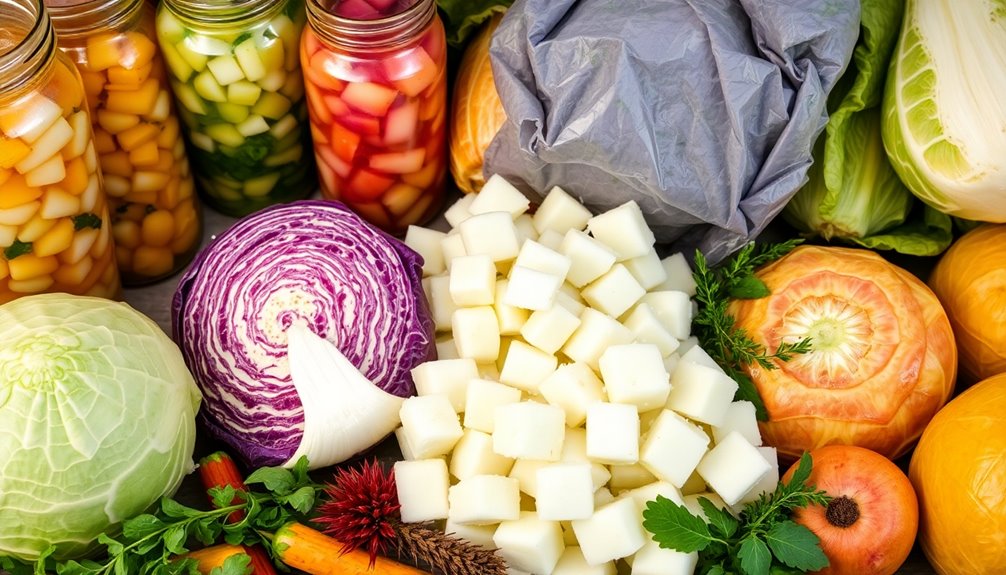
The best ways to preserve cabbage are fermentation, freezing, and quick pickling. Fermentation, like making sauerkraut, enhances flavor and adds probiotics for gut health. Freezing locks in nutrients, but remember to blanch first to maintain quality. Quick pickling offers a tangy twist and is effortless. When preserving, make certain you choose fresh, vibrant cabbage and follow proper techniques to avoid spoilage. If you want to know more about the benefits and methods, keep exploring!
Understanding the Benefits of Preserving Cabbage
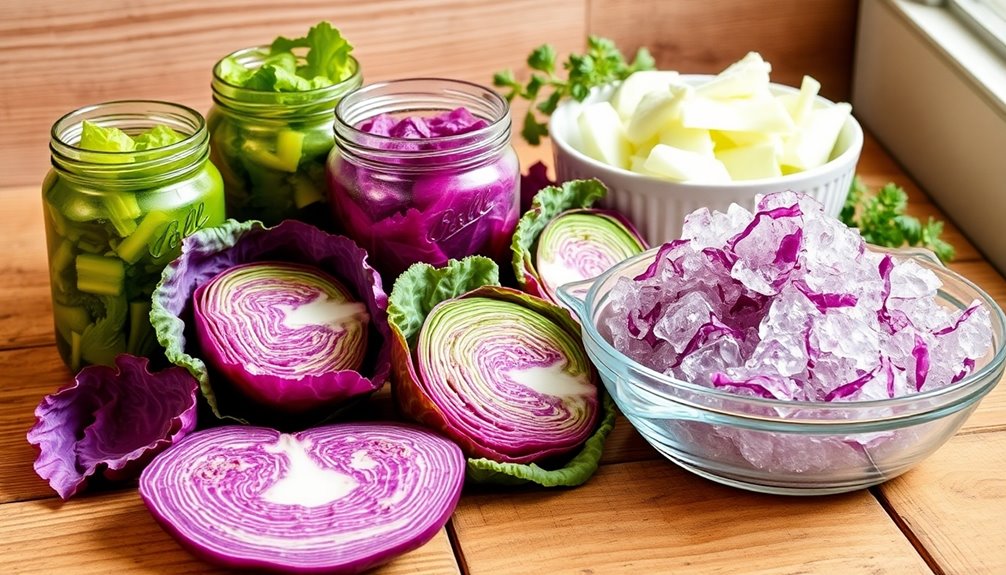
When you consider the benefits of preserving cabbage, you’ll quickly realize it’s a smart choice for both your health and wallet. Cabbage nutrition is impressive; it’s packed with vitamins C and K, fiber, and antioxidants. By preserving cabbage, you can maximize these nutrients, ensuring you have access to healthy options year-round.
Fermentation benefits also enhance cabbage’s appeal. Fermented cabbage, like sauerkraut, boosts gut health by introducing beneficial probiotics. This process not only extends the cabbage’s shelf life but also transforms its flavor profile, making it a versatile ingredient in your meals. Additionally, utilizing proper canning supplies ensures a safe and effective preservation process.
Plus, preserving cabbage means you can enjoy seasonal produce even during off months, saving you money. Embracing these methods can lead to a healthier lifestyle while minimizing food waste.
Choosing the Right Cabbage for Preservation
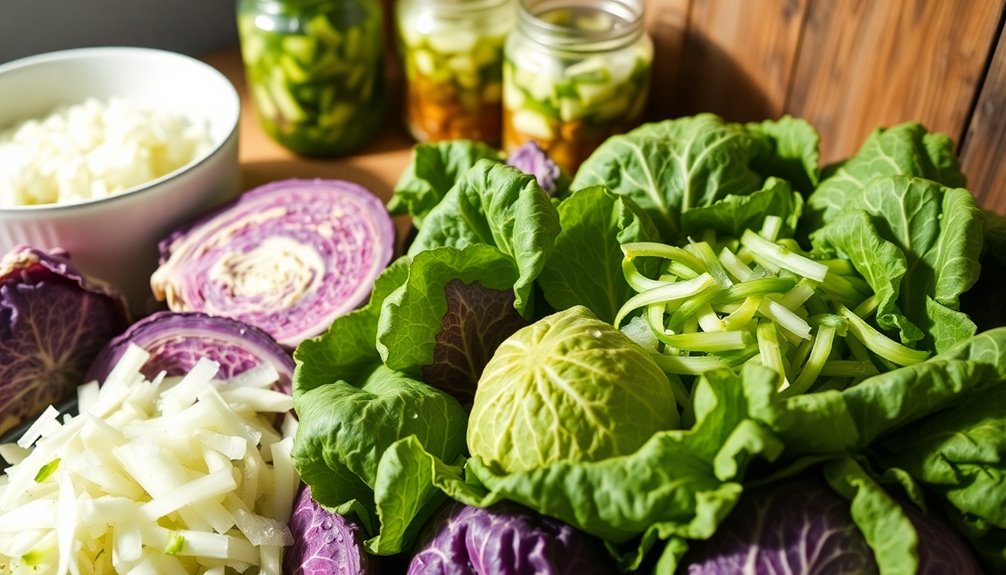
When it comes to preserving cabbage, choosing the right variety is essential.
You’ll want to look for fresh heads with firm leaves, as this impacts the quality of your preserved product.
Consider the size and texture of the leaves, too, since these factors can affect how well the cabbage holds up during preservation. Additionally, opting for budget-friendly cooking can enhance your preservation efforts by allowing you to use cost-effective methods and ingredients.
Types of Cabbage Varieties
Choosing the right cabbage variety is essential for successful preservation. Each type offers unique flavors and textures, impacting your final product.
Savoy cabbage, with its crinkled leaves, is great for fermentation, while Napa cabbage provides a milder taste perfect for pickling. Red cabbage adds vibrant color and is excellent for salads and slaws. Green cabbage is a classic choice for sauerkraut, thanks to its crispiness.
Pointed cabbage, known for its sweetness, works well in stir-fries. Chinese cabbage can add a unique twist to your dishes. Kohlrabi cabbage, though not traditional, brings a crunchy element to preservation.
Finally, Brussels sprouts, while not a cabbage in the strict sense, can be preserved and enjoyed throughout the year.
Freshness and Quality Factors
Fresh, high-quality cabbage is essential for successful preservation. When you’re choosing cabbage, look for freshness indicators like vibrant color and firm leaves.
Avoid any heads that feel soft or have brown spots, as these are signs of deterioration. A thorough quality assessment involves checking the stem; it should be moist and not dried out.
If possible, buy local or in-season cabbage, as it’s likely fresher. Always give your cabbage a gentle squeeze; a crisp texture indicates good quality.
Size and Leaf Texture
After evaluating freshness and quality, size and leaf texture play important roles in selecting cabbage for preservation. Opt for larger cabbages with thicker leaves, as they’re often more resilient during fermentation and freezing.
Different cabbage varieties, like Napa or Savoy, offer unique texture differences that affect your storage methods. For salad uses, you might prefer thinner-leaved options, which provide a crisp bite. However, when cooking, thicker leaves hold up better and enhance flavor profiles.
Consider how texture impacts nutritional impact; thicker leaves may retain more nutrients during preservation. Understanding these factors guarantees you choose the right cabbage for your intended cooking applications and fermentation effects, maximizing both taste and health benefits.
How to Prepare Cabbage for Preservation
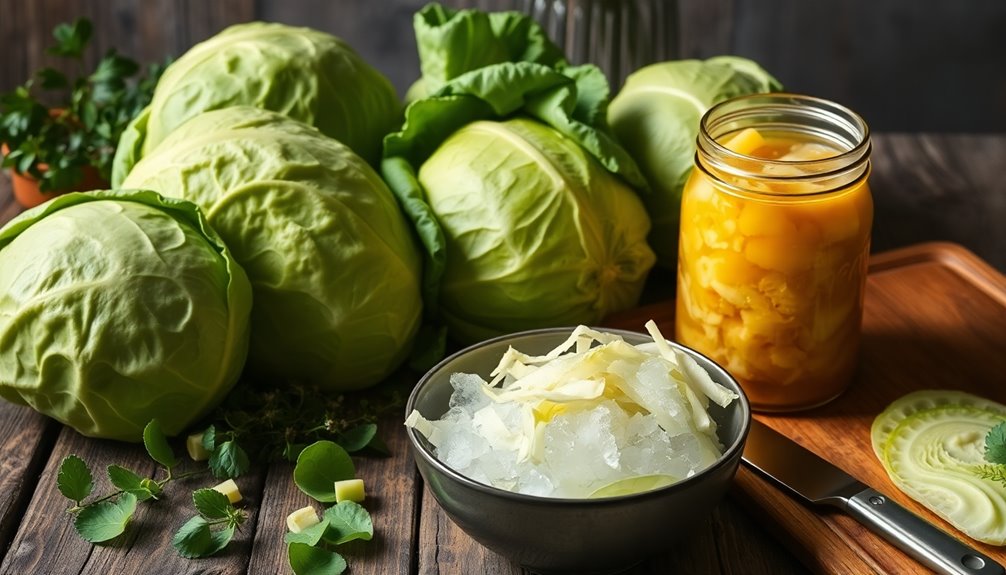
To prepare cabbage for preservation, start by selecting firm, vibrant heads free from blemishes or wilting.
Once you’ve got your cabbage, wash it thoroughly under cold water to remove any dirt or insects.
Using essential tools like a sharp knife and cutting board, slice the cabbage into quarters and remove the core.
Depending on your preservation method, you might want to shred or chop the cabbage into smaller pieces.
For freezing, blanch the cabbage in boiling water for a couple of minutes, then plunge it into ice water to stop the cooking process.
If you’re opting for fermentation, verify your workspace and tools are sanitized to promote a healthy fermentation environment. Proper preparation is crucial for achieving optimal texture and flavor during preservation.
With these cabbage preparation techniques, you’re all set for preservation!
The Art of Fermentation: Making Sauerkraut
Once your cabbage is prepped, you’re ready to explore the art of fermentation by making sauerkraut. This age-old practice not only enhances flavor but also boosts nutrition through fermentation techniques.
Let’s plunge into the essential steps for crafting your own sauerkraut:
- Shred the Cabbage: Thinly slice the cabbage to increase surface area for fermentation.
- Add Salt: Mix in salt, which helps draw out moisture and creates a brine for fermentation.
- Pack It Down: Firmly pack the cabbage into a jar, ensuring it’s submerged in the brine.
With roots tracing back to ancient times, sauerkraut history reveals its significance in preserving cabbage and enhancing its taste. Embracing mindful spending habits can also lead to discovering affordable ingredients for your fermentation journey.
Enjoy the process and the delicious results!
Quick Pickling: A Tangy Option for Cabbage
If you’re looking for a quick and tangy way to enjoy cabbage, quick pickling might just be your answer. This method transforms your fresh cabbage into delicious quick pickles in no time.
Start by shredding your cabbage and packing it into a jar. Then, create a tangy brine using vinegar, water, sugar, and salt. Pour the brine over the cabbage, ensuring it’s fully submerged.
Give it a good shake, and let it sit for at least an hour. The longer you let it marinate, the more intense the flavor will be.
These quick pickles make a fantastic addition to salads, sandwiches, or as a zesty snack. Enjoy the crunch and tanginess that quick pickling brings to your cabbage! Additionally, incorporating eco-friendly practices into your cooking can enhance both flavor and sustainability.
Freezing Cabbage: Step-by-Step Guide
Freezing cabbage is a fantastic way to keep it fresh for future meals. First, you’ll need to prepare the cabbage properly, followed by a quick blanching process to lock in flavor and nutrients. Additionally, you can extend its shelf life up to three months by using high-quality freezer bags to prevent freezer burn. Then, you can store it correctly to guarantee it stays fresh until you’re ready to use it.
Preparing Cabbage For Freezing
Prepare your cabbage for freezing by following a few simple steps that confirm it retains its flavor and texture. Proper preparation is key to maintaining nutrient retention and guaranteeing excellent recipe pairings later on.
Here are three essential preparation tips:
- Choose Fresh Cabbage: Opt for seasonal harvesting to confirm the best quality and cabbage textures.
- Cut and Trim: Remove any damaged leaves and chop the cabbage into your preferred size, enhancing its flavor for future meals.
- Select Storage Containers: Use airtight containers or freezer bags to maximize preservation methods, preventing freezer burn.
Blanching Process Explained
Blanching is an essential step in preserving cabbage, as it helps lock in flavor, color, and nutrients. To blanch effectively, start by washing and chopping the cabbage into uniform pieces.
Next, bring a large pot of water to a rolling boil. Use blanching techniques like submerging the cabbage in the boiling water for ideal timings; usually, 2-3 minutes is sufficient for green cabbage.
After blanching, quickly transfer the cabbage to a bowl of ice water to stop the cooking process. Let it cool for about the same time you blanched it.
Once cooled, drain and pat dry. This simple process guarantees your cabbage retains its quality when frozen, making it a perfect addition to your future meals.
Storing Frozen Cabbage Properly
Once you’ve blanched your cabbage, it’s crucial to store it properly to maintain its quality. Here’s how to do it right:
- Choose Storage Method: Use freezer bags or airtight containers to prevent freezer burn. Make sure you remove excess air for ideal moisture control.
- Portion Sizes: Divide your cabbage into meal-sized portions. This makes it easier to thaw only what you need later.
- Labeling Dates: Don’t forget to label each bag or container with the date. This helps you keep track of freshness and plan recipe ideas.
When you’re ready to use frozen cabbage, use proper thawing techniques—like placing it in the fridge overnight or steaming directly from frozen.
Enjoy your preserved cabbage!
Dehydrating Cabbage: A Simple Method
Dehydrating cabbage is a straightforward process that can help you preserve this versatile vegetable for months. First, wash and slice the cabbage into thin strips.
Then, choose your dehydrating technique—either a food dehydrator or an oven set to a low temperature. Spread the cabbage evenly on the trays or baking sheets, ensuring airflow for even drying.
Check for dryness after a few hours; it should be brittle, not chewy. Once completely dehydrated, cool the cabbage and store it in airtight storage containers. This method not only saves space but also retains the cabbage’s nutrients, as vacuum sealing can help extend shelf life and reduce food waste. Dehydrated cabbage can easily be rehydrated in soups, stews, or stir-fries, making it a convenient addition to your pantry.
Storing Cabbage in Jars: Tips and Tricks
When you’re ready to store cabbage in jars, choosing the right containers is key.
Make certain to wash them properly to keep your cabbage fresh, and learn how to seal them for maximum longevity. Additionally, consider using airtight containers to help maintain freshness and prevent spoilage.
Let’s explore these essential tips and tricks to guarantee your cabbage stays crisp and delicious!
Choosing The Right Jars
- Jar Materials: Opt for glass jars, as they’re non-reactive and perfect for fermentation and pickling.
- Ideal Sizes: Choose jars that suit your storage needs; smaller jars are great for quick use, while larger ones work well for bulk storage.
- Sealing Methods: Make sure your jars have airtight seals to maintain the best storage conditions, whether for fermentation or freezing.
Don’t forget about labeling techniques to track dates and contents, and always follow proper cleaning protocols to avoid contamination.
Proper Washing Techniques
Before you start preserving cabbage, it’s essential to wash it properly to remove any dirt and pesticides. First, rinse the cabbage under cold running water, guaranteeing you separate the leaves for thorough cleaning.
If you notice stubborn dirt, use a soft brush as one of your cleaning methods. Soaking it in a vinegar solution for about 10 minutes can also help eliminate residues.
Aim to wash your cabbage right before you plan to use it, as this keeps it fresher. Depending on how you store it, you might need to repeat this washing frequency.
Properly cleaned cabbage not only tastes better but also assures your preservation efforts yield safe and delicious results.
Sealing For Longevity
Sealing cabbage in jars is a fantastic way to guarantee it stays fresh and flavorful for months.
To make the most of this storage method, you’ll want to follow these tips:
- Choose airtight containers: Opt for glass jars with tight-fitting lids to minimize air exposure.
- Vacuum seal for extra protection: If you have a vacuum sealer, use it to remove excess air, which helps prevent spoilage.
- Label and date jars: Always mark your jars with the date you sealed them. This keeps track of freshness.
Using Cabbage in Soups and Stews
When you’re looking to add depth and flavor to your soups and stews, cabbage can be a game-changer. You can experiment with different cabbage variations, like green, red, or Savoy, each offering unique textures and tastes.
Chopped or shredded, cabbage melds beautifully with other ingredients and absorbs the rich flavors of your broth.
Chopped or shredded, cabbage harmonizes with other ingredients, soaking up the rich flavors of your broth.
For flavor enhancements, consider sautéing the cabbage first to caramelize its natural sugars, giving your dish an extra layer of sweetness. You can also add it toward the end of cooking for a crunchier bite.
Whether you’re making a hearty vegetable stew or a comforting chicken soup, cabbage brings nourishment and a delightful heartiness that elevates your meals. Additionally, incorporating fermented cabbage can enhance the nutritional profile of your dishes while adding a unique tangy flavor.
Creative Recipes for Preserved Cabbage
Cabbage isn’t just a fantastic addition to soups and stews; it also shines when preserved, opening up a world of culinary possibilities. You can easily transform your preserved cabbage into delightful dishes that impress. Here are three creative ideas to get you started:
- Fermented Tacos: Use your fermented cabbage as a zesty topping for tacos, adding crunch and flavor.
- Cabbage Slaw: Mix your preserved cabbage with carrots and a tangy dressing for a revitalizing slaw.
- Stuffed Cabbage: Fill cabbage leaves with a savory mixture of rice and meat, then bake until tender.
Additionally, you can enhance the flavor by incorporating pickle juice into your slaw dressing for a tangy twist. With these recipes, you’ll enjoy all the benefits of preserved cabbage in exciting ways!
How Long Can You Store Cabbage?
While you might be enthusiastic to stock up on cabbage, it’s essential to know how long you can store it to maintain its freshness and flavor.
Generally, fresh cabbage can last about one to two weeks in the refrigerator if you keep it in a plastic bag or a crisper drawer. For ideal storage, avoid washing it until you’re ready to use it, as moisture can lead to spoilage.
If you decide to ferment or freeze cabbage, it can last much longer—several months in the freezer and even up to a year when properly fermented.
Signs Your Preserved Cabbage Has Gone Bad?
When preserving cabbage, it’s essential to recognize signs that it’s gone bad.
If you notice an unpleasant odor or any significant color changes, your cabbage may not be safe to eat.
Trust your senses—they’re your best guide in keeping your food fresh.
Unpleasant Odor Emission
If you notice an unpleasant odor coming from your preserved cabbage, it’s a clear sign something’s gone wrong.
While fermentation scents can be normal, strong, foul odors often indicate the presence of harmful odorous compounds. To help you identify if your cabbage has spoiled, watch for these signs:
- Sour or rancid smell: A sharp, unpleasant odor means the fermentation process has gone awry.
- Strong, putrid odor: This can indicate bacterial growth, making the cabbage unsafe to eat.
- Unusual dampness: Excess moisture can lead to spoilage and contribute to off-putting smells.
If you notice any of these conditions, it’s best to discard the cabbage to avoid health risks.
Color Changes Observed
One of the most telling signs that your preserved cabbage has gone bad is noticeable color changes. If you see a shift in color intensity, such as dullness or unexpected browning, it’s a red flag.
Pigment changes can indicate that the cabbage has lost its nutrient retention, reducing its health benefits. The visual appeal also diminishes, making you less likely to enjoy cooking with it.
Over time, prolonged storage duration can exacerbate these issues, leading to a significant impact on your dishes. When your cabbage looks off, trust your instincts.
It’s better to err on the side of caution rather than risking your health with spoiled food. Always prioritize freshness and quality in your preserved cabbage.
Nutritional Benefits of Preserved Cabbage
Preserved cabbage offers an impressive array of nutritional benefits that can enhance your diet year-round. By using methods like fermentation and freezing, you guarantee maximum nutrient retention while enjoying its health benefits.
Here are three key advantages of including preserved cabbage in your meals:
- Rich in Vitamins: It’s packed with vitamins C and K, which support your immune system and bone health.
- Probiotics from Fermentation: Fermented cabbage, like sauerkraut, is a great source of probiotics, promoting gut health and digestion.
- Antioxidant Properties: Preserved cabbage contains antioxidants that help combat oxidative stress and inflammation.
Incorporating preserved cabbage into your diet not only boosts nutrition but also adds delightful flavors to your meals!
Common Mistakes When Preserving Cabbage
When it comes to preserving cabbage, overlooking key steps can lead to disappointing results. Common pitfalls include ignoring quality checks; always choose fresh, crisp cabbage.
When using preservation techniques like fermentation, fermentation errors can occur if you skip salt measurements or fermentation times. In freezing, make sure to blanch cabbage first—freezing mistakes can ruin texture and taste.
If you’re pickling, don’t rush the process; pickling fails often stem from insufficient brine or improper sealing. Finally, storage tips are essential; store your preserved cabbage in airtight containers to prevent odor issues and spoilage.
Frequently Asked Questions About Cabbage Preservation?
Have questions about preserving cabbage? You’re not alone! Many people get confused by cabbage myths and the best preservation techniques. Here are some common queries:
1. Can I freeze cabbage?
Yes, you can! Just blanch it first to maintain its texture and flavor.
2. Is fermenting cabbage necessary?
Not necessarily, but fermentation enhances flavor and improves digestion. Plus, it gives you delicious sauerkraut!
3. How long does preserved cabbage last?
If stored correctly, frozen cabbage lasts about 10-12 months, while fermented cabbage can last for several months in the fridge.
Understanding these basics can help you enjoy cabbage year-round.
Don’t let myths stop you from enjoying this versatile vegetable!
Conclusion
To sum up, preserving cabbage opens up a world of flavors and health benefits. Whether you’re fermenting it into tangy sauerkraut or quick-pickling for a zesty side, you’ll love how versatile it can be. Imagine your grandmother’s famous sauerkraut recipe, passed down through generations, bringing joy to family gatherings. By mastering these preservation techniques, you’ll not only reduce waste but also create delicious dishes that nourish your body and soul. So go ahead, get started on your cabbage preservation journey!